How to Choose a Reiki Practitioner in London


Choose a Reiki practitioner in London on four things: verifiable training, insurance, membership of a professional body, and how safe you feel with them in the first conversation. Reiki is not regulated by law in the UK, so these checks are yours to make. The last one matters most if you are carrying something heavy, such as grief, overwhelm or a sense of being blocked. Paul Stebles offers Quantum Reiki energy healing sessions, in person and remotely, alongside Quantum Healing Hypnosis (QHHT), for people who want a calm, personal and trauma-informed space to work in.
TL;DR
Reiki is voluntarily regulated in the UK, so look for training to the national standard, current insurance and membership of a recognised professional body.
The CNHC register is approved by the Professional Standards Authority, so it is the strongest quality mark you can look for.
Private Reiki in the UK usually costs around £15 to £100 an hour, with London at the upper end of that range.
A good practitioner explains what to expect, the fee and the boundaries before you book, and never rushes you.
If you are looking for emotional release or deeper insight, ask how the session is held as well as what it is called.
Table of Contents
What a Reiki session actually involves
Before you compare practitioners, know what you are booking. The UK Reiki Federation describes a treatment as non-diagnostic, non-interventionist and non-manipulative. You lie down or sit fully clothed while the practitioner places their hands gently on or just above your body. There is no massage and no pressure.
Sessions usually last between half an hour and an hour. What you feel varies. Some people notice warmth, coolness, tingling or a sense of flowing energy. Others feel very little apart from deep relaxation, and that is a perfectly normal experience too.
That quiet, simple format is why the person matters so much. With so little technique visible from the outside, you are choosing someone for their training, their presence and the safety they create in the room.
Is Reiki regulated in the UK?
No law requires a Reiki practitioner to hold a particular qualification. Cancer Research UK says there is no legal requirement, but that most reputable practitioners belong to a professional Reiki association. The UK Reiki Federation adds that regulation of complementary therapies is voluntary, and that no Reiki organisation can stop someone from practising.
This means a practitioner who has chosen to meet a standard has made an effort you can check. Three bodies currently accept Reiki, according to the Reiki Council’s practitioner FAQ:
the Complementary and Natural Healthcare Council (CNHC), an Accredited Register under the Professional Standards Authority;
the General Regulatory Council for Complementary Therapy (GRCCT);
the Federation of Holistic Therapists (FHT).
The CNHC is the one to know. The Professional Standards Authority is the independent body that oversees voluntary health registers, so a place on an Accredited Register is the closest thing to an official stamp that Reiki has.
The five checks that matter
Here is a practical checklist, drawn from the Reiki Council and the CNHC. Use it for any practitioner in Greater London, whether they work from a Mayfair clinic, a therapy room in Croydon or your own home.
1. Training to a recognised standard
The CNHC’s Reiki Core Curriculum sets the minimum for safe and competent practice. It requires at least 240 hours of total study time, at a level equivalent to Level 3 on the Regulated Qualifications Framework for England, Wales and Northern Ireland. The UK Reiki Federation’s teaching guidelines translate this into practical terms:
training spread over at least nine months;
at least 40 hours taught in person;
75 documented treatments given to others;
10 case studies of at least four sessions each.
You do not need to quiz anyone on these figures. They show how much a properly trained practitioner has done, and why a weekend course is a thin foundation. The Reiki Council’s client FAQ says a short advertised course, such as a morning session, will not give someone the ability to practise publicly.
2. In-person attunement and lineage
An attunement is the traditional initiation a Reiki teacher gives a student. The Reiki Council states that the national occupational standards require a lineage traceable directly back to Mikao Usui, the founder of the Usui system, and that the practitioner was attuned in person. Online-only attunements do not meet this. The CNHC also does not accept training delivered entirely by distance learning.
You will often see Reiki described in three levels. Level 1 is for practising on yourself and loved ones. Level 2 prepares someone for public practice, including working with emotions. Level 3 is the Master level for teaching. The Reiki Healthcare Research Trust’s education page sets this out. For paid work with the public, Level 2 is the minimum. Cancer Research UK says anyone treating you should hold at least a Level 2 qualification.

3. Insurance
Insurance is required for anyone working with the general public in private practice, according to the Reiki Council’s practitioner FAQ. CNHC applicants must hold current professional indemnity insurance to practise in the UK. If you want to understand what cover looks like, our guide to Reiki insurance coverage in the UK explains it plainly.
4. Professional membership and a code of ethics
Membership of a reputable body means a practitioner has signed a Code of Conduct and Ethics and met entry requirements. The Reiki Council makes the point that this is unlike an unchecked directory, where anyone can pay for a listing. Cancer Research UK suggests starting with the UK Reiki Federation’s searchable practitioner database. A star rating on a booking site tells you about the experience of the customers who reviewed. It does not tell you how the person was trained.
5. A clear explanation before you book
The Reiki Council lists a simple test: has the practitioner explained what to expect, and the fee structure? You should also be told where the session takes place and how long it lasts, and the room should be clean and quiet. In a healthcare setting, consent is recorded before therapy starts, and the NHS policy example from Royal Cornwall Hospitals NHS Trust also requires written information so the person can make an informed decision. A private practitioner can hold themselves to the same standard: say what will happen, and ask before they do it.
What does Reiki cost in London?
Cancer Research UK reports that private Reiki treatments in the UK usually cost around £15 to £100 an hour, with treatments more expensive in bigger cities. In London, expect the upper half of that range, and more in central clinics where room hire is high.
What moves the price:
Location. Zone 1 clinics charge for the postcode. A home visit or a quieter suburban room often costs less.
Session length. A 20-minute taster and a full hour are very different offers.
Training and experience. A longer-trained practitioner usually charges more.
What is included. Some sessions combine Reiki with other energy work, and some include a conversation before and after.
Many practitioners suggest a short run of three sessions followed by a break, so budget for a series and not a single visit. For a clearer view of how to plan that, see how many sessions you may need and our own page on Reiki cost in the UK.
When we publish our prices, we publish them plainly. An Evolve Quantum Healing session, our Quantum Reiki energy healing, is £99, and the remote version is also £99.
Choosing when you are carrying something heavy
Most guides to choosing a Reiki practitioner stop at credentials. If you are reading this because you feel overwhelmed, energetically blocked, or you want deeper emotional healing, you also need to think about the container the session happens in.
Ask yourself these questions after your first call or message:
Did I feel listened to? A good practitioner asks what brought you and what you would like from the session, and does not simply describe their method.
Was I told what would happen? You should know whether you will be lying down, how long it lasts and whether there is touch. Reiki hands are placed gently on or over the body, and you can ask for hands-off.
Is the language honest? The word healing means different things to different people. A careful practitioner talks about support, relaxation and release, and does not promise a cure or tell you to stop medical treatment.
Can I stop at any time? You should feel able to say so, with no explanation needed.
Do I feel calm in their presence? This is not a soft criterion. It is the thing you will notice for the whole hour.
If you take medication, are pregnant, have a diagnosed condition or are under a doctor’s care, keep your GP informed. Reiki is a complementary practice, so it sits alongside medical care and does not replace it. Cancer Research UK advises telling your doctor about any complementary therapy you use. Our guide to Reiki contraindications covers the situations in which a medical check comes first.
Reiki, energy healing and past-life work: what the labels mean
If you are searching for Reiki, you may also have come across energy healing, chakra balancing, cord cutting and regression hypnotherapy. They are not the same thing, and the names are used loosely in London’s busy wellbeing scene.
Reiki is the hands-on or hands-near practice described above, with a defined lineage and training standard.
Energy healing is a wider term. It can include Reiki, chakra balancing, cord cutting, timeline healing and belief transformation.
Quantum Healing Hypnosis (QHHT) is a separate, longer session that uses deep hypnosis to reach the subconscious mind. People use it to explore past lives, connect with their higher self and look for insight into their life’s direction.
The practical consequence: ask any practitioner which of these they are offering, and for how long. If you want to explore past lives or seek guidance from your higher self, Reiki alone is not the tool, and a session described as Reiki should be exactly that.
Perspective
When someone books with us, they are rarely asking for a technique. They are asking for a safe place to put something down: an emotional blockage, an unexplained heaviness, a question about why their life feels the way it does. That is why we put the atmosphere first. Our approach is personal, calming and trauma-informed, and our sessions are given the time they need, because rushing a person who is opening up helps nobody. Our QHHT sessions are extended sessions for that reason. We combine QHHT with energy healing because many clients arrive with more than one layer to work on. Emotional release, timeline healing, cord cutting and belief transformation sit alongside Reiki and chakra balancing in our energy sessions, and clients tell us in their testimonials that they felt supported and that the work was tailored to them. Whoever you choose, choose someone who explains what will happen, listens before they begin, and makes you feel it is safe to stop. That is the standard we hold ourselves to. Paul
Booking with us
Our Evolve Quantum Healing session is Quantum Reiki energy healing, combining Reiki, chakra balancing, cord cutting, timeline healing, belief transformation and emotional release. It costs £99 in person or remotely, which suits you if you cannot travel or prefer your own space. You can book an Evolve Quantum Healing session through our calendar.
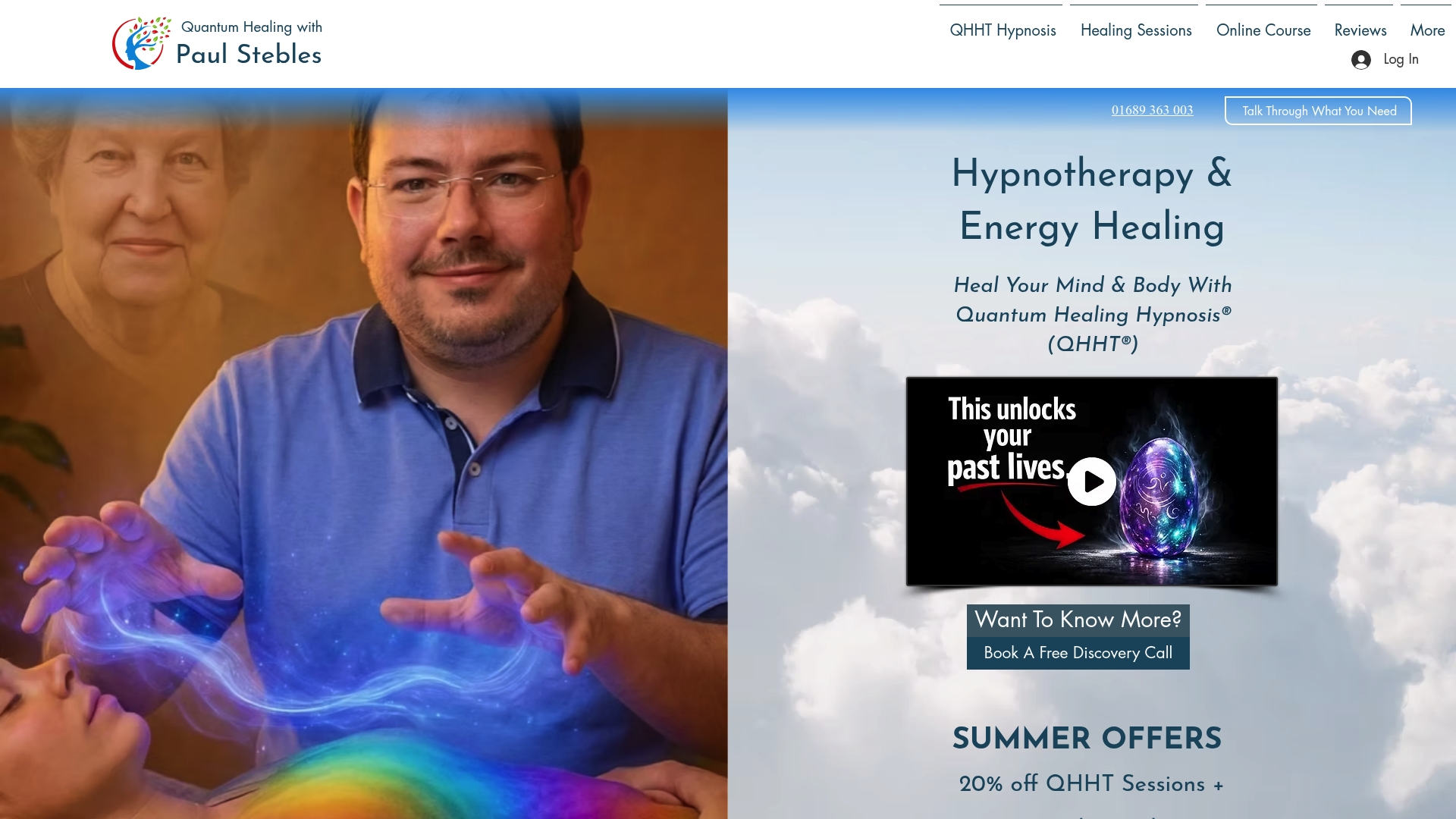
If you want to go deeper, our QHHT session is £369, and the mobile QHHT, where we come to you, is £399. We work with clients across Bromley, Croydon, Bexley, Sutton, Lewisham and wider Greater London.
After your first session
It is common to feel relaxed, tired, thoughtful or emotional for a day or so after Reiki or energy work. Drink water, keep the rest of the day light and give yourself some quiet. Our guide to Reiki after effects sets out six aftercare steps. If anything worries you physically, speak to your GP.
If you would like a wider view of finding the right person for energy work in south-east London and Kent, our guide on choosing an energy healer goes further.
FAQ
How much does a Reiki session cost in the UK?
Private treatments usually cost around £15 to £100 an hour, according to Cancer Research UK, and bigger cities cost more. Our own Evolve Quantum Healing session is £99. Sessions typically last between 20 minutes and an hour.
Can anyone practise Reiki?
There is no law stopping anyone from offering it. To practise safely with the public, though, a practitioner needs training that meets the national occupational standards and a lineage back to Mikao Usui, according to the Reiki Council. A short course is not enough.
Do I need to be a believer for Reiki to work?
You do not need any particular belief to lie down and receive a session. People notice different things: warmth, tingling, deep relaxation or very little. All of these are normal, and the practitioner should explain this beforehand.
Does a Reiki practitioner in the UK need insurance?
Yes, if they work with the general public in private practice, as the Reiki Council confirms. CNHC registration also requires current professional indemnity insurance.
Sources
Recommended
Comments