72 Hours to a Small Shift: Evidence Backed UK Depression Self Help


Self-help methods rooted in CBT-style thinking, behavioural activation, exercise, routine and mindfulness reliably ease symptoms for many people with mild to moderate depression. None of this replaces urgent care: if you’re having suicidal thoughts, contact Samaritans or call 999 now. Otherwise, the path forward is small, repeatable steps rather than one dramatic fix.
TL;DR:
Self-help methods like routines, exercise, and mindfulness can be effective for mild to moderate depression, but urgent care is necessary for suicidal thoughts or psychosis.
Set small, achievable goals such as dressing by 10am or opening a window, and review progress after three days rather than rushing to evaluate.
Techniques like behavioral activation involve scheduling pleasurable or mastery activities, while MBCT helps interrupt rumination and is useful for persistent symptoms after standard therapy.
Daily mood tracking, activity scheduling, and gradual social connection build momentum and counteract withdrawal without overwhelming oneself.
Supplements like St John’s wort carry significant interaction risks and should be discussed with a healthcare professional before use.
Table of Contents
Recognising the symptoms and when they need urgent attention
Evidence-based methods: CBT, MBCT and behavioural activation
Daily exercises: activity scheduling, mood tracking and grounding
Supplements and complementary approaches: what the evidence actually says
When self-help isn’t enough: therapy, medication and crisis support
How to use this depression self-help guide
Start by rating your mood out of ten, right now, before reading further. That single number becomes your baseline, so you can actually see movement over the coming weeks rather than guessing.
Pick one goal so small it feels almost pointless. Getting dressed by 10am counts. So does opening a window. Depression self-help fails most often when the first target is too big; ambition is the enemy of momentum here.
Build a three-day trial around that goal:
Choose one micro-task for morning, one for afternoon (each under 15 minutes).
Write down a fallback plan: who you’ll text or call if the day collapses.
Review after 72 hours, not before, whether it’s helping.
Habit stacking works well for low motivation, attach the new task to something you already do, like brushing your teeth or boiling the kettle. If the whole plan feels too much on a given day, the “do one thing” rule applies: complete a single item and stop. That still counts as a win.
Pro Tip: Write your plan somewhere visible, a phone note or a sticky note by the kettle, because depression erodes memory for intentions faster than it erodes the intentions themselves.
Recognising the symptoms and when they need urgent attention
Mild depression usually looks like low mood, reduced enjoyment, disrupted sleep and appetite change, but you’re still functioning day to day. Moderate depression adds noticeable difficulty at work, in relationships or with basic self-care.
Watch for:
Persistent low mood or emptiness lasting most of the day, most days, for two weeks or more
Loss of interest in activities you’d normally enjoy
Sleep or appetite disturbance, either direction
Fatigue, poor concentration, or feelings of worthlessness
Social withdrawal that keeps deepening rather than easing
Some symptoms mean self-help isn’t the right starting point on its own: thoughts of suicide or self-harm, hearing or seeing things others don’t, or being unable to manage basic daily tasks like eating or washing. Any of these warrant immediate contact with NHS 111, your GP, or emergency services.
Depression affects a significant share of adults at some point, and NHS guidance points to routine, daily activity and staying connected as the foundational self-help response for those in the mild to moderate range.
Evidence-based methods: CBT, MBCT and behavioural activation
Cognitive behavioural therapy (CBT) rests on a simple observation: thoughts, feelings and behaviours feed each other in a loop. A thought like “I’ve ruined everything” triggers a feeling of shame, which triggers avoidance, which reinforces the original thought. Break one link and the loop weakens.
A basic thought record does this on paper. Write the situation, the automatic thought, the feeling it produced, and then a more balanced alternative thought. Ten minutes a day, done consistently, starts to loosen the grip of automatic negative thinking.
Behavioural activation works from the other direction: change behaviour first, and mood often follows rather than waiting for motivation that doesn’t come. Schedule one activity that used to bring pleasure and one that gives a small sense of achievement, even something as modest as watering a plant or replying to one message.
CBT: identify a distorted thought, write it down, challenge it with evidence
Behavioural activation: schedule, don’t wait, small pleasurable or mastery tasks first
MBCT: build awareness of thought patterns without judging them
Mindfulness based cognitive therapy (MBCT) targets the rumination cycle that keeps depression circling back after treatment. It teaches non-judgemental awareness of thoughts and feelings rather than “clearing the mind”, which interrupts the maintenance loop that keeps low mood self-perpetuating.
A 2025 UK trial found a genuinely useful option for people who hadn’t responded fully to earlier psychological therapy:
Adding MBCT to usual treatment produced a meaningfully lower PHQ-9 score at 34 weeks (an adjusted difference of −2.49) than treatment as usual alone, and the approach had a 99% probability of being cost-effective at the NHS’s standard £20,000 per QALY threshold.
That makes MBCT a strong further-line option specifically for people whose symptoms persist after standard therapy, not a replacement for first-line treatment. Digital iCBT programmes and structured workbooks, MoodGYM-style interactive modules among them, carry randomised evidence too, with benefit tied closely to actually completing two or more modules rather than starting and drifting off.
Daily exercises: activity scheduling, mood tracking and grounding
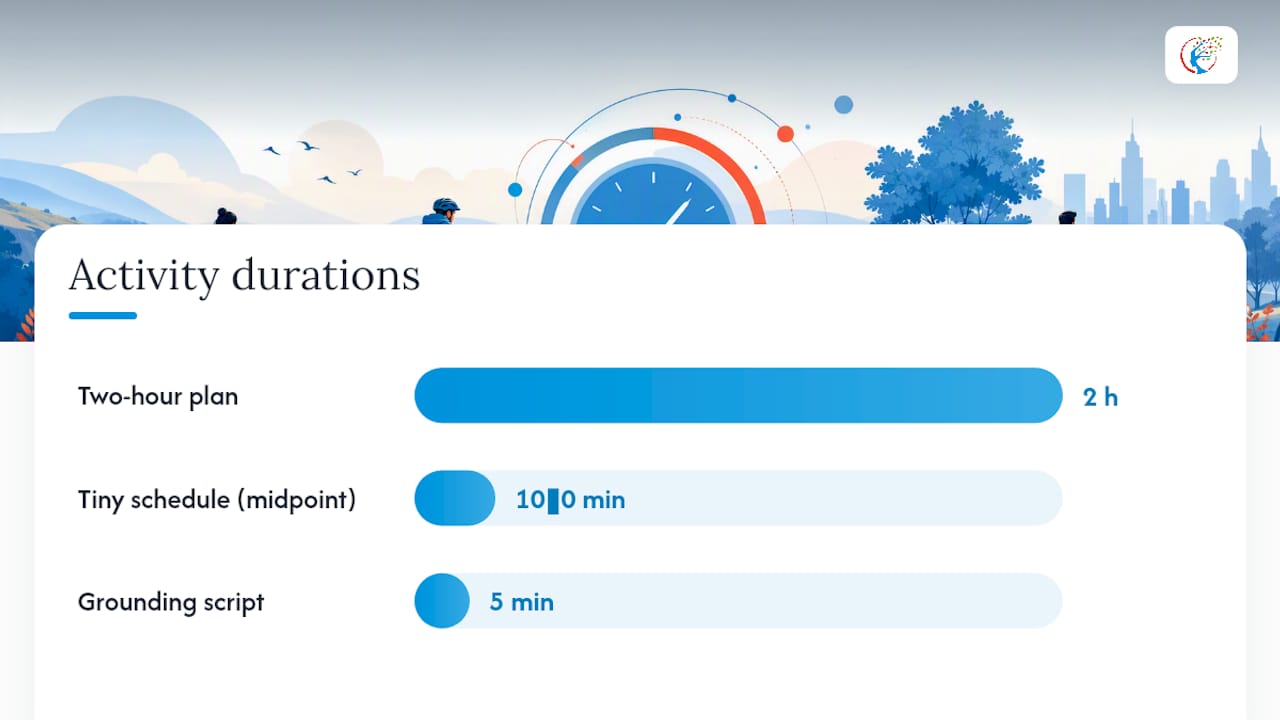
Small, repeated actions beat sporadic big efforts. A tiny activity schedule, just 10 to 20 minutes, works better than a two-hour plan you’ll abandon by day two.
Pick one pleasurable activity and one mastery task for tomorrow (music, a short walk, tidying one drawer).
Log your mood before and after on a simple 1 to 10 scale.
Repeat for three days, then look for patterns rather than judging any single day.
A mood diary doesn’t need to be elaborate. Three prompts each evening are enough: what happened, how you felt, what you did about it. Patterns emerge fast, mornings might consistently score lower than evenings, or social contact might reliably lift your number by a point or two.
For grounding in the moment, try this five-minute script: breathe in for four counts, hold for four, out for six, and repeat for ten cycles while naming five things you can see. It won’t fix the underlying depression, but it interrupts acute spikes of distress long enough to make the next decision easier.
Habit triggers help this stick, tie the mood check to something automatic, like your first coffee. Review after a week: if a task consistently gets skipped, shrink it further rather than dropping it.
Pro Tip: If mood tracking on paper feels like a chore, a structured mood journal with prompts built in removes the blank-page problem that stops most people after day three.
Rebuilding social connection without overwhelming yourself
Withdrawal and low mood reinforce each other in a loop that feels protective but usually deepens isolation. Social connection acts as a physiological buffer against stress, and the research consistently shows small, manageable goals work better than trying to reintegrate all at once.
Send one low-pressure text: “Thinking of you, no need to reply” removes the pressure of a conversation.
Set a single weekly goal, one call, one coffee, one class, rather than a full social calendar.
Look into peer support groups or recovery colleges as a lower-stakes step than one-to-one socialising.
If isolation has become entrenched, structured guidance on rebuilding connection gradually can help map out the smallest realistic next step.
Peer support works alongside clinical care, not instead of it, particularly where isolation has become severe or long-standing.
Lifestyle self-care: sleep, movement and daily routine
Sleep hygiene starts with consistent timing: same wake time every day, even weekends, does more for mood regulation than sleeping in ever will. Get daylight within an hour of waking, and cut naps to 20 minutes if you need one at all.
Fix a wake time and stick to it within 30 minutes, daily
Get outside for daylight exposure early, even five minutes helps
Start exercise with walking, not the gym
Reduce alcohol, since it disrupts sleep architecture and worsens low mood over time
Keep one hygiene micro-habit non-negotiable (brushing teeth, showering) when energy is low
Walking 20 to 40 minutes, three times a week has consistent evidence behind it for lifting mood, and it’s the NHS’s own starting recommendation. Diet matters too, not as a cure, but stable blood sugar through regular meals reduces the energy crashes that make everything else harder to manage.
Supplements and complementary approaches: what the evidence actually says
St John’s wort has evidence supporting effectiveness for mild to moderate depression, but it interacts seriously with antidepressants, contraceptives and other medications, and it can trigger mania in people with undiagnosed bipolar disorder. That risk profile means it’s never a casual add-on.
St John’s wort: some evidence of benefit, serious interaction risk with prescribed medication
Omega-3: promising but mixed evidence across trials
Saffron and 5-HTP: emerging but inconsistent evidence, caution advised with other serotonergic medication
Any supplement: check with a GP or pharmacist before starting, especially alongside existing prescriptions
None of these substitute for therapy or urgent care. Treat them as a conversation to have with a professional, not a shortcut around one.
When self-help isn’t enough: therapy, medication and crisis support
If self-help hasn’t shifted things after several weeks, or symptoms are moderate to severe, it’s time to escalate.
Book a GP appointment and ask directly about NHS Talking Therapies, either self-refer online or through your GP.
Expect an initial assessment, then likely CBT or another structured therapy, with high-intensity options for more persistent cases.
If you’ve had therapy without full recovery, ask whether MBCT is available as a further-line option.
In crisis, contact Samaritans, NHS 111, or emergency services immediately, and keep a written safety plan with contacts you trust.
A note on combining self-help with guided support
Some people manage well with self-help alone. Others do better with structure and company through the process, which is where guided programmes or experiential approaches fit. These sit alongside medical care, never in place of it, and they’re worth trying only once urgent needs are addressed. If your own attempts stall, that’s the moment to ask for help, not evidence you’ve failed.
— Paul
Structured support if self-help alone isn’t quite landing
If you’ve worked through the steps here and still feel stuck, that’s often a sign you’d benefit from guided structure rather than more solo effort. An online course offers structured video lessons and exercises for anxiety and depression, designed for people who want a clear path rather than another blank page to fill in alone.

For those drawn to a more experiential route, one-to-one Quantum Healing Hypnosis Technique (QHHT) sessions and energy healing work are available, aimed at emotional blockages and deeper personal insight alongside whatever medical care you’re already receiving. These are optional complements, not emergency responses, and they suit people who want guided depth rather than another self-directed worksheet. Read more about what a QHHT session actually involves, or check the course details and book a slot that fits your week.
This article is general information, not a substitute for advice from a qualified doctor. Consult a qualified healthcare professional about your own circumstances before acting on anything here.
Sources
Recommended
Comments