Depression spiritual healing: a safe, practical UK guide


Spiritual healing can meaningfully reduce depressive symptoms for some people, but only when used alongside clinical care, not instead of it. A pilot randomised controlled trial investigating spiritual healing as an adjunct to usual care randomised 28 adults with moderate depression to either ten healing sessions plus usual care, or usual care alone. The results were promising enough to warrant further investigation, and observational data from the same research group recorded a notable drop in symptom scores after multiple sessions. This is not a cure. It is a signal worth taking seriously.
If you are in crisis right now: call 999 or go to your nearest A&E if you are in immediate danger. Contact the Samaritans on 116 123 (free, 24 hours) or call NHS 111 for urgent mental health support. Do not wait.
A transparency note: this article is published by Paul Stebles, a UK practitioner offering QHHT and energy healing in Orpington. That is a conflict of interest worth naming. The guidance here is written to be genuinely useful regardless of whether you ever book a session.
Table of Contents
What does the research actually say about spiritual healing and depression?
What types of spiritual healing do people use for depression?
How do you try spiritual healing for depression safely in the UK?
How do you choose a spiritual healer or QHHT practitioner in the UK?
When is spiritual healing not appropriate, and what are the risks?
Paulstebles: QHHT and energy healing for depression in Orpington
What does the research actually say about spiritual healing and depression?
The evidence base is real but modest. The pilot RCT protocol published in BMJ Open is the most rigorous study available in this specific area. It was designed to test feasibility, not to deliver a definitive verdict, and its small sample size means the results cannot be generalised with confidence. What it does establish is that a structured spiritual healing intervention can be delivered safely alongside usual care, that participants tolerate it well, and that the design is viable for a larger trial.
Study detail | What the pilot found |
Design | Pilot RCT with qualitative interviews and feasibility outcomes |
Sample size | N = 28 adults with moderate depression |
Intervention | 10 spiritual healing sessions plus usual care |
Control | Usual care alone |
Primary focus | Feasibility, safety, and preliminary symptom change |
Adverse effects | Low incidence of serious adverse effects reported |
Beyond that trial, a faith-based spiritual intervention pilot examined six weekly sessions structured around themes including forgiveness, hope, and gratitude. It reported preliminary effectiveness and explored plausible healing mechanisms, adding to a small but growing body of observational evidence.
One figure worth anchoring to: the observational data recorded a mean symptom score reduction from 4.7 to 2.3 after a mean of 4.1 sessions. Observational, uncontrolled, and therefore not proof of causation — but not nothing either.
On the mechanistic side, research linking faith-based practices to BDNF changes suggests a plausible neurophysiological pathway. Brain-Derived Neurotrophic Factor supports synaptic plasticity and neuronal survival, and its suppression is associated with stress-related disorders including depression. Prayer and meditation appear to increase serum BDNF levels, which offers one biological explanation for why some people feel better.
A conceptual framework for spiritually integrated treatment published in a peer-reviewed journal recommends integrating spiritual approaches into clinical assessment and treatment planning, while flagging real obstacles: fragmented care, boundary concerns, and the risk of spiritual bypassing. The limits are genuine. Small samples, heterogeneous methods, potential placebo effects, and the absence of large-scale RCTs all constrain what can be claimed. Anyone telling you the evidence is conclusive is overstating it.
How can spiritual healing reduce depressive symptoms?
The core mechanisms are: restored existential meaning, reduced rumination, therapeutic alliance, somatic regulation, and possible neurochemical effects including BDNF changes. Each operates differently, and understanding which one is most relevant to your situation helps you choose the right practice.
Existential meaning and purpose. Depression often involves a collapse of meaning, a sense that nothing matters and no future is worth reaching for. Spiritual practice, whether prayer, meditation, or guided regression, can reconnect a person to a felt sense of identity and purpose. A spiritually integrated treatment framework specifically identifies existential concerns as a target for this kind of intervention.
Interrupting rumination. Repetitive negative thinking is one of depression’s most persistent features. Breath-focused prayer and mindful recitation redirect attention toward present-moment awareness when cognitive strategies have stopped working. The mechanism is simple: you cannot ruminate and attend to breath simultaneously.
Therapeutic alliance and social support. Sitting with a skilled, compassionate practitioner creates a relational container that has its own therapeutic value, separate from any specific technique. This is not unique to spiritual healing, but it is real.
Somatic and emotional release. Depression is held in the body as much as the mind. Energy healing modalities and body-aware spiritual practices create conditions for emotional material to surface and be processed. Naming and safely containing difficult emotions, including rage, is part of genuine healing rather than a side effect to manage.
Neurophysiological effects. The BDNF research noted above suggests that regular meditative and faith-based practice may support the biological conditions for mood recovery, not just the psychological ones.
Consider two scenarios. Someone whose depression is driven primarily by rumination will likely benefit most from breath-focused prayer or a contemplative practice that interrupts the thought loop. Someone whose depression is rooted in existential despair, a loss of identity after bereavement or a major life change, may respond better to spiritual direction or a guided regression process that reconnects them to a deeper sense of self.
Pro Tip: Keep a simple daily log: note your mood (1–10), sleep quality, and whether you practised that day. After four weeks, patterns become visible. Share the log with your GP or therapist so they can see what is shifting.

What types of spiritual healing do people use for depression?
The most commonly used categories are prayer and spiritual disciplines, contemplative practices and meditation, energy healing, guided imagery and regression hypnotherapy, and pastoral counselling or spiritual direction. Each has a different entry point and a different set of expectations.
Prayer and spiritual disciplines. Structured prayer, whether liturgical or spontaneous, provides rhythm, community, and a relational frame with something larger than the self. It is low-cost, widely accessible, and carries almost no risk of harm. The limitation is that it works best within an existing faith framework; without that, it can feel hollow.
Contemplative practices and meditation. Mindfulness-based approaches, including Mindfulness-Based Cognitive Therapy (MBCT), have the strongest evidence base of any spiritual or contemplative intervention for depression. MBCT is available on the NHS for recurrent depression. Secular meditation apps can supplement formal practice between sessions.
Energy healing (Reiki, chakra balancing, Johrei). Practitioners work with the body’s perceived energy field, often using light touch or hands held near the body. Sessions typically last 45–60 minutes and leave most people feeling calm and rested. The evidence base is limited, but reported adverse effects are low. The main caution: quality varies enormously between practitioners.
Guided imagery and regression hypnotherapy (QHHT). This approach uses deep relaxation and guided visualisation to access subconscious material, explore past experiences, and reframe limiting beliefs. A QHHT session is typically longer than most therapy appointments, often two to three hours, and involves a detailed pre-session consultation. It suits people who want to understand the roots of their emotional patterns rather than just manage symptoms. You can read more about what regression hypnotherapy involves before deciding whether it fits.
Pastoral counselling and spiritual direction. A trained spiritual director or pastoral counsellor offers a reflective, non-directive space to explore faith, meaning, and emotional experience together. This is particularly useful when depression has a strong existential or grief component.
A note on anger: contemplative traditions consistently recommend processing rather than suppressing strong emotions. Spiritual ways to release anger, such as guided breath work, somatic movement, or directed prayer, are part of several of these approaches. Anger release spiritually is not about performing calm; it is about creating conditions where the emotion can move through rather than stay stuck.
How do you try spiritual healing for depression safely in the UK?
Try spiritual healing as an adjunct to your existing care, agree a monitoring plan with your clinician before you start, and set clear criteria for when you will escalate to clinical support. That is the non-negotiable starting point.
Tell your GP or mental health clinician. Before booking any session, let your existing care team know. This is not about asking permission; it is about safety. If you are on antidepressants or in active psychological treatment, your clinician needs to know what else you are doing.
Set a clear timeframe and goals. A 4–8 week trial period is reasonable for most spiritual practices. Define what you are hoping to notice: better sleep, less rumination, a greater sense of calm. Vague intentions produce vague results.
Choose a practitioner carefully. Use the checklist in the next section. Do not skip this step.
Start a monitoring log. Track sleep, appetite, mood (1–10), medication adherence, and any thoughts of self-harm, daily if possible. The anxiety and depression masterclass on the Paulstebles site includes structured exercises that can support this kind of self-monitoring.
Schedule a review. At the four-week mark, review your log with your GP or therapist. If symptoms have worsened, stop the spiritual practice and prioritise clinical support.
Know your crisis plan. Write down: Samaritans (116 123), NHS 111, your GP’s out-of-hours number, and your nearest A&E. Keep it somewhere visible.
Crisis warning signs to act on immediately: persistent thoughts of self-harm or suicide, inability to care for yourself, rapid worsening of symptoms over 48–72 hours, or any psychotic symptoms. These require clinical help, not a healing session.
Consistency matters more than intensity. Tradition-based practices often recommend a 40-day commitment to observe genuine personality-level shifts. A single session rarely produces lasting change; a regular practice, even ten minutes of breath-focused prayer daily, tends to compound.
How do you choose a spiritual healer or QHHT practitioner in the UK?
Look for clear safeguarding policies, transparent training history, written consent, defined clinical boundaries, and a willingness to liaise with your GP. A practitioner who ticks all five of those boxes is rare enough that finding one is worth the effort.
Questions to ask before booking:
What training have you completed, and with which organisation?
Do you have professional indemnity insurance?
What is your safeguarding policy, and what happens if I disclose suicidal thoughts?
Will you communicate with my GP if needed?
Do you use written consent forms?
What are your fees, session length, and cancellation policy?
What follow-up support do you offer between sessions?
Red flags to walk away from:
Any promise of a cure for depression or other diagnosed conditions.
Pressure to reduce or stop prescribed medication.
No written consent process or safeguarding policy.
Reluctance to discuss their training or qualifications.
Discouraging you from continuing with NHS or clinical care.
No clear referral pathway if your needs exceed their scope.
On remote versus in-person: remote energy healing sessions are widely offered and many clients find them equally effective for emotional work. QHHT, by contrast, typically requires in-person attendance because of the depth of the relaxation state involved. If you are in a period of acute distress, in-person sessions offer a safer container and easier access to immediate support if needed.
Always tell your GP you are seeing a spiritual healer. The spiritually integrated treatment framework specifically recommends that spiritual approaches be integrated into clinical assessment, not run in parallel without communication.
What happens in a spiritual healing or QHHT session?
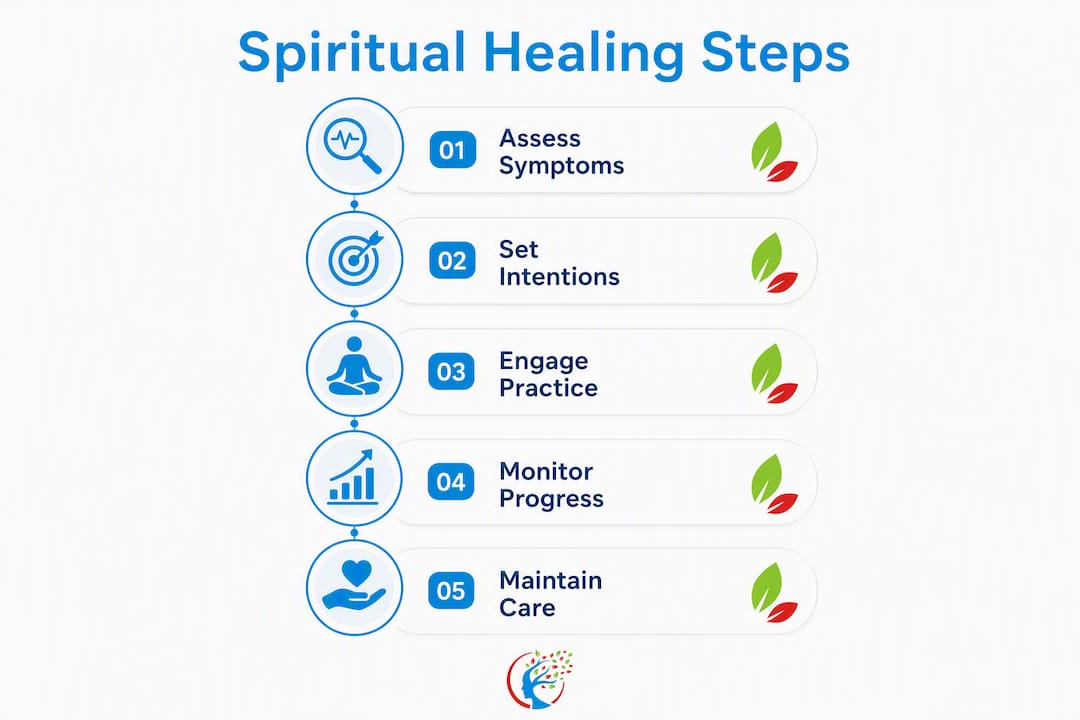
A typical session moves through four phases: check-in and assessment, intention setting, the core practice, and a grounded debrief with aftercare guidance. The specifics vary by modality, but the structure is broadly consistent.
Phase | Typical duration | What happens |
Arrival and check-in | 10 minutes | Practitioner reviews your current state, recent history, and any concerns |
Intention setting | 5–10 minutes | You and the practitioner agree the focus for the session |
Core practice | 45–60 minutes | Energy work, guided regression, or contemplative practice depending on modality |
Grounding and debrief | 15 minutes | Practitioner helps you return to ordinary awareness; you discuss what arose |
QHHT sessions run longer than most, often two to three hours in total, because the regression process requires a gradual deepening of relaxation before the subconscious material becomes accessible. Energy healing sessions are typically shorter, around 60 minutes.
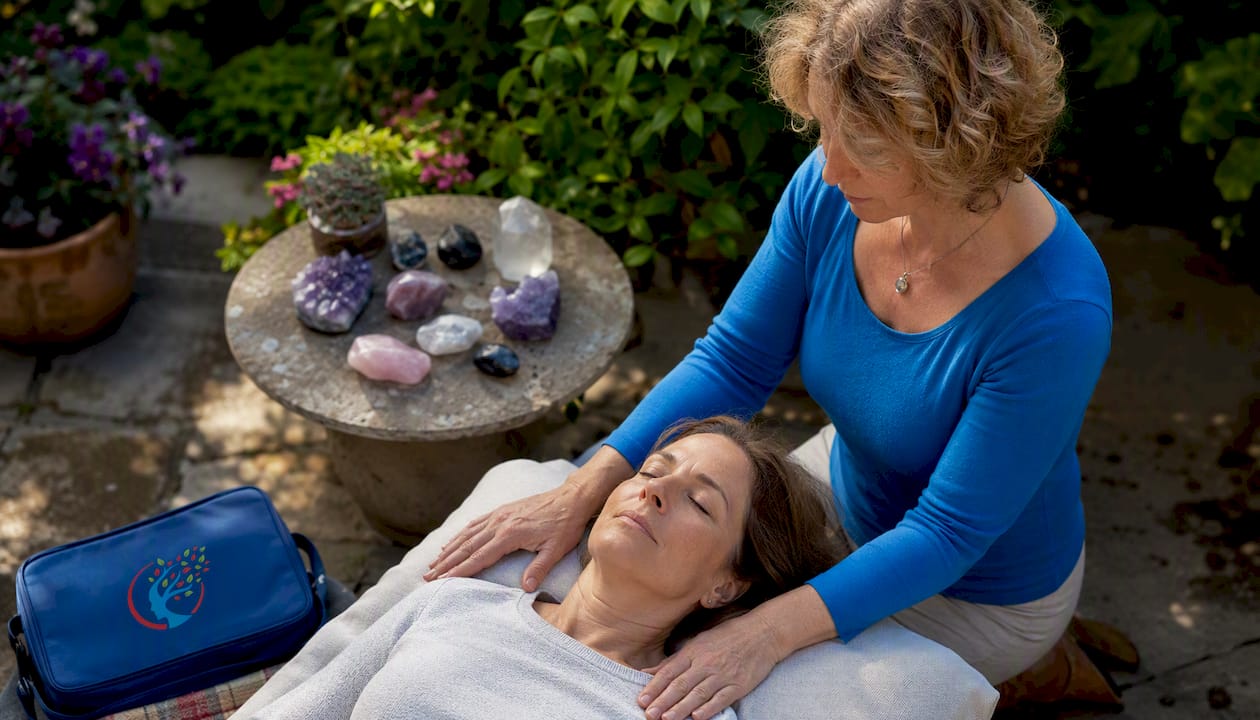
Common immediate effects include deep relaxation, emotional release (sometimes tears, sometimes laughter), and a temporary sense of clarity or lightness. Some people feel tired for 24–48 hours afterwards, which is normal and usually resolves with rest, hydration, and gentle movement. Occasionally, old memories or emotions surface in the days following a session; this is part of the process, not a sign that something went wrong.
Pro Tip: Plan a quiet evening after your first session. Avoid scheduling demanding work or social commitments immediately afterwards. A short walk, a warm drink, and time to write down what came up will help you integrate the experience.
Realistic outcomes vary considerably. Some people notice a meaningful shift after one or two sessions; others need six or more before anything changes. A practitioner who promises dramatic results quickly is not being straight with you. The energy healing FAQ on the Paulstebles site covers common questions about what to expect in more detail.
When is spiritual healing not appropriate, and what are the risks?
Spiritual healing is not a substitute for emergency psychiatric care, prescribed medication where clinically indicated, or evidence-based psychotherapy such as CBT or MBCT. That is not a caveat buried in the small print; it is the central safety principle.
The spiritually integrated treatment literature identifies spiritual bypassing as the most frequent problem when spiritual healing is used for psychological conditions. It looks like progress, the person seems calmer, more philosophical, less reactive, but the underlying material has not been touched. Genuine healing involves contact with difficult emotions, not transcendence of them.
Other common pitfalls:
Stopping antidepressants or other prescribed medication without medical advice, because a practitioner or community suggests spiritual practice is sufficient.
Working with an unqualified or uninsured practitioner who lacks the skills to hold difficult material safely.
Using spiritual practice as the only response to worsening symptoms.
Seek urgent help if you experience: suicidal thoughts or plans, self-harm, inability to function day-to-day, or any psychotic symptoms. Contact NHS 111, your GP, or go to A&E. Samaritans are available on 116 123 at any hour.
On the regulatory context: there is no central statutory regulator for spiritual healers in the UK. Unlike physiotherapists or psychologists, spiritual healers are not required to register with a statutory body. This means the burden of checking credentials falls on you. Professional membership of bodies such as the Complementary and Natural Healthcare Council (CNHC) or the UK Healers association offers some assurance, but membership alone is not a guarantee of competence. Ask about insurance, training, and safeguarding policies directly.
This article provides general information, not medical or psychological advice. If you are considering changing your treatment or are concerned about your mental health, speak with your GP or a qualified mental health professional.
Key takeaways
Spiritual healing can reduce depressive symptoms for some people when used as a monitored adjunct to clinical care, but it requires careful practitioner selection, consistent practice, and clear safety criteria.
Point | Details |
Adjunct, not replacement | Spiritual healing works best alongside NHS or clinical care, never instead of prescribed treatment. |
Pilot RCT evidence exists | A 28-person pilot RCT found the intervention feasible and safe; observational data showed symptom scores dropped notably after multiple sessions. |
Monitor and review | Keep a daily mood log and review it with your GP or therapist at four weeks; stop if symptoms worsen. |
Know the red flags | Promises of cure, pressure to stop medication, and no safeguarding policy are reasons to walk away from any practitioner. |
Paulstebles offers UK-based options | Paulstebles provides QHHT, energy healing, and an online course for depression in Orpington, with a safety-first, GP-collaborative approach. |
What I have seen working with people through depression
Most people who come to me carrying depression are not looking for a miracle. They have usually already tried medication, therapy, or both, and something is still missing. What they describe, almost universally, is a disconnection from themselves: from meaning, from the body, from any felt sense that things could be different. That is where spiritual healing has something to offer that clinical approaches sometimes do not reach.
My approach combines QHHT and energy healing, and I work with clients to ensure they remain connected to their GP or mental health team throughout. I do not ask anyone to choose between clinical care and this work. The two are not in competition.
The clients I see make the most progress when three things are in place: they are stable enough clinically to do deeper work, they have a monitoring plan agreed with their clinician, and they come with genuine curiosity rather than desperation. Desperation is understandable, but it tends to produce magical thinking, which is the enemy of real change.
I am a provider of the services described in this article. That is a conflict of interest, and you should weigh my perspective accordingly. What I can say honestly is that the people who benefit most are those who treat this as one part of a broader recovery, not the whole of it.
Paulstebles: QHHT and energy healing for depression in Orpington
If you have read this far and want to work with a UK practitioner who takes the safety-first, integrative approach described here, Paulstebles offers in-person QHHT sessions, remote and in-person energy healing, and a structured online course for anxiety and depression.
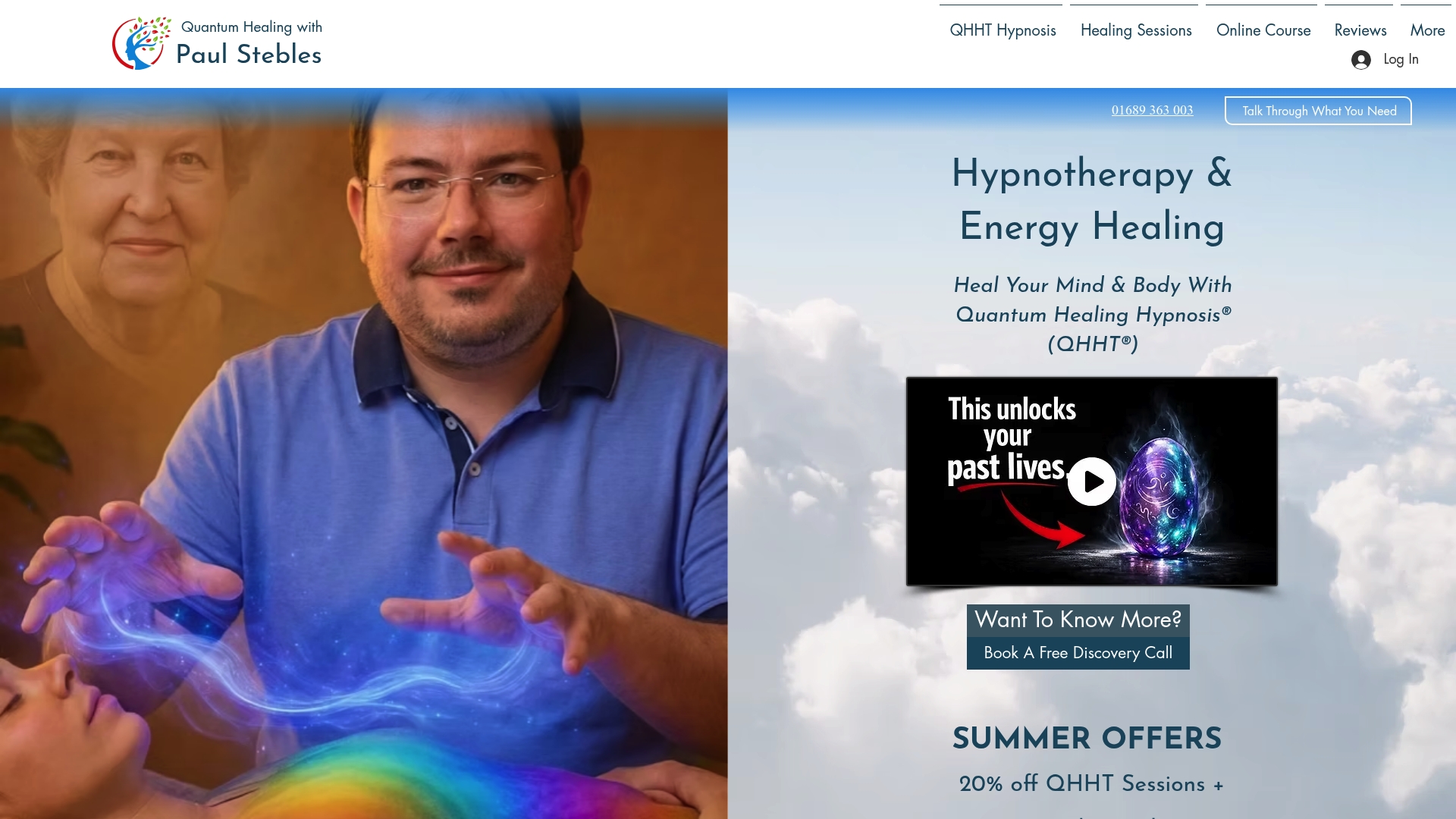
Every client is encouraged to remain in contact with their GP or mental health clinician throughout. Sessions are not positioned as a replacement for clinical care, and if your situation requires urgent clinical support, you will be told so clearly. The QHHT booking page covers session format, duration, and what to expect. For those who prefer to start with self-paced work, the online course for depression offers structured exercises and video content you can begin immediately. To book a session or ask a question, visit paulstebles.com.
Trusted UK resources and key studies to read next
The studies and resources below are the ones cited in this article. Bring any of them to your GP or mental health clinician if you want to discuss integrating spiritual healing with your current treatment.
Pilot RCT protocol: spiritual healing as adjunct to usual care for moderate depression — the most directly relevant clinical study; covers trial design, sample, and feasibility findings.
Faith-based spiritual intervention pilot study — six-session structured intervention with preliminary effectiveness data and mechanistic exploration.
BDNF and faith-based practices — mechanistic research linking meditative and prayer practices to neurophysiological markers relevant to depression.
Spiritually integrated treatment of depression: a conceptual framework — scholarly framework for integrating spiritual approaches into clinical care, including guidance on spiritual bypassing.
Complementary and holistic approaches for depression — accessible overview of the evidence base for complementary approaches, useful for sharing with a clinician.
UK crisis and mental health support:
Recommended
Comments