Energy Healing Preparation: Paul's Intake Scripts and a 3 Step Checklist

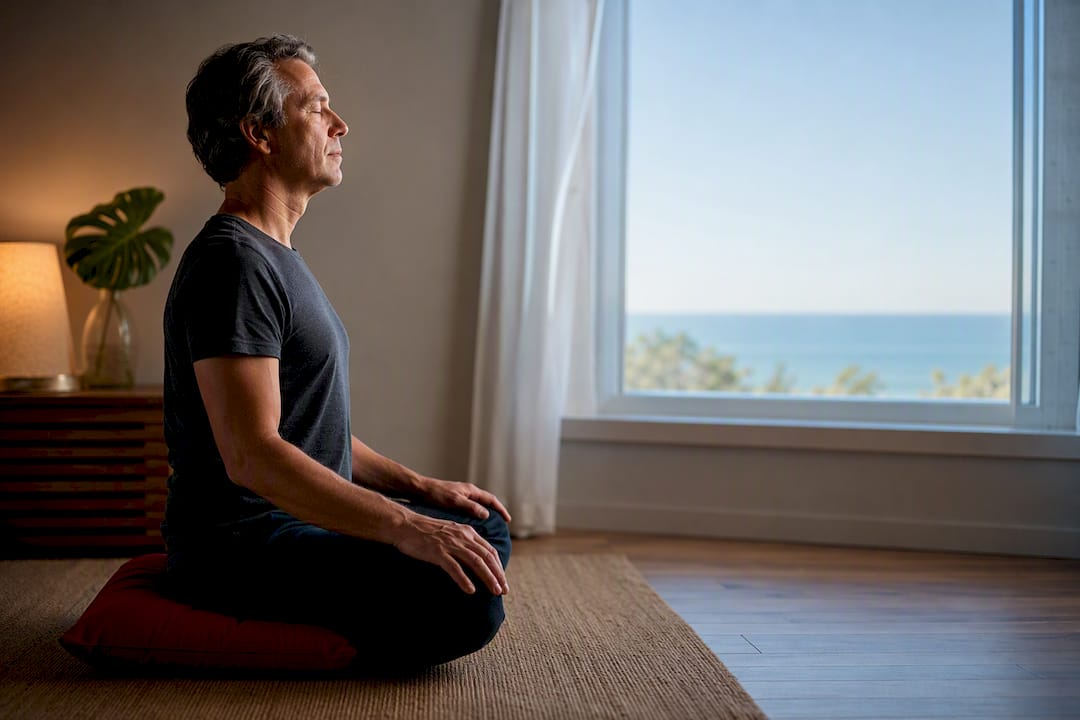
Set one clear, open intention, drink plenty of water, and skip alcohol or heavy meals for at least a day before your appointment. Build in quiet time before and after, whether you’re travelling to a session or logging on from home. Practitioners consistently find that this kind of energy healing preparation makes people more receptive during the work itself and steadier when they leave, making it worth treating as a genuine part of the session rather than an afterthought, as explained in the Frequently Asked Questions About Red Light Therapy resource on session optimisation and safety.
TL;DR:
Preparing at least 24 hours before includes avoiding alcohol and drugs, sleeping well, and noting any vivid dreams or coincidences.
Setting a flexible intention through breathwork, visualization, or heart-centered touch helps reduce resistance and enhances receptivity.
Dressing comfortably in loose, warm clothing and eating a light meal two to three hours prior improve relaxation and physical ease during the session.
Arriving early and clearly communicating your needs or health conditions ensures the practitioner can adapt the session for safety and comfort.
Aftercare involves hydration, gentle movement, restful routines, and monitoring emotions or symptoms over the following days for optimal integration.
Table of Contents
The 24-hour, 4-hour and 30-minute checklist before your session
Preparing for healing sessions works best in layers, starting a full day out and narrowing down to the final minutes before you begin.
24 hours before:
Get a proper night’s sleep where possible.
Skip alcohol and recreational drugs. Practitioner guidance generally recommends steering clear of both for at least a day either side of a session, since they can dull how clearly you process what comes up.
Jot down any vivid dreams or odd coincidences. Pre-session signs are more common than people expect.
Move your body gently. A walk or light stretch helps.
2 to 4 hours before:
Eat something light rather than a heavy meal.
Hydrate steadily rather than gulping water at the last minute.
Spend a few minutes standing barefoot on grass or simply breathing slowly.
Put screens down. Give your mind some quiet before you arrive.
30 to 10 minutes before:
Write your intention down in a sentence or two.
Use the loo. You don’t want a full bladder mid-session.
Set up your space: cushion, blanket, dim lighting.
Silence your phone and, for virtual sessions, log in five minutes early to check your connection.
How do you set an intention for energy healing?
An intention should be specific enough to give the session direction, but open enough that you’re not forcing a particular outcome. A workable template runs something like: “I’m open to releasing whatever is blocking me from feeling calm around my work. I trust that whatever comes up is what I need right now.” Notice the second sentence does the real work. It’s the permission slip.
The most common mistake is gripping the outcome too tightly. Wanting a specific result so badly that you white knuckle your way through the session tends to create resistance rather than ease, and practitioners often notice tension in clients who arrive determined to “fix” one exact thing rather than simply show up.
Three quick practices help loosen that grip before you begin:
Breathwork: four seconds in, hold for four, six seconds out, repeated for two minutes.
Simple visualisation: picture roots growing from your feet into the ground.
Heart-centred touch: one hand on your chest, noticing the rise and fall of breath for a minute.
Pro Tip: Say your intention out loud once, even if you’re alone in the car beforehand. Speaking it seems to anchor it more firmly than just thinking it.
What should you eat and wear before an energy healing session?
Food and clothing choices matter more than most people assume, mostly because comfort and steady blood sugar both affect how relaxed you can get.
Eat a light meal two to three hours beforehand. Think soup, a salad, or wholegrain toast rather than anything greasy, sugar-laden, or alcohol-adjacent, since heavy digestion tends to pull energy and attention away from the session itself.
A short burst of movement earlier in the day, even ten minutes of stretching or a brisk walk, helps release physical tension that can otherwise sit in the shoulders and jaw. Grounding exercises such as walking barefoot outdoors work well here too.
For clothing and comfort:
Wear something loose and warm. Rooms used for energy work are often kept cool.
Bring a blanket or small pillow if you tend to get cold or need extra back support.
Remove noisy jewellery, particularly bangles or long earrings, before lying down.
For virtual sessions, set up a supportive chair or bed where you can stay still for the session’s length without your arm going numb.
What happens when you arrive for a session?
Arriving with a little breathing room, rather than rushing straight from traffic or a meeting, changes how the first ten minutes of a session feel.
Arrive 10 to 15 minutes early (or log in that early for virtual sessions). This buffer lets you settle rather than arriving flustered, and it gives you room to ask questions before the practitioner begins.
Expect an intake conversation. Most practitioners ask about your general health, any recent surgery, pregnancy, and whether you’re managing a severe mental health condition. Taking Charge’s overview of a typical Reiki session notes that sessions commonly run 15 to 90 minutes and usually open with exactly this kind of check-in.
Say what you need clearly. If you’d rather the practitioner hover their hands above you instead of using direct touch, say so. The same goes for music versus silence, or needing extra pillows for a bad back.
For virtual sessions, check your camera angle, dim harsh lighting, put headphones in if you can, and find a private spot where you won’t be interrupted partway through.
What should you tell your practitioner about your health?
Energy healing sits alongside conventional medicine, not in place of it. NHS guidance on complementary therapies is explicit that these approaches should be used alongside standard treatment, with a clinician consulted for anything serious, and Cleveland Clinic’s overview of Reiki makes the same point: it’s non-invasive and widely considered safe, but it’s a complementary therapy rather than a substitute for evidence-based care.
That’s why disclosure matters. Pregnancy, recent surgery, open wounds, a severe mental health diagnosis, or medication that affects consciousness are all worth mentioning before you start, since a good practitioner will adapt around them, perhaps working with hands held above the body rather than direct contact, shortening the session, or pausing altogether if something concerning surfaces.
A 2024 NHS-trust policy on complementary energy therapy sets out exactly this kind of adaptation as standard practice: consent is confirmed before treatment begins, sessions are adjusted for medical circumstances, and appropriate records are kept when energy therapies are delivered in clinical settings.
If you’re dealing with anything that worries you physically, see your GP first and keep them in the loop about any complementary work you’re doing alongside treatment, as outlined in East & North Hertfordshire NHS Trust’s policy.
What should you do in the days after a session?
Aftercare shapes how much of a session actually sticks, and it doesn’t need to be complicated.
Straight afterwards:
Drink water. Energy work often leaves people more dehydrated than they expect.
Rest if you can, even twenty minutes lying down.
Move gently and eat something light rather than heading straight for a heavy meal.
Over the next 48 to 72 hours:
Journal anything that surfaces, dreams included.
Keep your routine soft. Skip big social plans or demanding work if you can.
Notice tiredness or sudden emotion. Both are common and usually pass within a day or two.
If low mood or physical symptoms persist beyond a few days, that’s worth mentioning to a GP rather than waiting it out. Our guide to Reiki aftercare covers the six steps most practitioners recommend in more depth, and if you’re weighing up whether one session was enough, our piece on session pacing explains how outcomes tend to build over several visits rather than one.
Templates Paul recommends before you book
A little structure before your appointment saves time once you’re in the room. Send these details ahead where you can: any current medical conditions, medication, pregnancy status, and whether you’d prefer hands-on or hands-above contact.
For your intention, try: “I’m open to understanding what’s been holding me back, and I trust the session to bring forward whatever’s most useful right now.”
Bring loose clothing and, for remote sessions, a quiet, private space with a stable internet connection. The practitioner typically provides the rest, including music, blankets for in-person visits, and a calm, unhurried pace throughout. Full details on formats and pricing sit on the booking page, and the energy healing FAQ answers most first-timer questions before you even arrive.
How do you clear your energy before a session?
Cleansing your energy field beforehand isn’t about ritual for its own sake. It’s about arriving without a backlog of the day’s stress sitting on top of you.
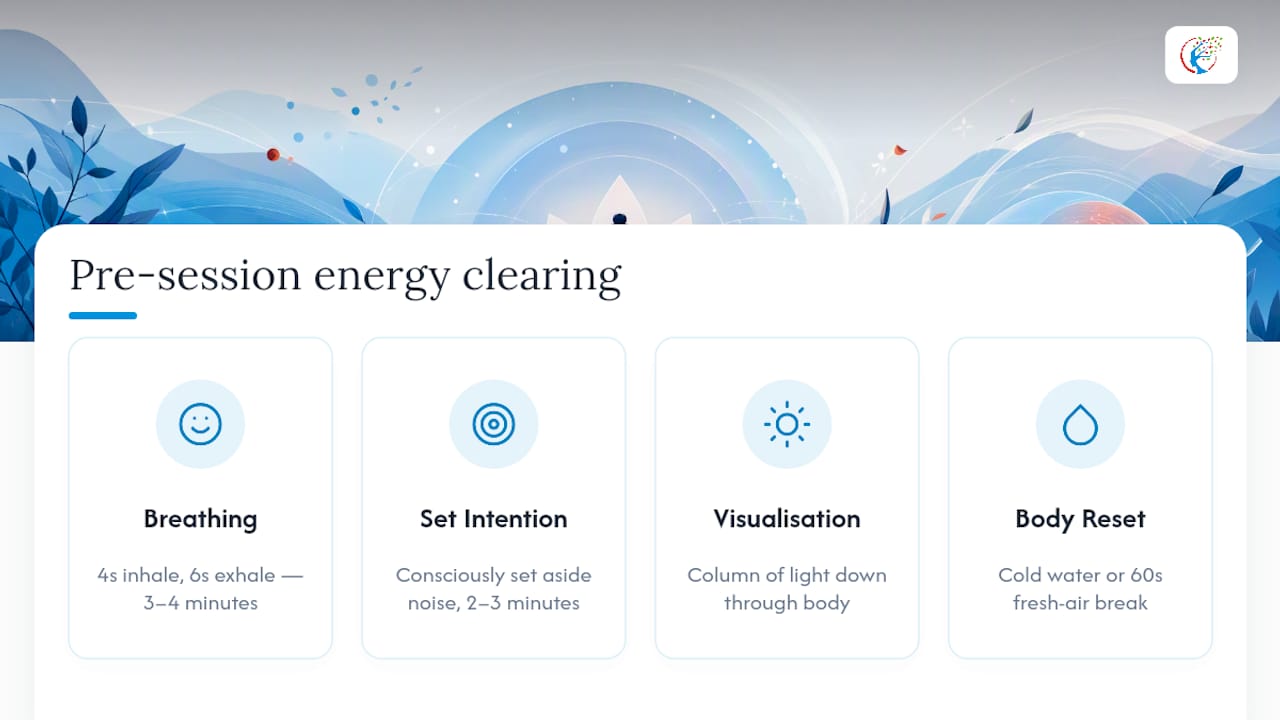
A few minutes of slow, conscious breathing does more here than people expect. Sit somewhere quiet, breathe in for a count of four, out for a count of six, and repeat for three or four minutes. Slowing the exhale like this calms the nervous system enough that you’re not walking into a session still buzzing from a commute or a work call.
Some people prefer working with smoke, such as burning a small amount of sage or palo santo in a well-ventilated room, while others simply run their hands an inch above their own body from head to feet, imagining static or heaviness being brushed away. Neither is a prerequisite. What matters more is intention: taking two or three minutes to consciously set aside the day’s noise before you start.
A short visualisation works well too: picture a column of light running from above your head down through your body and into the ground, sweeping away anything that isn’t useful to carry into the session. Splashing cold water on your wrists or stepping outside for fresh air for sixty seconds achieves something similar through the body rather than the imagination. Our piece on QHHT and the nervous system goes into why this kind of grounding actually changes how receptive you are, not just how you feel about it.
Which breathing exercises help you relax before healing?
Breath is the fastest lever you have over your nervous system, and it’s the one most people forget to use deliberately.
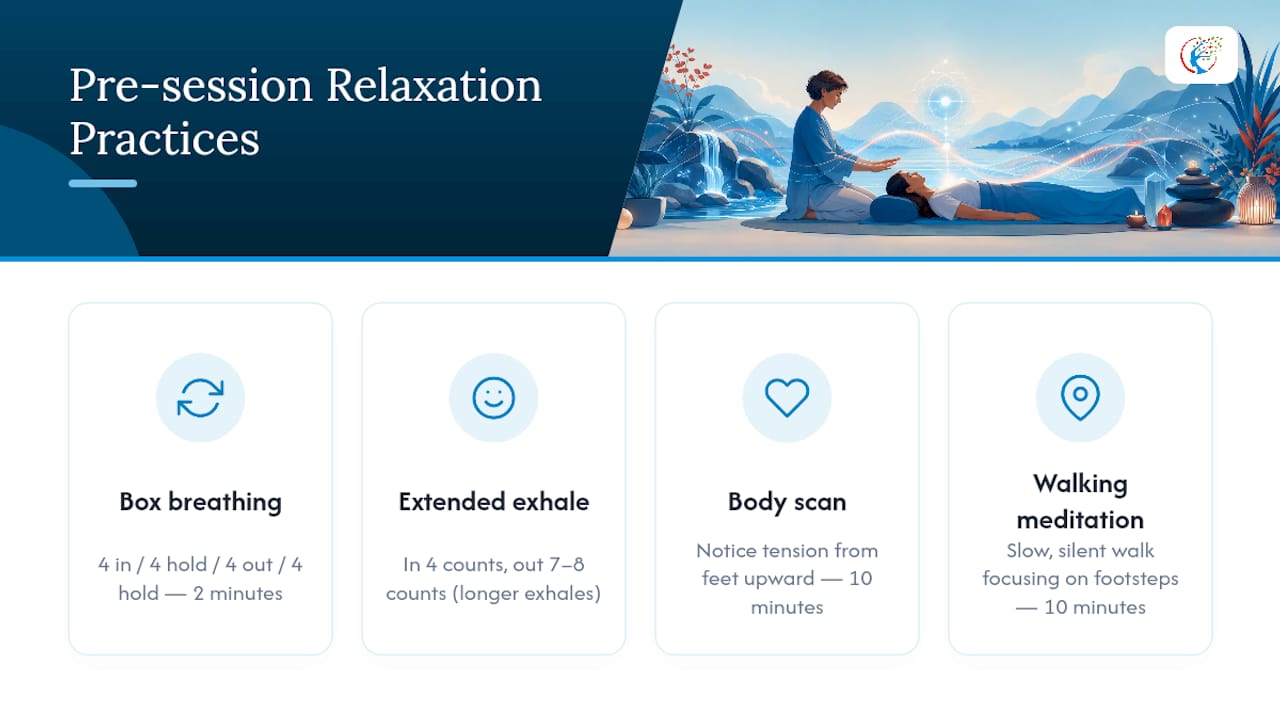
Box breathing works well as a pre-session reset: breathe in for four counts, hold for four, out for four, hold for four, and repeat for two minutes. It slows the heart rate and gives the mind something simple to focus on instead of spiralling through the day’s to-do list.
For a slightly deeper effect, try extended exhale breathing: in for four counts, out for seven or eight. Exhales longer than inhales activate the parasympathetic nervous system, which is the physiological state most conducive to receiving energy work rather than resisting it.
A short body scan meditation also helps. Starting at your feet and moving slowly upward, simply notice where you’re holding tension without trying to force it to release. Ten minutes is plenty.
If you’re new to meditation and find sitting still frustrating, walking meditation is a reasonable substitute: a slow, silent ten-minute walk with attention on each footstep does something similar to seated practice, just with less resistance for people who find stillness hard. None of these need to be perfect. The point isn’t to arrive in some flawless meditative state, just noticeably calmer than you were an hour before.
Paul’s brief note on why preparation matters
Preparation isn’t about performing readiness for the practitioner’s benefit. It’s about arriving with less static in the system, so the session has something clearer to work with. In practice, clients who’ve hydrated, set an intention, and given themselves a quiet hour beforehand tend to settle faster and process more, and they generally leave feeling steadier rather than disoriented. If any of this raises questions specific to your situation, get in touch before booking. It’s a conversation worth having early.
— Paul
Book a session or start the Rising Higher course
If this guide has you thinking about booking, a few options fit depending on what you’re after. QHHT sessions suit anyone wanting deep subconscious exploration or past-life work, priced at £369 for the standard format or £399 if you’d prefer Paul to travel to you. For lighter, more focused energy work, Evolve Quantum Healing and its remote equivalent are both £99, which makes remote sessions a genuinely accessible way to start if travel or timing is an issue.
If you’d rather work through structured material at your own pace first, the Rising Higher course walks through anxiety and low mood support with video lessons you can return to whenever you need them, separate from booking a live session.
Every booking begins with a short conversation about your health history and what you’re hoping to get from the session, exactly the kind of disclosure covered above, so nothing about the process should feel unfamiliar once you get there. If you’re ready, the booking page has live availability for both in-person and remote sessions.
Primary sources and further reading
The guidance in this article draws on established clinical and consumer health sources rather than opinion alone:
NHS — Complementary and alternative medicine, on using energy healing alongside, not instead of, conventional treatment.
Cleveland Clinic — Reiki, on safety and what to expect from energy therapies generally.
Taking Charge — What can I expect in a typical Reiki session?, covering typical formats and session length.
East & North Hertfordshire NHS Trust — Complementary energy therapy policy, on consent and safety adaptations in clinical settings.
This article is general information, not a substitute for advice from a qualified doctor. Consult a qualified healthcare professional about your own circumstances before acting on anything here.
Sources
FAQ
How long does a QHHT session usually last?
QHHT sessions are typically longer than a standard energy healing appointment because they involve a detailed pre-talk, the hypnosis itself, and time to integrate afterwards, often running several hours in total. Exact timing varies by practitioner, so check directly when booking through Paul’s booking page.
What are examples of energy healing practices?
Reiki, chakra balancing, cord cutting, and timeline healing are common examples, each working with the body’s energy field in slightly different ways. Cleveland Clinic’s overview describes these as non-invasive and generally well tolerated, though always complementary to standard medical care.
How is energy healing actually done?
Most sessions involve the practitioner placing their hands lightly on or just above the body while the client lies down, fully clothed, in a calm setting. Session length commonly ranges from 15 to 90 minutes, depending on the format and what’s being addressed.
Can I study or learn energy healing myself?
Many people start with self-healing techniques such as breathwork, grounding, and simple visualisation before moving on to formal training or attending sessions with a practitioner. For anyone wanting structured self-guided material, the Rising Higher course offers a video-based starting point.
What if I have a health condition. Should I still book a session?
Yes, in most cases, as long as you disclose it beforehand so the practitioner can adapt accordingly. Pregnancy, recent surgery, and severe mental health conditions are the details practitioners most commonly ask about, and NHS guidance recommends keeping your GP informed of any complementary therapy alongside ongoing treatment.
Recommended
Comments