Heart chakra healing: a practical step-by-step guide

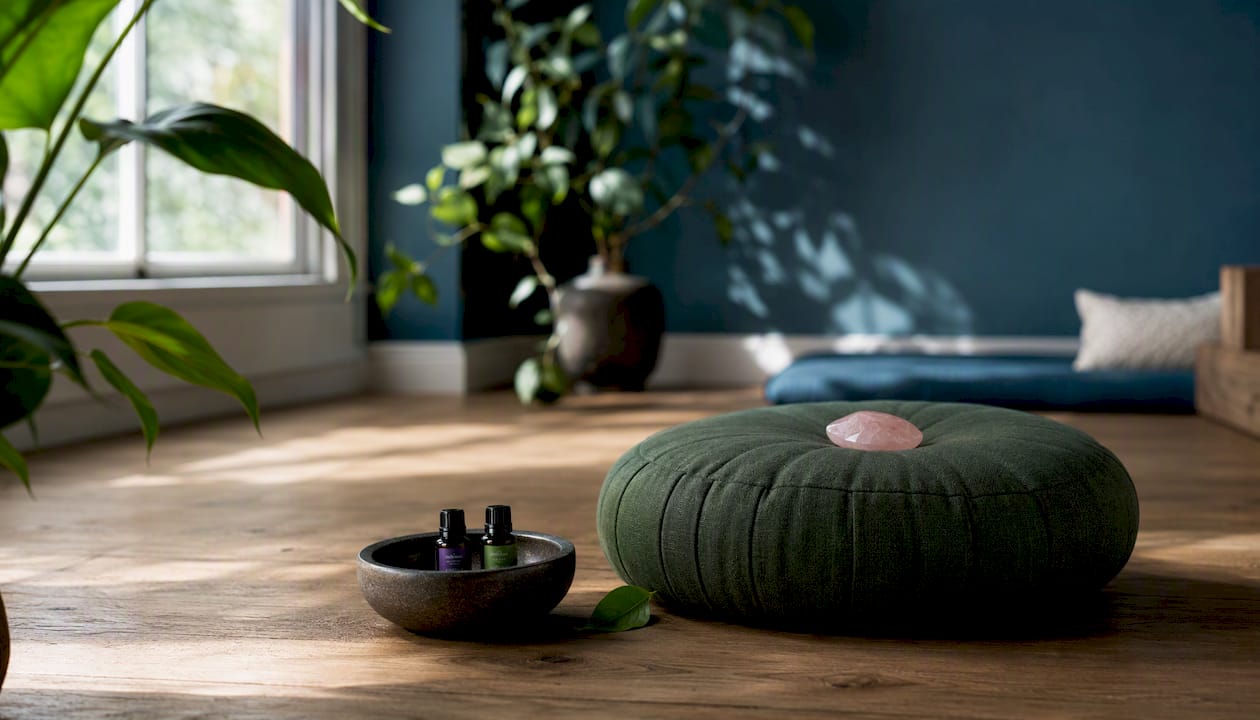
Heart chakra healing is a set of accessible practices — meditation, breathwork, movement and compassionate self-work — that restore openness, empathy and emotional balance at the chest centre known in Sanskrit as Anahata. The fastest way to start is this: place one hand on your heart, breathe in for four counts and out for six, and silently repeat “I am open to love and compassion.” Do that for five minutes now, and you have already begun.
The most effective entry practices, supported by both traditional teaching and modern physiological research, are:
Guided heart meditation with green or pink light visualisation
Paced breathwork (4 counts in, 6 counts out) to shift autonomic state
Simple chest-opening movement such as a supported bridge or gentle cobra
Daily affirmations using the hand-on-heart method
For your first week, commit to one five-minute practice each morning. By day seven, most people notice a small but real shift in how tightly they hold their chest.
Key takeaways
Consistent daily practice of paced breathwork, heart meditation and self-compassion exercises produces measurable emotional and physiological change within weeks, and the four-week plan above gives you a clear, structured way to begin.
Point | Details |
Start with breath | A daily 4–6 paced breathing practice is the lowest-risk, highest-impact entry point for heart chakra healing. |
Safety comes first | Stop any practice that triggers panic, severe chest pain or dissociation, and consult a clinician before continuing. |
Tools are adjuncts | Crystals (rose quartz, green aventurine, malachite), oils and sound (YAM, 639 Hz) support the work but do not replace breathwork and meditation. |
Progress is gradual | Most people notice emotional shifts within 2–4 weeks; physical ease in the chest typically follows at 4–8 weeks of consistent practice. |
Paulstebles offers support | For deeper heart-centred healing, Paulstebles provides energy healing and QHHT sessions in person and remotely. |
Table of Contents
What is the heart chakra (Anahata)?
Anahata translates from Sanskrit as “unstruck” or “unhurt” — a name that points to the idea of a love that exists before any wound. It sits at the centre of the chest, roughly at the level of the sternum, and in traditional yogic anatomy it is the fourth of seven primary chakras, bridging the lower three (earth, water, fire) with the upper three (sound, light, consciousness).
Its associated element is air, which is why breath is the most direct physical route into this centre. The colour most commonly linked to Anahata is green, representing growth and renewal, though pink appears in many modern practices to emphasise self-compassion. The bija mantra is YAM, chanted or hummed to create a vibrational resonance at the chest.
In modern terms, the heart chakra maps loosely onto what researchers call the cardiac-autonomic system. HeartMath’s research on heart–brain communication shows that the heart sends more signals to the brain than the brain sends to the heart, and that those signals directly influence emotional processing and perception. When you feel your chest tighten in grief or open in joy, that is not metaphor — it is physiology. Chakra language gives that experience a framework and a set of practices to work with it deliberately.
What does a balanced or blocked heart chakra feel like?
The clearest way to self-assess is to notice patterns across a few days, not a single moment. Emotions fluctuate; patterns reveal the underlying state.
Balanced versus blocked: a quick comparison
Balanced heart chakra | Blocked heart chakra |
Genuine empathy without losing yourself | Emotional numbness or flatness |
Healthy boundaries in relationships | Chronic over-giving or martyrdom |
Ability to grieve and recover | Prolonged, stuck grief |
Self-compassion alongside compassion for others | Harsh inner critic, self-blame |
Ease in giving and receiving affection | Fear of intimacy or rejection |
Relaxed, open posture | Rounded shoulders, tight chest |
Breathing that feels full and easy | Shallow, restricted breathing |
Forgiveness as a process you can engage | Resentment that replays on a loop |
An overactive presentation is less often discussed but equally real: relentless self-sacrifice, compulsive caretaking, or an inability to say no are all signs the heart centre is dysregulated in the other direction. Numbness and over-giving are two faces of the same imbalance.
Self-assessment prompts (sit quietly and answer honestly):
When someone offers you genuine help, do you deflect or feel uncomfortable?
Can you name three things you genuinely like about yourself without qualifying them?
Do you hold your breath when someone gets emotionally close?
Is there a person or event you have been unable to forgive for more than two years?
A “yes” to two or more of these is not a diagnosis, but it is a useful signal to take the practices in this guide seriously.
Pro Tip: Keep a short journal for three days before starting any formal practice. Note your chest sensations, breathing patterns and emotional tone each morning. That baseline makes progress far easier to spot later.
What causes a blocked heart chakra?
Blockages rarely come from a single event. They accumulate through repeated emotional experiences that teach the nervous system that openness is unsafe.
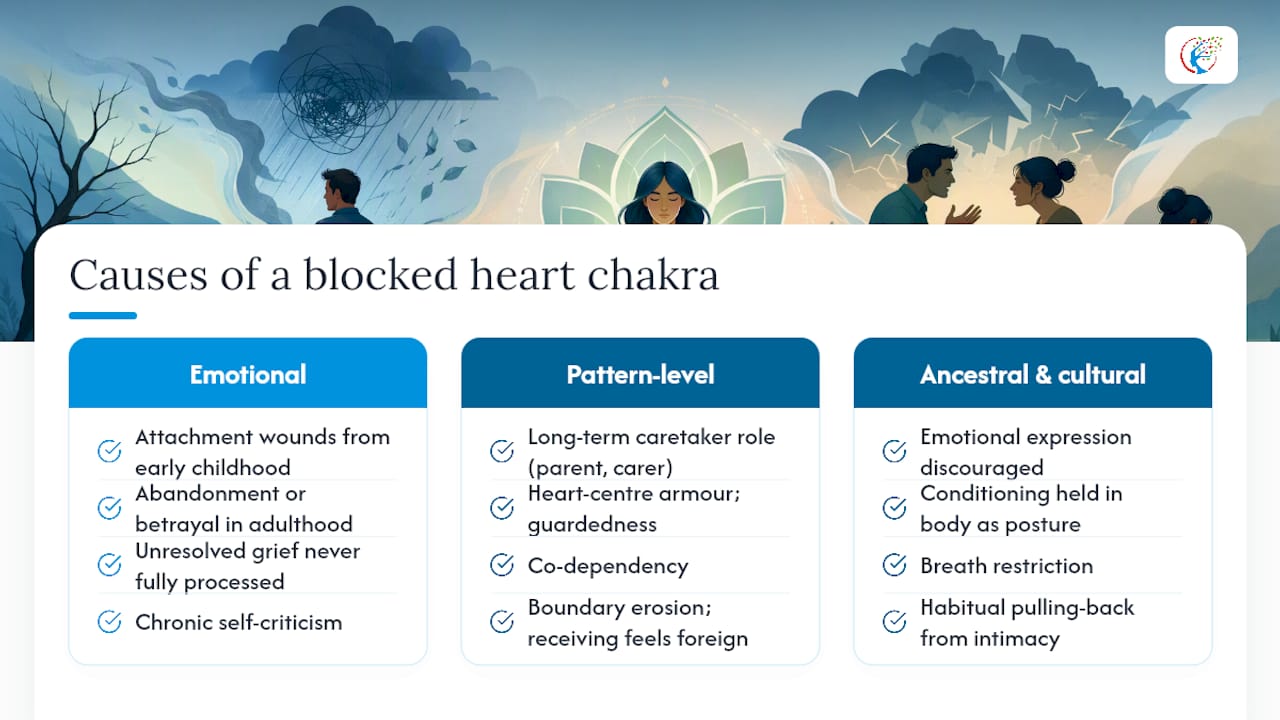
The most common emotional causes are attachment wounds from early childhood (inconsistent caregiving, emotional unavailability), experiences of abandonment or betrayal in adult relationships, and unresolved grief that was never fully processed. Chronic self-criticism is particularly corrosive because it turns the heart’s natural capacity for compassion inward as a weapon rather than a resource.
Pattern-level causes are subtler. Someone who has spent years in a caretaker role — whether as a parent, a carer for an ill relative, or a “fixer” in friendships — often develops what practitioners describe as heart-centre armour: a protective guardedness that began as a survival strategy and calcified into a default state. Co-dependency and boundary erosion work similarly. The person gives so consistently that receiving feels foreign, even threatening.
Ancestral and cultural patterns also play a role. Many people in the UK grew up in households where emotional expression was discouraged, and that conditioning sits in the body as posture, breath restriction and a habitual pulling-back from intimacy.
When to seek clinical support: if your heart chakra work surfaces flashbacks, panic attacks, severe depression, or any thoughts of self-harm, stop the practices and contact a trauma-informed therapist or your GP. The NHS offers talking therapies through IAPT (now NHS Talking Therapies), and organisations such as BACP can help you find an accredited therapist. Chakra practices are adjuncts to clinical care, not replacements for it.
Evidence, safety and when to involve a clinician
The practices in this guide are not fringe. Peer-reviewed research catalogued on PMC confirms that mind-body interventions produce measurable physiological changes relevant to emotional regulation, including shifts in autonomic nervous system activity, cortisol levels and inflammatory markers. That does not mean chakra theory is a clinical diagnosis — it means the practices themselves (breathwork, meditation, movement) have a credible evidence base.
Heart-rate variability (HRV) is the most useful physiological marker here. HRV measures the variation in time between heartbeats; higher variability generally indicates a more flexible, resilient autonomic system. Paced breathing at roughly six breaths per minute is thought to improve heart rate variability, which is why the 4–6 count breathing pattern recommended throughout this guide is more than a relaxation trick.
Practice | Evidence base | Safety note |
Paced breathwork (4–6 counts) | HRV research, autonomic regulation studies | Avoid if you have a respiratory condition; consult your GP first |
Heart-focused meditation | HeartMath cardiac-afferent signalling research | Stop if you experience dissociation or panic |
Chest-opening yoga poses | Musculoskeletal and mood research | Avoid deep backbends with neck, shoulder or spinal injuries |
Crystal and sound tools | Adjunct/complementary; no clinical trials | Safe as adjuncts; never substitute for medical treatment |
Essential oils (topical) | Aromatherapy literature | Always dilute; patch-test; avoid if pregnant without GP advice |
Clinical red flags — stop and seek help if you experience: severe or sudden chest pain, palpitations that feel abnormal, dizziness that does not resolve, or any cardiac symptom. These require medical assessment before any breathwork or physical practice.
For essential oils, always dilute in a carrier oil (typically 2–3 drops per 10 ml of carrier) and perform a patch test 24 hours before full use. For crystals, the safety concern is practical rather than energetic: do not ingest them, and keep small stones away from children.
Core daily practices to open and balance the heart chakra
Consistency over intensity is the principle that matters most here. Ten minutes every day outperforms a two-hour session once a week.
Guided heart meditation script
Find a comfortable seat. Close your eyes and place both hands on your chest. Take three natural breaths to arrive.
On your next inhale, imagine a soft green light gathering at the centre of your chest. It is warm, not hot. It pulses gently with your heartbeat.
As you exhale, let that light expand outward — first filling your chest, then your shoulders, then your whole torso.
Silently or aloud, chant or hum YAM (pronounced “yum”) three times. Feel the vibration at your sternum.
Bring to mind one person — including yourself — for whom you feel genuine warmth. Hold that feeling, not the thought, for 60 seconds.
Slowly open your eyes. Notice the quality of your breath.
Five minutes is enough. Ten is better. The HeartMath research on heart-focused attention suggests that deliberately shifting attention to the heart area and evoking a positive feeling can alter cardiac afferent signals to the brain within minutes.
Breathwork steps
Paced breathing is the fastest physiological lever you have. Follow these steps:
Sit upright or lie flat. Relax your jaw and shoulders.
Inhale through the nose for several counts, feeling your chest and belly expand.
Exhale through the nose or mouth for a longer count, letting the chest soften completely.
Repeat for 5 minutes. If six counts feels too long, start with a 4–5 ratio and build gradually.
This ratio encourages HRV coherence and activates the parasympathetic nervous system. For a more structured breathwork routine, oxygen-focused breathing exercises offer additional protocols adapted for stress relief and nervous system regulation.
Affirmations: the hand-on-heart method
Place your dominant hand on your heart. Take one slow breath. Then say each affirmation aloud or in a whisper, pausing after each one to notice any physical response:
“I give and receive love freely.”
“I forgive myself for what I did not know.”
“I am worthy of deep connection.”
“My heart is safe to open.”
The physical contact matters. Research on self-compassion suggests that touch activates the same soothing system as receiving care from another person.
Your 5-minute daily checklist
Morning: 2 minutes of 4–6 paced breathing
Morning: 1 affirmation, hand on heart
Midday: 30-second chest check-in (notice tension, soften it)
Evening: 2-minute heart meditation or YAM chant
Which yoga poses help open the heart chakra?
Chest-opening poses work by physically counteracting the protective rounding that accumulates with stress, grief and long hours at a desk. You do not need to be flexible. You need to be consistent.
Supported bridge pose
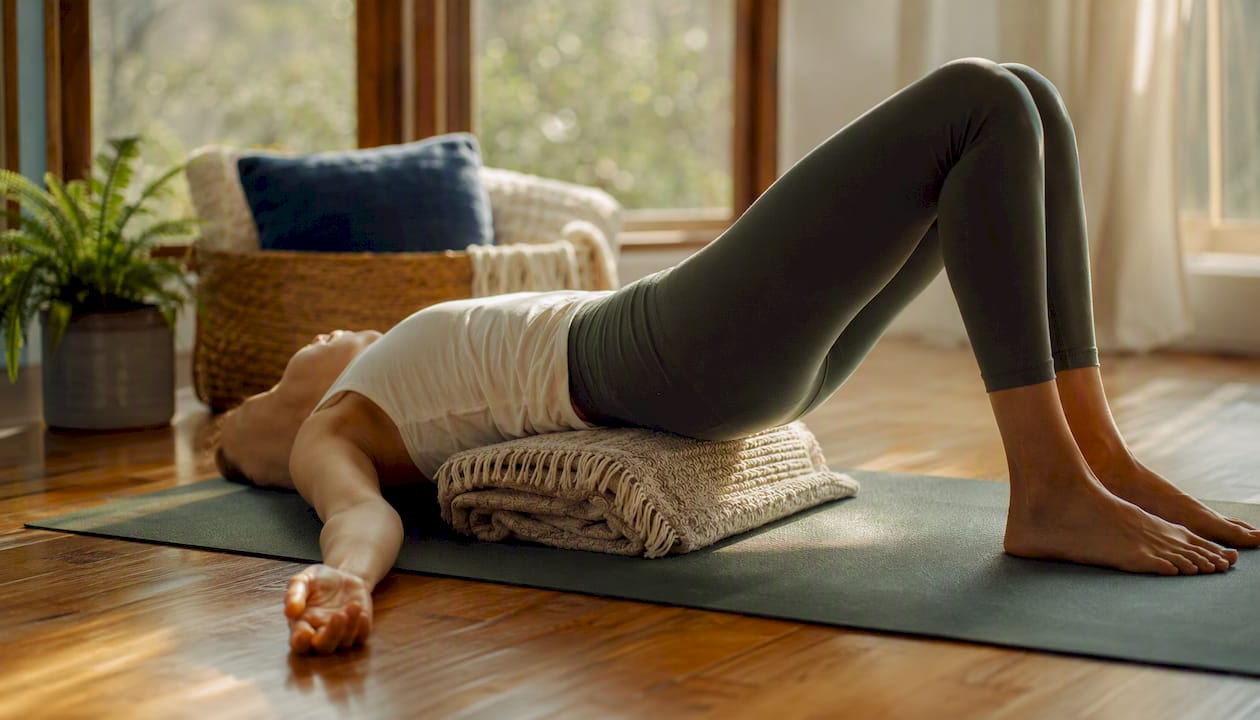
Lie on your back with knees bent and feet flat. Press your feet into the floor and lift your hips. Clasp your hands beneath you and gently roll your shoulders under. Hold for 5–8 breaths, feeling the chest broaden. To modify: place a yoga block or folded blanket under your sacrum and let the pose be entirely passive. Avoid if you have acute lower back pain.
Cobra pose
Lie face down, hands beneath your shoulders. On an inhale, press gently through your hands and lift your chest — only as high as feels comfortable without strain in the lower back. Keep your elbows slightly bent. Hold for 3–5 breaths. This is not about height; it is about length through the front of the chest. Avoid if you have a wrist injury or are in the later stages of pregnancy.
Camel pose (modified)
Kneel with hips over knees. Place your hands on your lower back, fingers pointing down. Inhale and lift your chest toward the ceiling, letting your head follow only if your neck is comfortable. Do not drop the head back if you have any cervical spine issues. Hold for 3–5 breaths. Come out slowly and sit in child’s pose for 5 breaths to counter the backbend.
A gentle 8-minute sequence
Child’s pose — 1 minute (grounding)
Cat-cow — 1 minute (spinal warm-up)
Cobra — 2 rounds of 5 breaths
Supported bridge — 1 minute
Seated forward fold — 1 minute (integration)
Supine twist — 30 seconds each side
Savasana — 1 minute
Safety note: if you have a diagnosed spinal condition, osteoporosis, or recent shoulder surgery, consult a physiotherapist before attempting backbends. The sequence above is intentionally gentle, but individual anatomy varies.
How to use crystals, oils and sound healing safely
Complementary tools work best when they anchor an intention rather than replace a practice. Think of them as environmental cues that help your nervous system shift state.
Heart chakra crystals
The most commonly recommended crystals for heart-centred work, and practical ways to use each:
Rose quartz: the classic stone for self-love; hold during meditation or place on the chest in savasana
Green aventurine: associated with emotional calm and new beginnings; carry in a pocket or place on a desk
Green calcite: gentle and cooling; useful during periods of anger or resentment; hold in the left hand
Jade: traditionally linked to harmony and longevity; wear as jewellery or keep near your bed
Rhodonite: specifically associated with grief and forgiveness work; hold when journalling about loss
Amazonite: supports boundary-setting and clear communication; place near your workspace
Malachite: a strong stone for emotional release; use with care during intense periods, and cleanse regularly
Cleanse crystals regularly under running water (check each stone’s water tolerance first — malachite, for example, should not be soaked) or by placing them in sunlight or moonlight for a few hours.
Essential oils
Rose, lavender and bergamot are the three oils most consistently linked to heart-centred and emotional regulation work. Rose is grounding and deeply associated with love; lavender calms the nervous system; bergamot lifts mood and eases anxiety.
Always dilute in a carrier oil such as sweet almond or jojoba at 2–3 drops per 10 ml before applying to skin. Perform a patch test on the inner forearm 24 hours before full use. If you are pregnant, breastfeeding or have a skin condition, consult your GP or a qualified aromatherapist before use.
Sound healing: YAM, 639 Hz and singing bowls
The bija mantra YAM is chanted on a single tone that resonates naturally at the chest. Sit comfortably, take a full breath, and on the exhale hum or chant “yum” for as long as the breath lasts. Repeat 7–10 times. You will feel the vibration at the sternum.
Certain sound frequencies are used in sound healing for emotional harmonising and are often associated with heart-centred work. You can find 639 Hz tracks on most music streaming platforms; listen through headphones for 10–20 minutes during meditation or rest.
Singing bowls and tuning forks work similarly: the sustained tone creates a physical vibration that many people find immediately calming. If you are using a bowl at home, strike it gently and hold it near (not touching) the chest.
Pro Tip: Sound and crystal tools are adjuncts, not primary treatments. If you are working through significant grief or trauma, use them alongside breathwork and meditation rather than instead of them. And if a crystal or oil triggers an unexpected emotional response, that is information worth noting in your journal.
A practitioner-curated 4-week plan to start healing
This plan is designed for someone starting from scratch. Each week builds on the last. Daily commitment is 10–15 minutes; the weekend sessions are slightly longer.
Week 1: awareness and breath
Daily (10 minutes):
5 minutes of 4–6 paced breathing on waking
One affirmation, hand on heart
Evening: note one moment of chest tension and one moment of ease in your journal
Weekly checkpoint: Can you feel the difference between a constricted and an open breath? That awareness is the foundation.
Week 2: meditation and movement
Daily (12 minutes):
5-minute heart meditation (green light visualisation + YAM)
5-minute gentle yoga sequence (cobra and supported bridge)
One journalling prompt (see below)
Weekly checkpoint: Notice whether your posture has shifted. Are your shoulders slightly less rounded by the end of the week?
Week 3: tools and deeper work
Daily (15 minutes):
Full 5-minute meditation with crystal (rose quartz or green aventurine on the chest)
5-minute breathwork
One forgiveness or self-compassion journalling prompt
Optional: 10 minutes of 639 Hz sound in the evening
Weekly checkpoint: Are you noticing more ease in one relationship or interaction? Even a small shift counts.
Week 4: integration and boundary work
Daily (15 minutes):
Choose your two favourite practices from weeks 1–3 and combine them
Add one boundary-setting exercise: identify one situation where you said yes when you meant no, and journal what a kind but clear “no” would have sounded like
Review your week 1 journal entries. What has changed?
Troubleshooting:
Feeling emotionally flooded during meditation: shorten the session to 2 minutes and focus only on the breath, not the visualisation
No noticeable change by week 3: increase the breathwork to twice daily and add a 10-minute walk in nature
Resistance to the affirmations: try writing them instead of speaking them; the resistance itself is worth journalling about
Practitioner guides such as LonerWolf’s heart chakra healing resource recommend pacing this kind of work carefully, particularly when grief or attachment wounds are present. There is no value in pushing through emotional pain faster than your nervous system can integrate it.
How do you know the heart chakra is healing?
Progress in this work is rarely dramatic. It tends to show up in the gaps — a moment where you would normally have snapped and didn’t, a conversation where you stayed present instead of shutting down.
Emotional indicators (often noticeable within 2–4 weeks of consistent practice):
Less reactivity in close relationships
A small but genuine increase in self-compassion
Ability to sit with grief without being overwhelmed by it
Moments of spontaneous warmth or gratitude
Physical indicators (often noticeable within 4–8 weeks):
Easier, fuller breathing
Less chronic tightness across the chest and upper back
Improved sleep quality
A general sense of the body feeling less braced
Realistic timelines matter here. Months of consistent practice produce more durable change than weeks of intense effort. Lifestyle factors that support the work include eating green leafy vegetables (which in traditional systems are associated with the heart chakra’s colour and element), spending time in nature, and prioritising genuine social connection rather than performative socialising.
A simple monthly maintenance routine: one longer session (30 minutes) combining breathwork, meditation and movement on the first day of each month, plus a brief review of your journal to note what has shifted. When life gets busy and the daily practice shrinks to two minutes of paced breathing, that is still worth doing. The nervous system responds to repetition, not duration.
Why a blended approach produces lasting change
Most people who come to heart chakra work have already tried the obvious things: journalling, affirmations, perhaps some yoga. Those practices help, and they are all in this guide. But what I observe consistently is that surface-level practice alone tends to plateau. You can repeat “I am open to love” every morning and still find yourself shutting down in the same conversations, with the same people, for the same reasons.
The reason is that emotional armour is not stored in the conscious mind. It lives in the body, in the nervous system, in patterns laid down long before you had language for them. Breathwork and movement begin to address that layer. But for many people, the deeper clearing requires working directly with the subconscious — which is where approaches like QHHT and energy healing become genuinely useful rather than merely complementary.
What I find particularly striking about combining these modalities is the speed of integration. When someone has done even a week of consistent breathwork and heart meditation before a session, their nervous system is already more receptive. The subconscious material surfaces more cleanly, and the energetic clearing holds more durably. The daily practices are not a warm-up to the “real” work. They are part of the same continuum.
The people who benefit most from this blended approach are those who are genuinely ready to look at what they have been protecting themselves from, and who are stable enough to do so safely. That is not everyone, and that is fine. For those who are ready, the combination of embodied daily practice and deeper subconscious work tends to produce the kind of change that actually sticks.
Working with Paulstebles for deeper heart-centred healing
Self-practice takes you a long way. For some people, it takes them all the way. But if you have been working with these practices for several weeks and find yourself hitting the same emotional wall, or if the grief and guardedness feel too deep to shift alone, that is not a failure of effort. It is a signal that the work needs a different level of support.
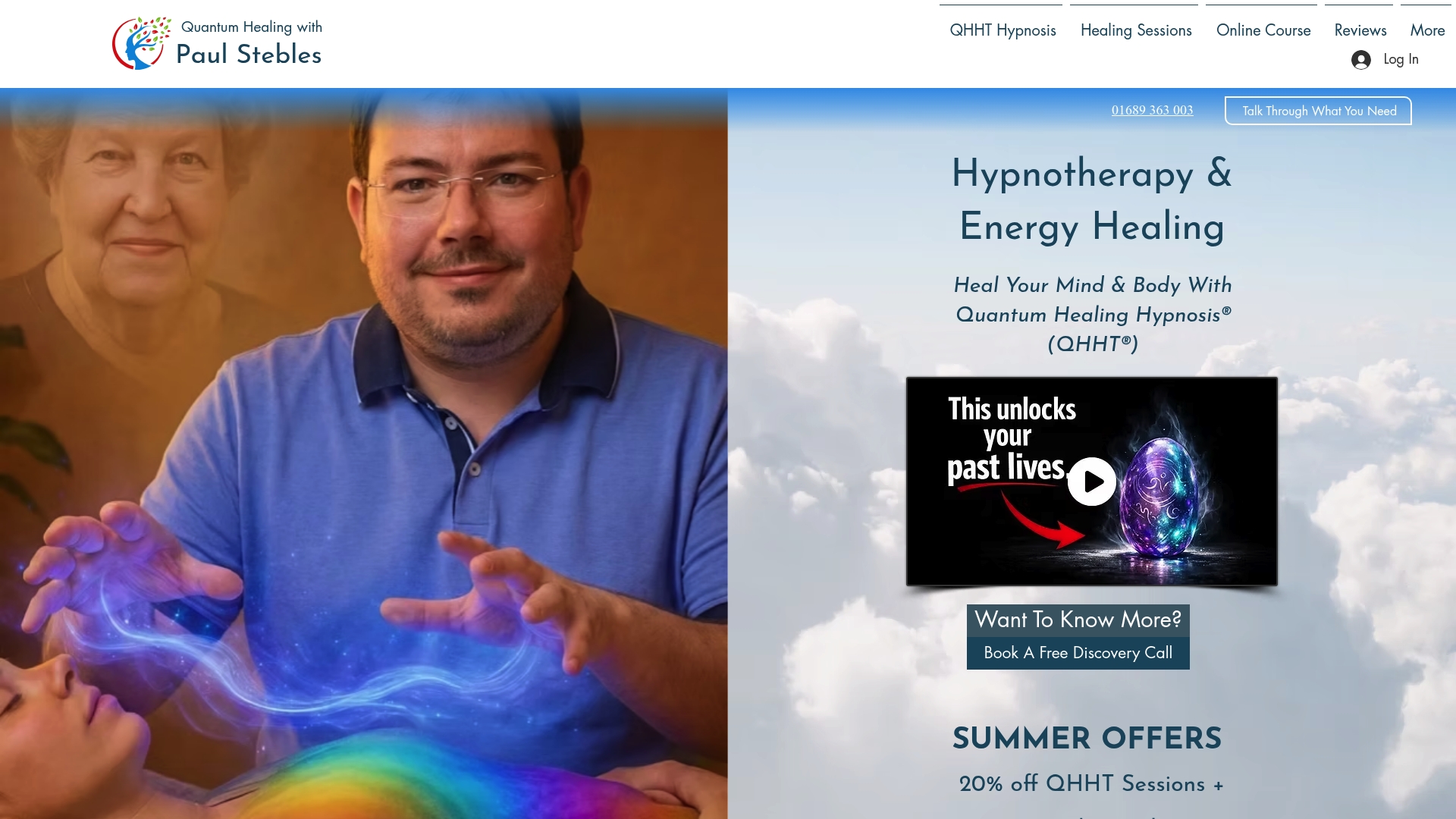
Paulstebles offers in-person and remote energy healing sessions that combine Reiki, chakra balancing, cord cutting and emotional release work, alongside Quantum Healing Hypnosis Technique (QHHT) sessions that access the subconscious directly for past-life exploration, higher-self guidance and deep emotional clearing. Remote sessions are available for those outside the Orpington and Bromley area. The approach is calm, structured and built around your pace, not a fixed script.
Ideal candidates are adults who are emotionally stable enough to engage with subconscious material, who are not in acute mental health crisis, and who want to move beyond what daily self-practice alone can reach. If you are unsure whether a session is right for you, the energy healing and QHHT FAQ covers common questions about what to expect. To book a session directly, visit the QHHT booking page.
This article provides general information about heart chakra practices and is not a substitute for medical, psychiatric or psychological advice. Always consult a qualified professional for clinical concerns.
Sources
The sources below informed this guide. Each is worth reading directly depending on your interest.
For readers ready to move from self-practice to guided support, the Paulstebles blog covers practitioner reflections, case studies and deeper reading on energy healing and subconscious work.
Recommended
Comments