Nervous system regulation: build calm and resilience


The most effective approach to nervous system regulation is not a single technique but a combination: small, repeated daily inputs that gradually raise your vagal tone, paired with short evidence-backed practices you can reach for the moment stress spikes. You do not need an hour of meditation or expensive devices. You need a handful of reliable tools and the habit of using them.
Three things you can try in under one minute:
Physiological sigh: Inhale fully through your nose, then take a second short sniff to top up your lungs, then exhale slowly and completely through your mouth. One or two repetitions is enough to shift your heart rate downward.
Long-exhale breathing: Breathe in for four counts, out for six to eight. The extended exhale is what activates the parasympathetic brake.
Cool water face splash: Splash cold water on your face or hold your wrists under cold running water briefly. This triggers the dive reflex and slows the heart rate quickly.
Pro Tip: Use the three tools above for momentary distress tolerance, when you are already activated and need to come down fast. Use the daily routine in the later sections for repair, the slower work of actually raising your baseline resilience over days and weeks.
Key takeaways
Nervous system regulation builds through daily micro-inputs and consistent breathwork, not through occasional resets or any single technique.
Point | Details |
Use immediate tools for acute stress | The physiological sigh and long-exhale breathing shift your state within 60 seconds. |
Build daily micro-inputs | Small repeated cues through the day raise vagal tone more durably than weekly resets. |
Slow breathing has the strongest evidence | Resonance breathing at roughly six breaths per minute reliably increases HRV with regular practice. |
Know when to seek help | Red flags (dissociation, suicidal thoughts, inability to self-care) need GP or NHS 111 contact, not more self-help. |
Paulstebles offers deeper support | QHHT and energy healing sessions in Orpington address the subconscious and somatic layers that daily practices alone may not reach. |
Table of Contents
How does the autonomic nervous system actually work?
The autonomic nervous system (ANS) runs your body’s background processes without conscious input. It has three divisions. The sympathetic branch accelerates everything: heart rate rises, digestion slows, muscles tense, and stress hormones flood the bloodstream. This is the classic fight-or-flight response. The parasympathetic branch does the opposite: it slows the heart, restarts digestion, and signals that the threat has passed. The enteric system governs the gut independently, which is why chronic stress so reliably produces digestive symptoms.
The vagus nerve is the main cable of the parasympathetic system. It runs from the brainstem down through the throat, heart, and gut, carrying signals in both directions. Efferent fibres slow the heart; afferent fibres carry visceral information back up to the brain, which is why gut feelings are physiologically real. When the vagus nerve is functioning well, you have what researchers call high vagal tone, and this shows up in your heart rate variability (HRV): the small, healthy fluctuation between heartbeats that reflects how readily your body can shift between activation and rest.
“High resting vagal tone, indexed by high-frequency HRV, is associated with better cardiovascular recovery, sharper executive function and greater neuro-visceral flexibility.”Perspective: vagal physiology, HRV and interventions
When perceived threat persists, the amygdala-hypothalamus axis keeps the HPA axis activated, cortisol stays elevated, and the parasympathetic brake cannot fully engage. The result is a system stuck in low gear: technically safe, but unable to recover properly. That is the state most people are trying to get out of.
A useful mental image: picture a see-saw. Sympathetic activation tips one side down; parasympathetic tone tips the other. Vagal tone is the strength of the mechanism that lets the see-saw move freely in both directions. The goal is not to pin the parasympathetic side permanently down. It is to make the whole mechanism more responsive.
What does a dysregulated nervous system feel like?
Dysregulation is not always dramatic. Most people experience it as a persistent background hum of unease rather than a crisis.
Common everyday signs:
Sleep that does not feel restorative, or difficulty falling asleep despite exhaustion
Digestive complaints (bloating, nausea, irritable bowel) with no clear dietary cause
Persistent irritability or a short fuse that feels disproportionate to events
Brain fog, poor concentration, or difficulty making decisions
Frequent minor illnesses suggesting a suppressed immune response
Jaw clenching, shoulder tension, or shallow breathing you notice only when you check
These are signals worth taking seriously, but they are not emergencies. They respond well to the self-help practices in this article.
Red flags that need prompt professional attention:
Suicidal thoughts or thoughts of self-harm
Dissociation: feeling detached from your body or surroundings for prolonged periods
Inability to carry out basic self-care (eating, washing, leaving the house)
Prolonged shutdown states: emotional numbness, inability to feel anything, extreme withdrawal
If any of these apply, contact your GP, call NHS 111, or reach out to a mental health crisis line. The NHS’s Talking Therapies service (formerly IAPT) offers free psychological therapies for anxiety and depression; you can self-refer at most NHS trusts without waiting for a GP referral.
Pro Tip: When contacting your GP about nervous system symptoms, try this framing: “I’ve been experiencing persistent [sleep disruption / gut symptoms / anxiety] for [X weeks]. I’d like to discuss whether this could be stress-related and what support is available.” Specific language gets faster, more targeted responses.
Practical techniques you can use right now
Breathing exercises
Slow, exhale-focused breathing is the most reliably validated tool for immediate downregulation. The extended exhale activates the vagus nerve and produces measurable parasympathetic signalling as clinical reviews confirm.
Physiological sigh (step-by-step):
Sit or lie comfortably.
Inhale through your nose until your lungs feel full.
Take a second short sniff to fully inflate the air sacs.
Exhale slowly and completely through your mouth.
Repeat once or twice. Most people feel a shift within 60 seconds.
Practice card: 1–2 repetitions, any time. No equipment needed.
Resonance breathing (step-by-step):
Breathe in and out through your nose or mouth at a slow, steady pace.
Continue for five to ten minutes.
This rhythm, roughly six breaths per minute, is associated with the highest HRV response in most adults. Use it as a daily practice rather than an emergency tool.
Practice card: 5–10 minutes daily, ideally morning or before bed.
Movement and discharge
Stress hormones are designed to fuel physical action. When that action does not happen, the chemicals linger. A brisk ten-minute walk, shaking out your hands and arms, or even a short burst of jumping jacks gives the body a chance to complete the stress cycle. You do not need a gym session. The point is movement that involves the whole body, not just the mind.

Pro Tip: After a stressful meeting or difficult conversation, take five minutes to walk briskly before sitting back down. The physical discharge prevents the activation from compounding.
Grounding and distress-tolerance tools
Grounding works by redirecting attention to the present sensory environment, which signals to the nervous system that no immediate threat exists. The 5-4-3-2-1 technique is widely used: name five things you can see, four you can touch, three you can hear, two you can smell, and one you can taste. It takes about two minutes and requires nothing.

Cold water face splashes (described in the opening) are particularly effective for acute anxiety or panic. Contraindication: avoid cold-water immersion if you have a known cardiac arrhythmia or Raynaud’s disease; check with your GP first.
Social soothing and co-regulation
The nervous system is fundamentally social. Polyvagal theory describes a ventral vagal state of safety that is activated by cues of connection: a calm voice, eye contact, a reassuring touch. You do not need to explain your stress to benefit from this. Sitting with a calm person, having a low-stakes conversation, or even stroking a pet can shift your state.
A simple script for reaching out: “I’m having a rough time. I don’t need advice, just some company. Could we [have a cup of tea / go for a walk / just chat for a bit]?”
Sleep hygiene as nervous system support
Poor sleep and dysregulation feed each other in a loop. A dysregulated nervous system makes sleep harder; poor sleep raises cortisol and lowers HRV the next day. Breaking the loop starts with consistent sleep and wake times, reducing screen exposure in the hour before bed, and keeping the bedroom cool. These are not novel suggestions, but they are the ones with the most consistent evidence behind them.
What does the research say about vagal methods?
The evidence base for vagal interventions is genuinely encouraging, though not uniformly strong across all methods.
What the research supports:
Slow-paced breathing and resonance breathing have the most consistent evidence. They reliably increase HRV in the short term and, with regular practice, appear to raise resting vagal tone over weeks.
HRV biofeedback uses real-time heart rate data to help you find your personal resonance frequency. Trials show benefits for anxiety, depression, and performance, particularly when practised daily for several weeks. Devices such as the Polar H10 chest strap paired with apps like Elite HRV or Welltory give accessible HRV readings at home.
Transcutaneous auricular vagus nerve stimulation (taVNS) applies a small electrical current to the ear, targeting the auricular branch of the vagus nerve. In athletic and performance contexts, brief taVNS has been linked to faster recovery and improved cognitive control. It is a non-invasive option, but most consumer ear-clip devices have not been through rigorous clinical trials. Clinical-grade taVNS is a medical procedure.
“Many consumer ‘vagus-nerve’ gadgets lack robust clinical validation; clinical VNS is a medical procedure with specific indications, whereas most retail devices provide superficial stimulation and need caution.” Vagus nerve exercises on TikTok are not what they seem
What the research cautions against:
Neck tapping, manual pressure on the neck, or attempts to physically press the vagus nerve are anatomically unlikely to produce targeted vagal effects. The nerve runs deep and is not accessible through surface pressure.
Popular practices such as cold plunges and breathing exercises are effective for momentary distress tolerance, but they are not standalone cures for chronic dysregulation. Pairing them with consistent daily practice and, where needed, therapeutic support produces better outcomes.
The practical takeaway: breathwork and HRV biofeedback are the two methods with the strongest accessible evidence. Use them consistently rather than chasing the newest device or trend.
How to build a daily routine that actually sticks
The most useful reframe here comes from lifestyle medicine research: treat regulation as daily infrastructure, not a crisis intervention. Small, repeated micro-inputs through the day build more durable change than one long weekly reset.
Sample 7-day micro-input plan:
Morning anchor (5 minutes): On waking, before checking your phone, do five minutes of resonance breathing. Note your subjective energy on a scale of 1–10 in a notes app or paper journal.
Mid-morning transition (1 minute): Between tasks, take three slow exhale-focused breaths and soften your jaw deliberately.
Lunchtime screen break (10 minutes): Eat at least part of your lunch without a screen. Walk briefly afterwards if possible.
Afternoon reset (2 minutes): 5-4-3-2-1 grounding exercise, or a brief walk to a window to look at something in the distance.
Evening wind-down (10 minutes): Dim lights 30–60 minutes before bed. Five minutes of slow breathing, then a brief body scan to notice and release tension.
Weekly check-in: Review your morning energy log. Are scores trending upward? If not, consider which anchor you are skipping most often.
Social input (ongoing): Prioritise at least one low-pressure, face-to-face interaction daily, even briefly. For those managing chronic activation, the empath energy protection guide offers practical strategies for maintaining boundaries without withdrawing from connection entirely.
Tracking progress simply:
Morning energy score (1–10) takes ten seconds and gives you a trend line within a week.
HRV apps (Elite HRV, Welltory) give a more objective measure if you want one; a Polar H10 or similar chest strap improves accuracy over wrist-based readings.
If scores are not improving after two to three weeks of consistent practice, that is a signal to seek professional support rather than to add more techniques.
Medical and safety notes for these techniques
This article is educational. It is not a substitute for clinical assessment or treatment.
UK signposting:
NHS Talking Therapies (formerly IAPT): Free psychological therapies for anxiety and depression. Self-refer at your local NHS trust.
NHS 111: For urgent but non-emergency mental health concerns.
999 or A&E: If you or someone else is in immediate danger.
Samaritans: 116 123, available 24 hours a day.
Contraindications to be aware of:
Breathwork: Avoid hyperventilation-style breathing (rapid, forceful) if you have epilepsy, cardiovascular disease, or are pregnant. Slow, gentle breathing as described here is generally safe, but check with your GP if you have any respiratory or cardiac condition.
Cold water exposure: Avoid if you have a cardiac arrhythmia, Raynaud’s disease, or cold urticaria. A brief face splash is lower risk than full cold immersion.
taVNS devices: Do not use if you have a pacemaker, cochlear implant, or active ear infection. Consumer devices are not medically regulated in the same way as clinical equipment.
Intense exercise as discharge: If you have a heart condition or have been advised to limit exertion, consult your GP before using vigorous movement as a regulation tool.
Pro Tip: If you are currently under the care of a GP, psychiatrist, or therapist for a mental health condition, discuss any new regulation practices with them before starting. Most will be supportive; a few techniques may interact with medication or treatment protocols.
Why consistency matters more than intensity
The thing most people get wrong about nervous system work is treating it like a course of antibiotics: take the full dose, finish the treatment, and expect the problem to resolve. It does not work that way. The nervous system learns through repetition, not through occasional dramatic interventions.
What actually shifts baseline reactivity is the accumulation of small, safe experiences: a breath taken before a difficult email, a walk after a stressful call, a meal eaten without a screen. These micro-inputs, repeated daily, gradually teach the system that safety is the default. That is a slow process, and it asks for patience rather than intensity.
There is also a deeper layer that breathwork and grounding cannot always reach. Unresolved emotional material, early experiences of threat, or persistent patterns of self-protection can keep the system in a low-level state of alert regardless of how many breathing exercises you do. When that is the case, the self-help tools in this article remain useful, but they work best alongside deeper therapeutic or subconscious work. The nervous system reset guide explores how approaches like QHHT and energy healing can address that layer.
How Paulstebles can support your nervous system work
Self-help techniques build the foundation. Sometimes the foundation needs reinforcing from below.
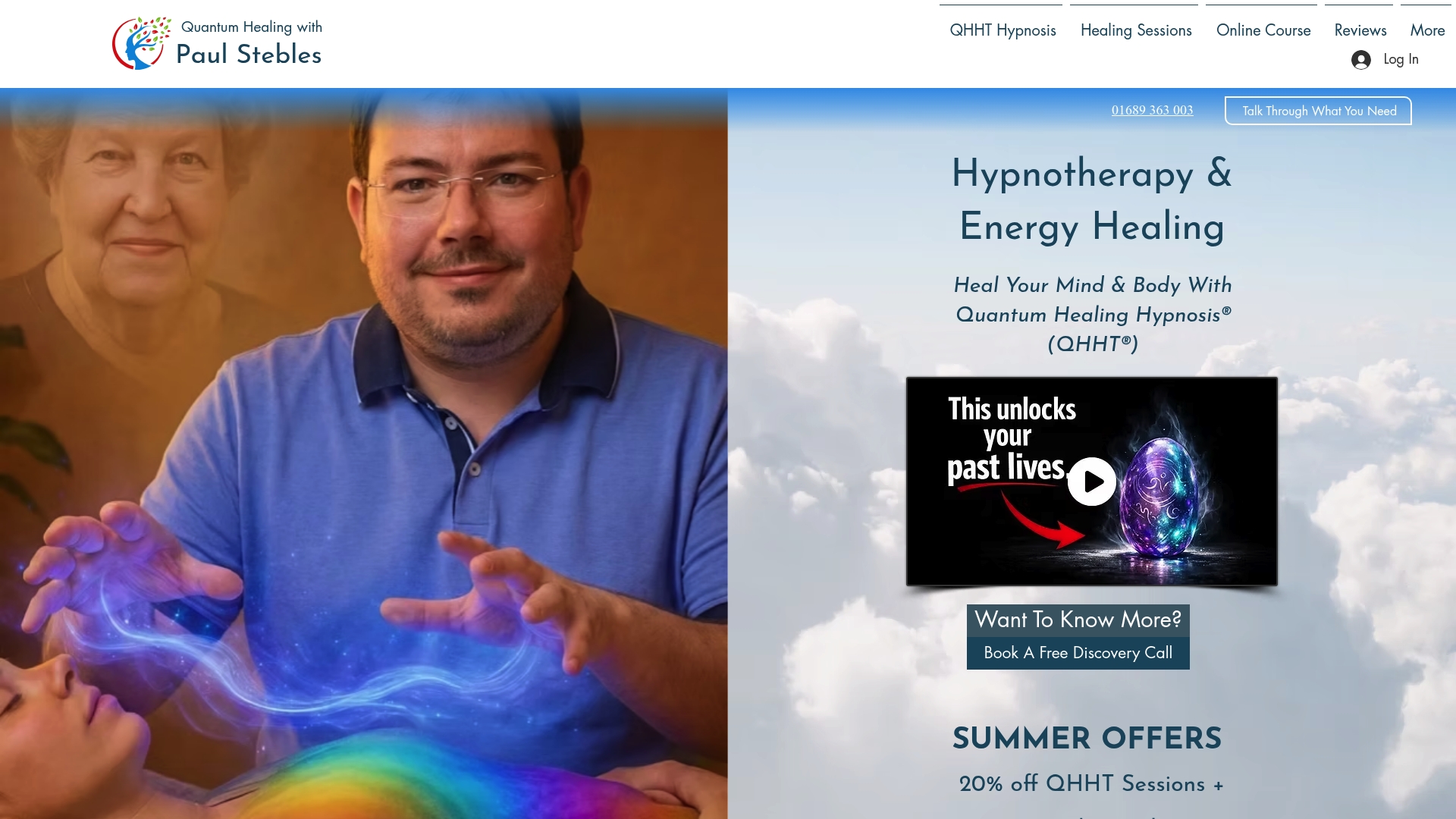
Paulstebles offers QHHT (Quantum Healing Hypnosis Technique) sessions and energy healing in Orpington and Bromley, designed for people who have tried the surface-level tools and still feel stuck. QHHT works at the subconscious level, helping clients access and process the emotional material that keeps the nervous system in a persistent state of alert. Energy healing sessions, which incorporate Reiki, chakra balancing, and emotional release work, address the somatic layer that talking therapies and breathing exercises sometimes miss.
These sessions are not a replacement for medical care. They are a complement to it, and to the daily practices described in this article. If you are ready to go deeper, book a session with Paul to explore what subconscious and energetic work can add to your regulation practice.
Sources
The sources below underpin the evidence and guidance in this article. Use the clinical and NHS links for practical next steps; use the academic sources for deeper reading on the physiology.
Recommended
Comments