Heal Old Patterns: Eight Past Life Regression Stories from the UK


This page collects first-person past life regression stories and explains what they typically mean, drawing on real accounts and practitioner experience. The stories here are subjective by nature, and the real value lies in emotional integration rather than historical proof. You will also find the practitioner perspective behind Paulstebles and how to book a session if you decide to explore your own.
TL;DR:
Past life regression stories often feature recurring themes like death scenes and relationship recognition, which can lead to emotional breakthroughs.
Sessions typically follow a structured arc starting with intake, guided induction, exploration, and a peaceful closure, lasting around two hours.
Validating the scenes as literal past lives is less important than understanding the emotional patterns they reveal and how they inform present behavior.
Choosing a trauma-aware, properly trained practitioner and using recordings or notes for reflection enhances safety and ongoing insight.
Self-guided attempts are less reliable than professional guidance, and regression often serves as a tool for emotional healing rather than historical verification.
Table of Contents
Real past life regression stories: eight varied accounts
No two regressions unfold the same way. Some clients see a single vivid scene and nothing more; others move through several lifetimes in one sitting. What follows draws on patterns seen across published first-person accounts and practitioner case notes, presented as illustrative composites rather than verified biography. Each one shows a different emotional shape, because that variety is the whole point of comparing stories in the first place.
The drowning fisherman. A client repeatedly dreaming of open water was guided back to a scene of a small wooden boat capsizing off a rocky coast. The dominant sensation was cold water closing over the face, followed by an unexpected calm at the moment of death. She described the session as healing, saying her lifelong fear of swimming eased noticeably afterwards.
The soldier who never went home. A man in his forties saw trench warfare, mud, and the specific sound of artillery before a death scene that ended abruptly. He found the imagery puzzling rather than cathartic, unable to place the conflict in any historical period he recognised, though the session left him unexpectedly patient with his own father, a veteran.
The weaver in a walled town. A woman experienced a quiet, sensory-rich life spent at a loom, marked by a repeated ache in her shoulders that mirrored a chronic pain she carries today. She regarded the story as symbolic rather than literal, a metaphor her subconscious built around a body she has never fully understood.
The merchant’s betrayal. A recurring theme of financial anxiety led one client to a marketplace scene where a trusted business partner cheated him out of goods. The emotional takeaway was recognising a modern pattern of over-trusting colleagues, which he called neutral in tone but immediately useful.
The mother who lost a child young. One of the more emotionally intense sessions involved a grief scene in what seemed a famine period, ending in the death of an infant. The client wept during the debrief but described the release as the most healing part of the entire experience, tying it to unresolved grief in her present life.
The healer accused of witchcraft. A woman drawn to herbalism regressed into a life as a village healer, ending in a trial and execution scene. She interpreted this less as history and more as an explanation for her present-day fear of public speaking and scrutiny.
The craftsman with unfinished work. A regression stalled repeatedly at the image of an unfinished piece of furniture, with no death scene reached at all. The client found this puzzling and slightly frustrating, though his practitioner noted that unfinished business is itself a common and workable theme.
The reunited pair. Perhaps the most common motif of all: a client recognised her present-day partner as a companion from a previous era, in a quieter domestic scene with no dramatic death at all. She described the story as deeply reassuring, less about proof and more about a felt sense of continuity.
Read across these eight accounts, and a pattern from long-form first-person features holds up: the vivid imagery and emotional shifts these writers describe often lead to genuine behavioural change afterwards, whether or not the scene itself can be verified.
What happens during a past life regression session
A regression session follows a fairly predictable arc, even though the content of each story is unpredictable. Understanding the shape of the session in advance takes the mystery out of the mechanics, so you can focus on what actually comes up.
Intake. Before any hypnosis begins, a competent practitioner spends time discussing your intentions, medical history, and any concerns. Directories covering past life regression experiences treat this stage as standard practice, not an optional extra.
Induction. You are guided into a relaxed, focused state using verbal techniques. Many modern methods trace back to inductions developed by Dave Elman, whose work still underpins much of contemporary hypnotherapy.
Guided exploration. Once relaxed, the practitioner asks open questions rather than leading ones, letting imagery and detail surface at your own pace.
Death or closure scene. Many regressions move towards a death scene, which sounds unsettling but is usually reported as peaceful rather than distressing, often followed by a sense of release.
Return and debrief. You are brought back gently, then talk through what surfaced while it is fresh.
Session length varies but tends to run long. One detailed first-person report describes a two-hour guided session that produced lasting emotional insight requiring follow-up work afterwards, and a separate case study puts a comparable session at two to two-and-a-half hours, with intake conducted beforehand and a reported reduction in chronic headaches afterwards. Good practitioners typically supply a recording of the session, written notes, or both, so you can revisit the material once the immediate emotion has settled.
Throughout the process, you remain conscious and in control. A practitioner guides the pace and asks questions, but you are the one describing and naming the imagery, which keeps the experience collaborative rather than something done to you.
Pro Tip: Ask beforehand whether your practitioner records the session as standard. A recording lets you revisit small details you might miss the first time, especially in the exploration phase when several scenes can surface quickly.
Recurring themes and how to read them
Compare enough stories and the same handful of motifs keep reappearing, regardless of who is telling them.
Death scenes. Drowning, battle, illness, and childbirth complications turn up constantly, usually resolving into calm rather than terror, as with the fisherman and soldier accounts above.
Repeated relationships. People frequently recognise someone from their current life in a different role, echoing the reunited pair story.
Occupational echoes. Skills, fears, or physical sensations tied to a past trade, like the weaver’s shoulder pain, often map onto present-day habits or ailments.
Role and identity shifts. Gender, class, and culture change freely between lifetimes, which is part of why some clients find the experience destabilising and others find it liberating.
Unfinished business. Scenes that stall or refuse to resolve, like the craftsman’s story, are treated as meaningful in their own right rather than as failed sessions.
There are two broad ways people make sense of all this. The literal frame treats the imagery as genuine memory of a former incarnation, and takes the specific details, era, and outcome as historically real even when unverifiable. The symbolic frame treats the same imagery as the subconscious building a story to represent a present-day emotional pattern, using the language of narrative because that is how the mind naturally organises meaning. Neither frame requires you to fully commit to the other. Many first-person and practitioner accounts converge on a similar conclusion: whether the material reflects an actual past life matters less than what it does for you emotionally in the present.
Choosing a safe, trauma-aware practitioner
Regression work can surface intense material, so vetting a practitioner properly matters more than picking based on price or proximity.
What to check before booking:
Formal training in hypnotherapy or a recognised regression modality, not just a weekend certificate.
A clear intake process that asks about your history and current mental health, not just your curiosity about past lives.
Explicit trauma-informed practice, meaning the practitioner knows how to pause, ground, or redirect if a scene becomes distressing.
A stated aftercare plan, whether that is a recording, written notes, a follow-up call, or all three.
Willingness to explain their approach clearly before you commit to booking, without pressure.
Questions worth asking directly:
“What happens if I get distressed during a session?” A good answer names a specific technique, not a vague reassurance.
“Do you provide a recording or notes afterwards?” Standard practice, per guidance from the Hypnotherapy Directory, includes some form of take-home material.
“How do you handle consent throughout the session?” Look for an answer that keeps you in control, not one where the practitioner drives the narrative.
Regression is not the right starting point for everyone. If you are dealing with a recent bereavement, an active psychiatric condition, or unresolved trauma that has not been addressed with conventional support, speak to a GP or mental health professional first. Regression can be a powerful complement to that work later, but it should not replace it.
Pro Tip: If a practitioner cannot clearly describe what they do when a session becomes emotionally difficult, treat that as a red flag rather than a minor gap in their answer.
The QHHT approach: how a practitioner frames these stories
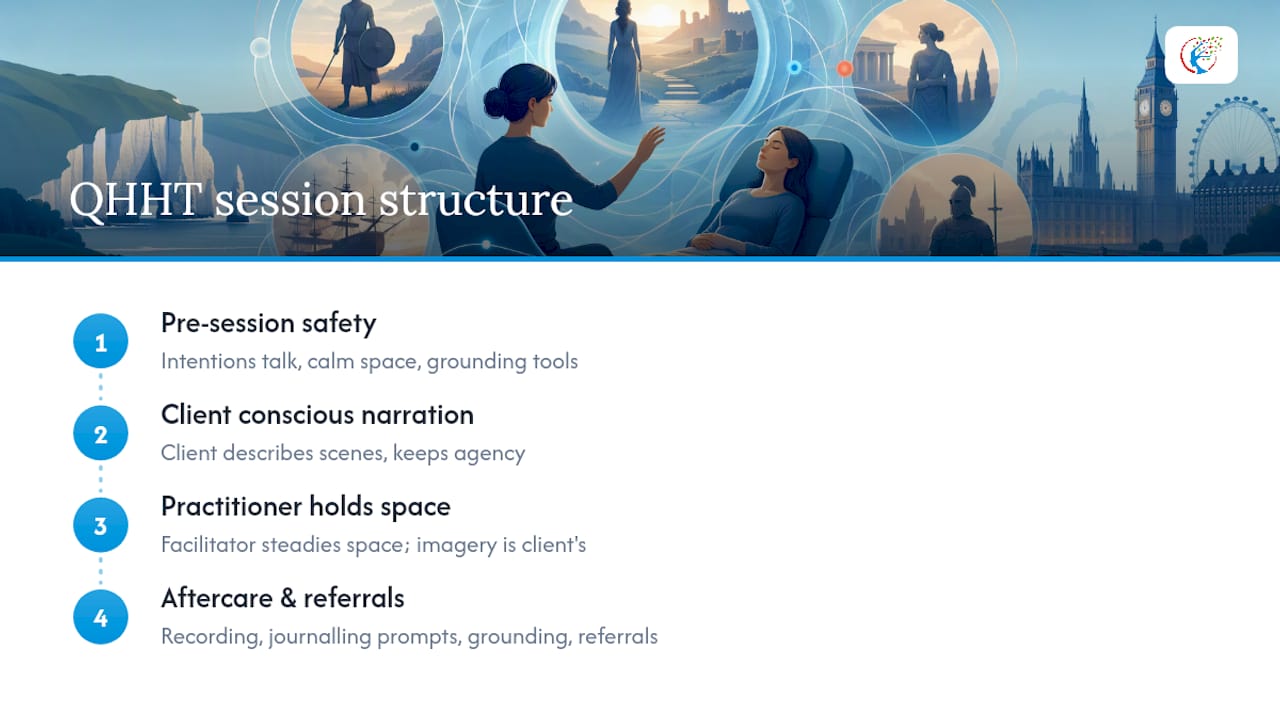
Quantum Healing Hypnosis Technique, or QHHT, treats the story that emerges as material to work with, not a fact to prove. Safety starts before hypnosis even begins: a thorough conversation about intentions and concerns, a calm physical environment, and grounding techniques the client can use if a scene feels intense. Clients stay conscious throughout, describing what they see in their own words, which keeps agency firmly with the client rather than the practitioner.
The therapeutic use of the story matters more than its literal accuracy. A scene of drowning might map onto a present fear of losing control; a scene of betrayal might explain a pattern of guardedness in relationships. This is where the past life regression benefits for anxiety and purpose become relevant, because the insight often does practical work regardless of whether the era or details can be historically confirmed.
A trained facilitator’s job is to hold the space steady while the client’s own subconscious does the work of choosing what to reveal and when to reveal it. The imagery belongs to the client. The structure and safety belong to the practitioner.
Aftercare typically includes a recording of the session, journalling prompts to work through in the days that follow, and simple grounding exercises for moments when a memory resurfaces unexpectedly. Some clients are referred onward for additional support if the session surfaces something that needs more sustained attention than one appointment can offer.
Why these stories matter, whatever you believe about them
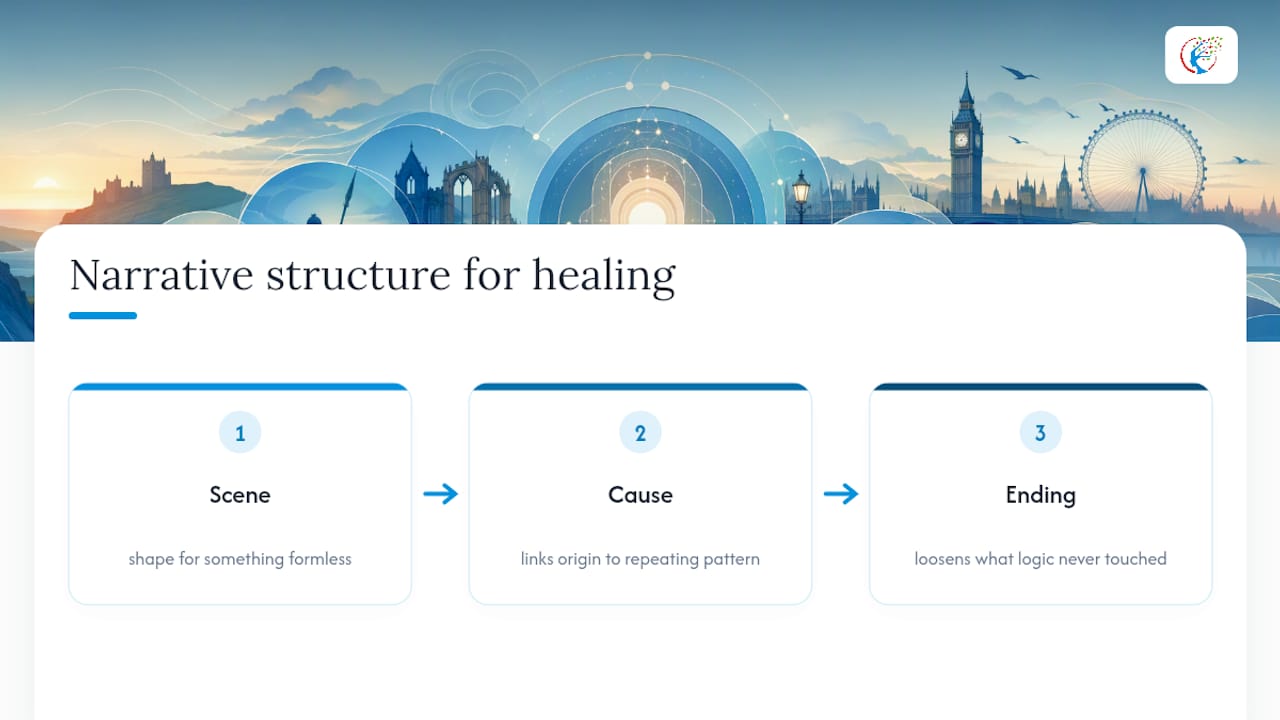
The pull of a past life story rarely comes from wanting a history lesson. It comes from wanting a shape for something that has been formless: a fear with no clear origin, a pattern that keeps repeating, a grief that has not found words. Narrative does that work. It takes a diffuse feeling and gives it a scene, a cause, an ending, and that alone can loosen something that logic never touched.
Curiosity and critical thinking can sit together comfortably here. You do not need to decide, once and for all, whether reincarnation is literally true to get something real out of a session. What matters more is whether the story helps you understand a present pattern well enough to change your relationship with it.
If you are intrigued but not ready to book anything, start small. Keep a journal of recurring dreams, fears, or physical sensations that feel oddly persistent. Read a handful of accounts like the ones above and notice which details actually resonate rather than which ones sound dramatic. When you are ready for guided work, choose a practitioner using the vetting questions already covered, and treat the first session as exploratory rather than definitive.
— Paul
Book a QHHT session with Paulstebles
Reading about other people’s regressions only goes so far. At some point, curiosity either stays curiosity or becomes a booked appointment, and a qualified practitioner can offer a direct route from one to the other with a calm, trauma-aware setting built around client agency rather than spectacle.

The core offering is QHHT® Quantum Healing Hypnosis, priced at £369 for an in-person session, with a Mobile QHHT® option at £399 for those who would rather be regressed in their own home. Alongside regression work, Paulstebles offers Evolve Quantum Healing at £99, combining Reiki, chakra balancing, and cord cutting for clients focused on energy work rather than a past life narrative, with a Remote Evolve Quantum Healing version also available at £99 for those who prefer sessions from a distance. For self-paced integration work, the Rising Higher online course offers structured exercises for anxiety and depression that pair well with insights from a regression session.
This approach suits people who want depth over speed: extended session times, a genuinely calming environment, and integration support that does not end the moment the hypnosis does. If any part of your story above felt familiar, the booking page is the natural next step, and it is worth checking session suitability with Paulstebles directly if you have any concerns about trauma history before you book.
Sources
For readers who want the fuller first-person accounts behind some of the patterns discussed here, a few pieces are worth reading in full.
FAQ
Does past life regression really work?
There is no scientific proof that regression accesses genuine past lives, but first-person accounts and practitioner case notes consistently describe real emotional shifts and, occasionally, reported physical changes afterwards. Whether the mechanism is memory or subconscious metaphor, the reported outcomes for many clients are meaningful rather than illusory.
What are the signs you may have lived a past life?
Common signs people cite include unexplained phobias, recurring dream imagery, an unusually strong pull towards a particular era or culture, and déjà vu around specific places or people. None of these signs confirm a past life on their own, but they are frequently the details clients bring into an intake conversation before a regression.
Who is the most famous past life regression therapist?
Michael Newton is widely credited within the field for developing life-between-lives regression work, building on earlier hypnotic induction methods pioneered by Dave Elman. Many contemporary practitioners, including those offering QHHT, trace elements of their technique back to this lineage.
Can I do past life regression by myself?
Self-guided meditation or visualisation can produce some imagery, but reaching a deep hypnotic state safely and interpreting what surfaces is far harder without a trained guide. A practitioner’s role in managing pacing, safety, and debrief is difficult to replicate alone, which is why most meaningful accounts describe guided sessions rather than solo attempts.
How much does a QHHT session with Paulstebles cost?
An in-person QHHT® Quantum Healing Hypnosis session costs £369 as a one-off fee, while the mobile version costs £399. Energy healing sessions, called Evolve Quantum Healing, are priced separately at £99 whether booked in person or remotely.
Recommended
Comments