QHHT Session Length: How Long to Plan For


A Quantum Healing Hypnosis Technique (QHHT) session is a half-day appointment, not an hour on a couch. The official QHHT guidance says a session should run a minimum of four to five hours, covering the interview, the hypnosis and time afterwards to talk it through. We give our sessions extended time for exactly this reason, so that nothing about your day, your questions or your experience has to be hurried.
TL;DR
Plan for four to five hours at minimum, from arrival to leaving, according to the official QHHT guidance.
The time splits into three parts: an interview of around two hours, the hypnosis itself, and a discussion afterwards.
Length varies because the interview grows when you have more to talk about.
QHHT is meant to be a one-off experience, so clear your diary for the whole day rather than booking short slots.
Eat well beforehand, keep the rest of the day empty and give yourself a quiet evening afterwards.
Table of Contents
How long a QHHT session takes
The short answer is four to five hours at the very least. The QHHT Official Website states that sessions should be a minimum of four to five hours, and that a session shorter than that is not a favourable situation. That figure includes everything: the conversation before you lie down, the hypnosis, and the time afterwards when you go through what came up.
The technique’s founder, Dolores Cannon, set the bar a little higher in her own teaching. Her Level 1 class notes say she normally spent at least five to six hours with each client, that many clients needed more, and that she could only do one session per day.

So when you see a listing that says “QHHT, 90 minutes” or “one hour hypnosis session”, you are looking at something different. A typical talking-based hypnotherapy appointment often runs for about an hour, which is a perfectly reasonable format for its own purposes. QHHT is built around a single long session in which your questions, your history and your experience all fit into one day.
What this means for the diary
Book a full day, or at least a clear morning and afternoon. If you are travelling, add the journey each way. Do not schedule anything demanding before or after: no school run, no work call, no dinner with people who need you to be sharp. Treating the appointment as the main event of the day is the single most useful planning decision you can make.
What fills the hours
A long session sounds like a lot until you see how it is divided. There are three parts, and each has a job.
The interview, around two hours
In the class notes, Cannon explains that she spent at least two hours interviewing the client. This is when trust is built, and she describes it as a private conversation with nobody else present.
The interview is where you say what brought you here. You might talk about emotional blocks, physical symptoms, a sense of being overwhelmed, or simply curiosity about past lives and your life’s purpose. You also agree the questions you want answered during the session. If you want help writing them, our guide on QHHT questions for UK sessions shows how to make that two-hour intake count.
The interview can run longer than two hours. Cannon noted that this happens when a client unloads their problems, and that is a good thing rather than a delay. Someone who has carried a lot for a long time often needs space to say it aloud before they can relax into the work.

The hypnosis
The hypnosis is the centrepiece, though not the longest part. According to the same notes, Cannon did not keep clients in trance for longer than about two hours without the permission of what she calls the subconscious.
During this stage you are guided into a deeply relaxed state. The aim of the technique is to reach the deeper subconscious mind, where people explore past lives, connect with their higher self and ask the questions they brought. Many people lose track of time while lying down, which is one reason the session is not squeezed into a short slot.
The discussion afterwards
When the hypnosis ends, you do not simply get up and leave. The official guidance counts time afterwards to discuss the session as part of the minimum four to five hours. Cannon’s notes also say she discussed the session with the client and provided a recording.
This stage matters more than it sounds. What you experienced can be vivid, symbolic or surprising, and talking it through with the person who was there helps you make sense of it while it is fresh. It is also a gentle way to come back to everyday awareness before you travel home.
Stage | What happens | Roughly how long |
Interview | Conversation, background, your questions | At least two hours, longer if you have a lot to share |
Hypnosis | Guided deep relaxation and exploration | Up to about two hours |
Discussion | Talking through the experience | The remaining time within the four to five hour minimum |
These are the figures from the founder’s own teaching, so treat them as a pattern rather than a stopwatch. Your day will follow your needs, not a template.
Why sessions run different lengths
Two clients booked for the same day can finish at different times. The most common reason is the interview. If you arrive with a long history, several questions or a lot of emotion to express, the first part takes longer, and the rest of the session moves with it.
Other things shift the timing too:
How many questions you bring. A focused list moves smoothly. A long one may need more time to cover properly.
How quickly you settle. Some people relax deeply within minutes. Others need longer to let go, especially if they are tired or anxious on arrival.
How much there is to talk about afterwards. A rich experience often deserves a longer conversation.
The practical lesson is to leave a margin. Plan to be free for longer than four to five hours, and let the session finish when it is complete rather than when a clock says so.
Is one session enough?
That is what the technique intends. Cannon found that one session could address all of a client’s problems and that they did not need another. The official guidance agrees that when QHHT is given properly it is meant to be a one-time experience.
This is the reason for the long appointment. Instead of spreading your work across six short visits, everything is gathered into one unhurried day. For many people that is also easier to organise: one date, one journey, one block of time set aside for yourself.
If you are comparing practitioners, our article on how to pick a UK QHHT practitioner goes through what to look for, including the session length itself.
Planning your day
A long session goes better when the rest of the day is quiet. These steps are practical, not rules.
Clear the whole day. Do not fit the session between other commitments. Leave room before and a generous gap afterwards.
Eat properly beforehand. A sensible meal means you are not distracted by hunger during a session that lasts several hours. Avoid heavy or stimulating foods and drinks, caffeine in particular, close to the start.
Write your questions in advance. Bring them on paper. The interview is the time to go through them, and having them written down stops you forgetting the one that matters most.
Wear comfortable clothes. You will be lying down for a while.
Arrange your journey home. Some people feel relaxed, tired or emotional afterwards. If you can be driven, or travel at a calm pace, do so.
Keep the evening gentle. Eat something light, drink water and give yourself time to rest. Writing down what you remember can help, as can simply sitting quietly.
If you are choosing any kind of therapy booking, it helps to know what to expect in EMDR sessions or any other format before you commit, because the structure of the appointment shapes how you prepare for it. The same principle applies here: knowing the shape of the day removes most of the nerves.
If you have a health condition
If you have a diagnosed mental health condition, epilepsy, or you are pregnant, speak to your GP before booking any hypnosis session. Tell your practitioner about anything relevant at the start of the interview. Our guide to QHHT safety safeguards explains what a careful practitioner puts in place.
Perspective
We built our sessions around time because the people who come to us are rarely short of advice. They are short of space. Someone who feels energetically blocked, overwhelmed or cut off from themselves does not need another rushed conversation. They need to be heard first, then guided gently, then given time to understand what happened. That is why we give our sessions extended time and why we work in a calm, trauma-informed way, in a safe environment. The long interview is not padding. It is where trust forms, and trust is what lets someone relax deeply enough for the hypnosis to be worthwhile. Our QHHT work sits alongside our energy healing, so the day can support emotional, spiritual and physical healing together. Clients tell us they feel supported and that the session was shaped around them, and that is what we aim for every time. If you take one thing from this page, let it be this: protect the time. Clear the day, ask your questions, and let the session take the time it needs. Paul
Booking your session
We offer QHHT in person at £369, and a mobile QHHT, where we come to you, at £399. If you want energy work rather than past life regression, Evolve Quantum Healing and Remote Evolve Quantum Healing are each £99 and can be booked from the same booking page. The energy sessions combine Reiki, chakra balancing, cord cutting, timeline healing, belief transformation and emotional release.
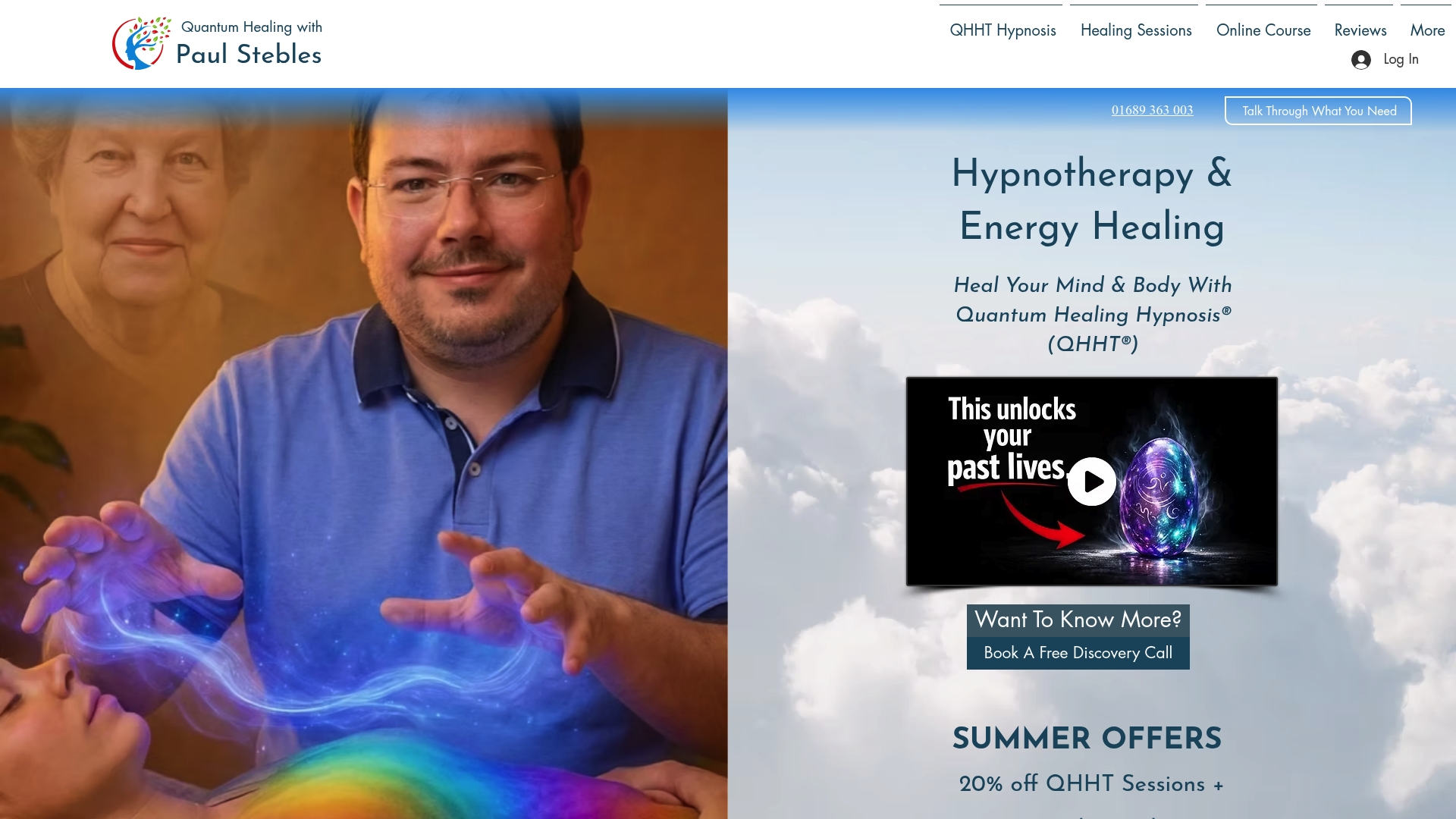
To see what a QHHT day involves in detail, read about QHHT and regression hypnotherapy in Orpington, or go straight to the QHHT booking page and choose a date when you can keep the whole day free.
FAQ
How long is a QHHT session?
The QHHT Official Website says sessions should be a minimum of four to five hours, including the interview, the hypnosis and the discussion afterwards. The founder’s own class notes describe at least five to six hours with each client. Plan for a full day and avoid squeezing other commitments around it.
How long does the hypnosis itself last?
The hypnosis is only part of the appointment. In the founder’s teaching, clients were not kept in trance for longer than about two hours without the subconscious’s permission. The interview before it takes at least two hours, and the discussion follows.
Will I need more than one session?
The technique is designed as a one-time experience. The official guidance says that when QHHT is given properly, additional sessions are not typically necessary. That is why one long appointment is used rather than a series of short ones.
What should I do before and after?
Before, eat a proper meal, avoid stimulating drinks, wear comfortable clothes and bring your questions written down. Afterwards, keep the rest of the day free, travel home calmly and rest. Writing down what you remember while it is fresh can be helpful.
Sources
Recommended
Comments