Reiki cost in the UK: what to expect in 2026


Most one-to-one Reiki sessions in the UK typically cost within a broad range suitable for standard 60-minute appointments. Taster or shorter sessions (around 30 minutes) usually start at a relatively low price point, while extended 90-minute treatments or those with add-ons can be priced higher, particularly in London and other major cities. Distance sessions are usually priced close to in-person rates, though some practitioners charge slightly less to reflect lower studio overheads.
Quick reference:
Starter/taster (30 min): typically £25–£35
Standard session (60 min): usually £30–£70
Extended session (90 min+): commonly £60–£100+
Distance/remote session: typically £30–£65, close to in-person rates
Pay more when a practitioner holds additional qualifications, works in a high-cost area, or includes add-ons such as crystal therapy or sound healing. A lower price is perfectly acceptable if the intake process is thorough and the practitioner holds recognised professional membership.
Table of Contents
How much does a Reiki session cost in the UK?
Aggregated UK price listings show per-session fees starting as low as £10 for community or charity-run tasters and reaching £70 or above for city-centre clinics. The table below gives a realistic working range for most private bookings.

Session type | Duration | Typical UK price band |
Taster/introductory | ~30 min | £25–£35 |
Standard | 60 min | £30–£70 |
Extended | 90 min+ | £60–£100+ |
Distance/remote | 60 min | £30–£65 |
First/initial visit | 75–90 min | £30–£70 |
First sessions cost more for a reason. Practitioners commonly run a 15–30 minute intake on top of the treatment itself, covering medical history, goals, and consent. That extended first appointment is why the initial visit is priced higher than follow-ups, not because the Reiki itself is different.
Regional variation is real. London and major cities such as Manchester and Bristol tend to sit at the upper end of the £30–£70 band, while practitioners in smaller towns often charge £35–£50 for the same session length. Package discounts of 10–20% are common when you book three or more sessions upfront, which can bring a standard session down to around £28–£56 depending on the practitioner.
In-person versus distance Reiki: what are you actually paying for?
The format changes the overheads, not the treatment itself. In-person sessions carry costs that remote ones do not: room hire, travel (for mobile practitioners), and any physical props such as crystals, singing bowls, or aromatherapy. Those extras are either bundled into the fee or listed separately, so it is worth asking before you book.
Distance Reiki is considered a full-value format by most practitioners. Where a remote session is priced slightly lower than an in-person one, the difference reflects studio savings rather than any reduced therapeutic intent. A typical remote session includes a short video or phone check-in (usually 10–15 minutes), a defined treatment window during which the practitioner works remotely, and a brief debrief call or written feedback afterwards.
Pro Tip: Before booking a distance session, confirm the practitioner’s time zone, their preferred platform (Zoom, phone, or written report only), and whether prepayment is required. Most reputable practitioners ask for payment in advance for remote bookings, which is standard practice rather than a red flag.
Packages, add-ons, training and attunement costs
Booking a block of sessions is the most straightforward way to reduce the per-session cost. Most practitioners offer:
3-session packages: typically 10–15% off the single-session rate
5 or 6-session packages: often 15–20% off, sometimes bundled with a free consultation or aftercare notes
Sliding-scale or concession pricing: available from many community practitioners for those on low incomes, students, or NHS staff; worth asking directly if cost is a barrier
Sliding scales and package discounts of 10–20% are standard practice in the Reiki community, not a sign of desperation on the practitioner’s part.
Add-ons vary widely. Sound therapy (singing bowls or tuning forks) typically adds £10–£20 to a session fee. Crystal placement, oracle card readings, or chakra balancing work are similarly priced as extras, though some practitioners include them as standard. Always check what is in the base price before assuming.
Reiki training and attunements sit in a different price bracket entirely. A Level 1 (Reiki I) course in the UK generally costs £100–£200, covering the attunement itself, a manual, and a certificate. Level 2 courses typically run £150–£300. Master/Teacher level training varies considerably by lineage and teacher, but £300–£600 is a reasonable working range. These prices usually include course materials; some teachers charge separately for printed manuals or ongoing mentoring.
Why do Reiki prices differ so much?
The gap between a £25 community session and a £90 city clinic appointment comes down to several overlapping factors.
Practitioner experience and qualifications are the biggest driver. A newly attuned Level 2 practitioner charging £35 is not necessarily worse value than a Reiki Master charging £75, but the Master brings more training hours, often additional modalities, and a longer track record. Specialisms such as Karuna Reiki, sound healing, or a counselling background justify a higher fee because the practitioner is drawing on a broader skill set.
Location and overheads account for a significant chunk of the London premium. A practitioner renting a therapy room in central London pays considerably more per hour than one working from a home studio in a market town, and that cost flows through to the client.
Session length and add-ons are straightforward: longer sessions and bundled extras cost more. What is less obvious is that first appointments are priced higher because the intake work is genuinely time-consuming, not because practitioners are padding the bill.
Reputation and testimonials matter too. Practitioners with a strong body of client feedback, a visible online presence, and clear aftercare policies tend to charge more, and the premium is usually justified.
On cancellation and refunds: most practitioners require 24–48 hours’ notice to avoid a cancellation fee, typically 50–100% of the session cost. A clear, written cancellation policy is a mark of professionalism. No policy at all is a warning sign.
How to choose a safe, professional Reiki practitioner
Price tells you something, but not everything. Before you book, run through these questions:
How long is the first session, and what does it include? A reputable practitioner will describe an intake consultation covering your health history and goals, not just a treatment slot.
What are the cancellation and refund terms? Ask for these in writing before paying.
Do you work alongside conventional medical treatment? The answer should be yes. Any practitioner who suggests you reduce or stop prescribed medication is a red flag.
Are you a member of a recognised professional body? Look for membership of the UK Reiki Federation or registration with the CNHC (Complementary and Natural Healthcare Council). Both require practitioners to meet training standards, hold insurance, and follow a code of conduct.
What hygiene and safety policies do you follow? Particularly relevant for in-person sessions.
Do you provide aftercare notes or follow-up guidance? This is a sign the practitioner treats the work seriously.
Red flags to walk away from: no intake consultation at all, pressure to book a long block of sessions upfront before you have had a single treatment, vague or absent professional membership, and any suggestion that Reiki replaces medical care.
Does the NHS fund Reiki, and is it regulated in the UK?
Plainly: the NHS does not generally fund or commission Reiki. NHS FOI responses confirm that where Reiki has appeared in NHS settings, it has typically been through charity funding or volunteers rather than commissioned contracts. Medway NHS Trust, for example, reported zero commissioned contracts for Reiki.
A 2024 survey of NHS trusts in England found that many trusts offering complementary therapies, including Reiki, did not provide evidence of clinical effectiveness, and that several services were charity-funded rather than clinically commissioned. There is currently no convincing published evidence for the clinical cost-effectiveness of Reiki as a standalone treatment.
Reiki is also unregulated in the UK, meaning anyone can legally call themselves a Reiki practitioner without formal training. This is precisely why membership of the UK Reiki Federation or CNHC registration matters: both bodies require minimum training standards, professional insurance, and adherence to a code of ethics. Neither guarantees clinical outcomes, but both give you a meaningful baseline of accountability.
This article is general information, not medical advice. Always consult a qualified healthcare professional before making decisions about your health or treatment.
How often do people have Reiki, and what does it add up to?
Most practitioners suggest an initial course of several sessions, spaced one to two weeks apart, to assess whether Reiki is working for you. Package discounts are commonly offered to reduce the total cost.
For ongoing maintenance, monthly or bi-monthly sessions are common, leading to cumulative yearly costs that vary widely depending on frequency and practitioner rates. These figures shift considerably depending on your location and chosen practitioner, but they give a realistic picture of cumulative cost for anyone planning regular treatment.
How does Reiki cost compare with other complementary therapies in the UK?
Reiki sits in the mid-range of the complementary therapy market. A standard 60-minute session at £30–£70 is broadly comparable with reflexology (typically £40–£65) and Indian head massage (£35–£55). Acupuncture tends to run slightly higher, with initial consultations often reaching £60–£90 and follow-ups at £50–£75. Osteopathy and sports massage generally cost more again, particularly in urban areas.
The practical takeaway: Reiki is not the cheapest complementary therapy available, but it is not the most expensive either. Its price point reflects the session length and the practitioner’s training rather than any particular scarcity of practitioners.
Paulstebles: in-person and remote energy healing in England
If you want a practitioner who combines Reiki with a broader energy healing approach, Paulstebles offers both in-person and remote energy healing sessions from Orpington and Bromley, covering South East London and Kent. Sessions integrate Reiki with chakra balancing, cord cutting, timeline healing, belief transformation, and emotional release work, giving each appointment more depth than a standard Reiki treatment alone.
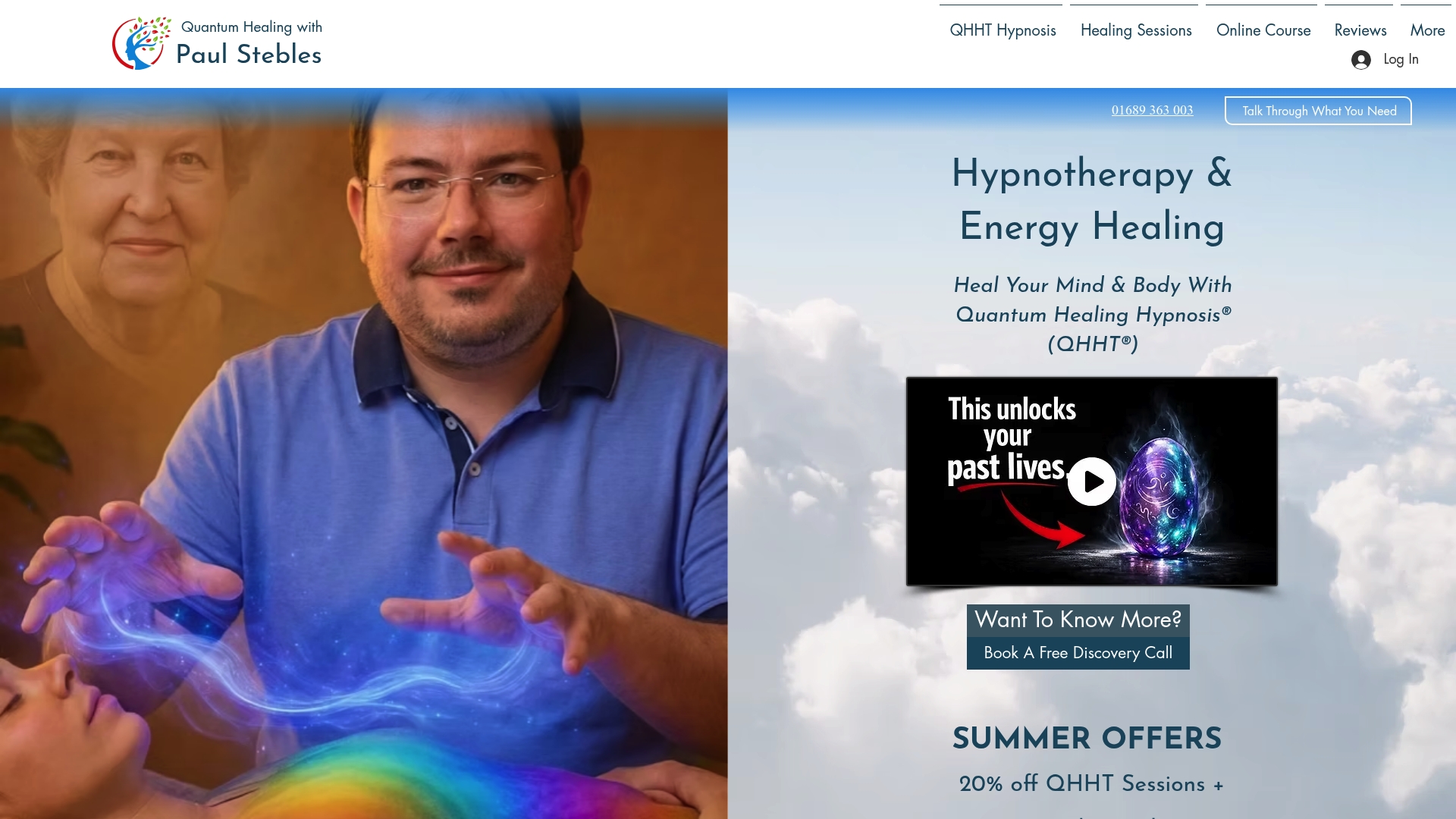
The first session includes a full intake consultation so that the work is tailored to your specific situation, whether you are dealing with emotional blocks, physical discomfort, or simply want clarity on what is holding you back. Remote sessions are available for clients across England who cannot attend in person, with a structured check-in and debrief included. Paulstebles also offers Quantum Healing sessions that combine energy work with deeper subconscious exploration for those seeking a more intensive experience.
To check availability and book your first session, visit paulstebles.com.
Key takeaways
Standard UK Reiki sessions cost £30–£70 for 60 minutes; first sessions cost more because they include a full intake consultation, and package discounts of 10–20% are widely available.
Point | Details |
Typical session cost | Standard 60-minute sessions run £30–£70; tasters are typically £25–£35 and extended sessions commonly reach £100 or more. |
First session pricing | Initial appointments include intake and consent work, making them 15–30 minutes longer and priced higher than follow-ups. |
Distance sessions | Remote Reiki is typically £30–£65, very close to in-person rates; any lower price reflects studio savings, not lesser value. |
Professional membership | Look for UK Reiki Federation membership or CNHC registration before booking any practitioner. |
Paulstebles | Offers in-person and remote energy healing in Orpington and Bromley, combining Reiki with chakra balancing and subconscious work. |
The price you pay is not the point
The most common mistake people make when comparing Reiki prices is treating the fee as the primary quality signal. It is not. A £40 session with a thorough intake, clear aftercare, and CNHC registration is a better investment than a £70 session with no consultation and no professional accountability.
What actually tells you whether a practitioner is worth booking: the quality of their intake process, the clarity of their cancellation terms, and whether they are honest about what Reiki can and cannot do. Practitioners who position Reiki as a complement to conventional care, rather than a replacement for it, are the ones worth paying for.
Package savings make sense once you have had a first session and know the practitioner suits you. Committing to six sessions upfront with someone you have never met is a financial risk regardless of the discount. Use the checklist in the how-to-choose section above before you hand over any money, and treat the first session as a trial as much as a treatment.
Sources and further reading
Royal Devon and Exeter NHS Trust FOI: Reiki and Energy Healing — NHS FOI response on commissioned Reiki services and governance; useful for understanding the NHS position.
Pseudoscience in cancer services: a survey of NHS trusts in England (medRxiv, 2024) — Academic survey on complementary therapies in NHS trusts; relevant to the evidence and regulation context.
MedPrice.uk: Reiki price listings — Aggregated UK clinic price data; useful for checking local rates.
Reiki Energy Healing: fees and duration — Practitioner fee page explaining first-session pricing and session length differences.
Paulstebles energy healing sessions — In-person and remote energy healing in Orpington and Bromley, combining Reiki with broader healing modalities.
How to choose the right energy healing practitioner — Practical guidance on vetting practitioners in Kent and South East London.
Recommended
Comments