Solar plexus healing: unblock and strengthen Manipura

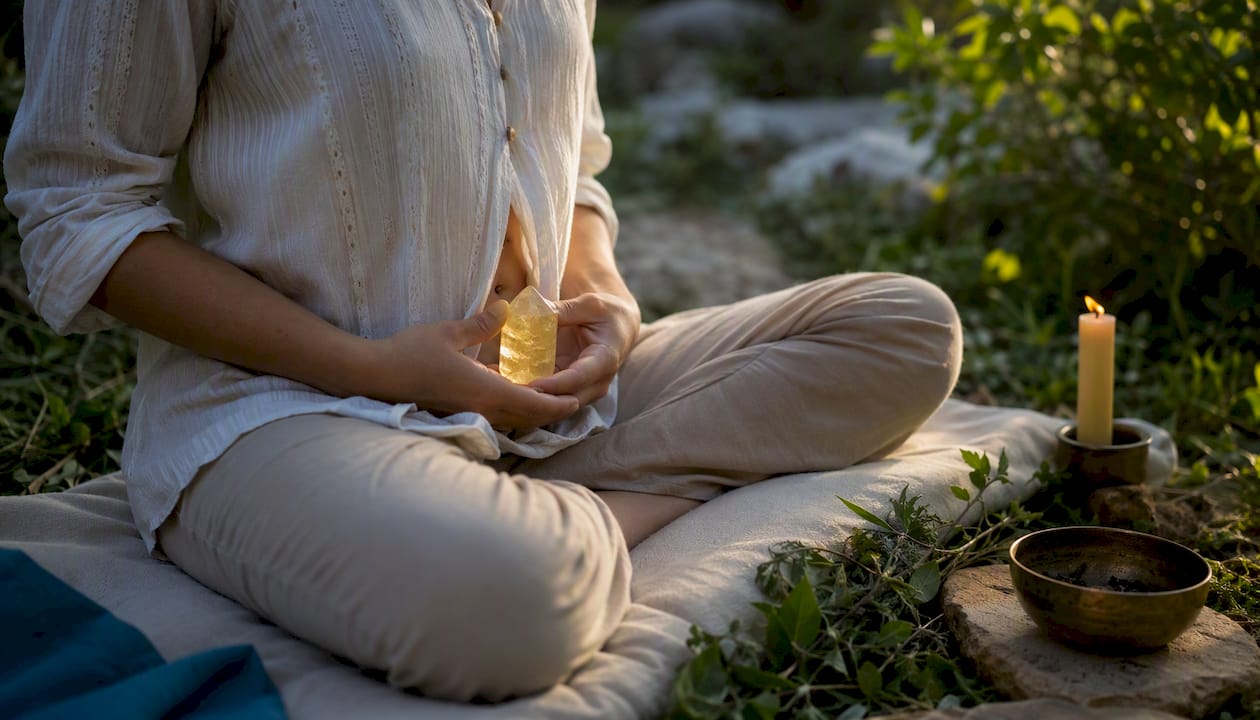
Yes, you can heal a blocked solar plexus. The most direct path combines consistent breathwork, core-focused movement, and deliberate boundary practice. Start right now with these three actions, each taking under ten minutes:
Breath: Sit tall, place one hand on your abdomen, and take five slow, deep belly breaths. Feel the rise and fall beneath your palm. This alone begins to stimulate Manipura.
Visualisation: Close your eyes and picture a warm, golden-yellow flame glowing at your solar plexus, just above your navel. Hold that image for two minutes, letting the warmth spread outward with each exhale.
Affirmation: Say aloud, “I am confident, capable, and in control of my own life.” Repeat it three times with intention.
Medical safety note: Persistent or severe abdominal pain, unexplained weight loss, numbness, or black stools require GP or NHS evaluation. Chakra practices are complementary and do not replace medical diagnosis or treatment.
Key takeaways
Solar plexus healing works best when breathwork, boundary practice, and gut health are addressed together, not as separate rituals.
Point | Details |
Start with breath and boundaries | Daily Kapalabhati and one small boundary act build Manipura strength faster than crystals alone. |
Balanced vs blocked looks different | Underactive Manipura shows as self-doubt and poor boundaries; overactive presents as control and aggression. |
Diet supports the work | Warming spices, probiotic foods, and reduced sugar support the gut–brain axis that underlies solar plexus confidence. |
Seek medical help for physical symptoms | Persistent abdominal pain, weight loss, or black stools need GP evaluation before any complementary practice. |
Paulstebles offers guided support | In-person and remote QHHT and energy healing sessions address the subconscious roots of solar plexus blockage across the UK. |
Table of Contents
How do you know if your solar plexus is blocked or overactive?
A practical daily and weekly routine for solar plexus healing
Guided visualisation, the RAM mantra and affirmations for Manipura
How Paul Stebles’ QHHT and energy healing support Manipura work
Paulstebles: professional solar plexus healing support in the UK
What is the solar plexus (Manipura) chakra?
The solar plexus chakra, known in Sanskrit as Manipura (“city of jewels”), is the third energy centre in the body. It sits above the navel, at the upper abdomen, and governs personal power, self-will, and the capacity to translate intention into action. According to MyYogaTeacher’s guide to Manipura, it is the seat of identity, autonomy, and digestive fire.
Manipura is associated with the fire element, which explains its connection to metabolism, digestion, and the generation of inner heat. When this centre is functioning well, you feel decisive, grounded in your own worth, and able to hold your boundaries without guilt. Psychologically, it governs self-esteem, motivation, and the courage to act.
At a glance:
Location: Upper abdomen, above the navel
Colour: Bright yellow
Element: Fire
Psychological functions: Self-confidence, willpower, personal identity, healthy boundaries
Physiological links: Digestion, metabolism, adrenal response, core muscle tone
How do you know if your solar plexus is blocked or overactive?
Mindbodygreen’s overview of the solar plexus chakra describes a clear contrast between a balanced and a blocked Manipura. The distinction matters because the practices you choose should match the presentation.
Blocked (underactive) | Overactive |
Low self-worth, chronic self-doubt | Controlling or domineering behaviour |
Difficulty making decisions | Aggression, perfectionism |
People-pleasing, poor boundaries | Arrogance, need to be right |
Shame, victim mentality | Burnout from overextension |
Digestive sluggishness, bloating | Acid reflux, stomach tension |
Fatigue, lack of motivation | Hyperactivity, restlessness |
Common causes of imbalance include childhood shame or criticism, chronic stress and anxiety, repeated boundary violations, digestive disruption, and long-term people-pleasing patterns. Trauma that attacked your sense of agency — being controlled, humiliated, or ignored — tends to leave a particularly deep mark on Manipura. Insights by Omkar’s guide to Manipura notes that rebuilding personal power often begins with small, repeated decisions rather than a single dramatic shift.
When does solar plexus discomfort need a GP, not a healer?
This distinction matters and it is worth being direct about it. The spiritual concept of the “solar plexus” and the clinical term “celiac plexus” refer to overlapping anatomical territory. A celiac plexus block is a medical nerve procedure used for chronic abdominal pain, entirely unrelated to energetic chakra work. Confusing the two can delay necessary care.
Seek GP or NHS attention promptly if you experience:
Acute or persistent severe abdominal pain
Unexplained weight loss
Black or tarry stools
Numbness or tingling in the abdomen or legs
Vomiting blood or persistent nausea
Symptoms that worsen over days rather than improving
When describing symptoms to a clinician, be specific: location, duration, what makes it better or worse, and any associated symptoms. Verywell Health provides clear guidance on the difference between energetic practices and clinical interventions. Energy healing is adjunctive. It supports wellbeing alongside medical care, not instead of it.
A practical daily and weekly routine for solar plexus healing
Insights by Omkar recommends layering breathwork, yoga, meditation, and boundary work as the most effective multi-modal approach to balancing Manipura. Here is a ready-to-use structure:
Daily (10–15 minutes total):
Morning breath: 2 minutes of Kapalabhati or belly breathing to activate the abdominal region
Visualisation: 2-minute golden flame meditation (see Section 8 below)
Affirmation: One chosen affirmation spoken aloud, ideally in front of a mirror
Boundary micro-practice: One small, deliberate act of saying no or asserting a preference — even something minor counts
Weekly (one or two longer sessions):
Extended breathwork: 10–15 minutes of pranayama, including Bhastrika
Yoga core flow: 20–30 minutes targeting the abdominal region (see Section 7)
Guided meditation or ritual: A longer visualisation, mantra session, or fire-element ritual
Journalling: 15 minutes responding to a focused prompt (see Section 8)
Timeline: Some people notice subjective shifts in confidence and digestive ease within a few weeks of consistent daily practice. Deeper wounds rooted in trauma or long-standing shame patterns typically take months and often benefit from professional support.
Breathwork techniques that stimulate Manipura
The abdominal region is directly connected to the enteric nervous system, sometimes called the “second brain.” Breath practices that generate internal heat activate this area somatically and support vagal tone, which in turn influences emotional regulation. Spiritual Marker’s complete guide to Manipura specifically recommends heat-building pranayama as a primary tool for solar plexus energy healing.
Kapalabhati (Skull-Shining Breath)
Sit tall with your spine erect. Rest hands on knees.
Take a full inhale through the nose.
Begin short, sharp, forceful exhales through the nose, driven by contracting the lower abdomen. The inhale is passive.
Start with 30 pumps, then rest and breathe naturally for 30 seconds.
Repeat for 2–3 rounds.
This is described as one of the most powerful abdominal breaths for Manipura activation, though beginners should build up gradually.
Gentler beginner alternative: Diaphragmatic Breath with Retention
Inhale slowly for 4 counts, hold for 4, exhale for 6. The extended exhale activates the parasympathetic system and gently stimulates the abdominal region without the intensity of Kapalabhati.
Contraindications — avoid these practices if you have:
Pregnancy
High blood pressure or cardiovascular conditions
Recent abdominal surgery
Active panic disorder or severe anxiety
Epilepsy or vertigo
Pro Tip: If Kapalabhati feels overwhelming, spend two weeks with the diaphragmatic breath before progressing. The goal is stimulation, not strain. Proper seated alignment matters too — check guidance on posture during meditation to avoid compressing the abdomen.
Yoga poses that open and strengthen the solar plexus
Core-focused asanas and twists directly engage the Manipura region. Mindbodygreen recommends poses that centralise energy in the abdomen as primary tools for balancing the solar plexus chakra.
Recommended poses:
Navasana (Boat Pose): Builds core strength and fires up the abdominal muscles directly
Ardha Navasana (Half Boat): A gentler variation for beginners
Parivrtta Trikonasana (Revolved Triangle): Stimulates digestion through deep spinal twist
Dhanurasana (Bow Pose): Opens the front body and stretches the solar plexus region
Virabhadrasana I (Warrior I): Builds confidence and grounded strength
Ustrasana (Camel Pose): Opens the chest and upper abdomen; use with care if you have lower back issues
Paripurna Navasana with breath holds: Combines core activation with pranayama
Surya Namaskar (Sun Salutation): Full-body sequence that honours the fire element and warms the core
A 10-minute micro-flow
Surya Namaskar x 3 rounds (warm-up, 4 minutes)
Navasana held for 5 breaths, rest, repeat twice (2 minutes)
Parivrtta Trikonasana on each side (2 minutes)
Savasana with hand on abdomen, visualising golden warmth (2 minutes)
Safe practice notes: Beginners should use Ardha Navasana instead of full Boat. Avoid deep twists during menstruation or if you have spinal disc issues. Backbends like Camel require a warm spine — never attempt them cold.
Guided visualisation, the RAM mantra and affirmations for Manipura
Short guided visualisation (3–4 minutes)
Sit comfortably with your spine tall. Close your eyes and take three slow breaths. Bring your attention to the space just above your navel. Imagine a small, bright yellow flame burning steadily there. With each inhale, the flame grows warmer and more luminous. With each exhale, any grey or murky energy dissolves into smoke and drifts away. After two minutes, see the flame expand into a golden sphere that fills your entire torso. Rest in that warmth for one minute. When you are ready, take a deep breath and open your eyes.
You can access guided meditations for emotional healing to support this practice with audio resources.
The RAM mantra
RAM (pronounced “rum”) is the bija (seed) mantra of Manipura. MyYogaTeacher recommends RAM mantra meditation as a primary tool for balancing the solar plexus. Chant it aloud or silently on the exhale, either in a seated meditation or during the visualisation above. A session of 10–20 repetitions is a natural starting point. The vibration of the sound is thought to resonate with the Manipura frequency.
10 affirmations for solar plexus confidence and boundaries
I am worthy of respect and I give it freely to myself.
I trust my own judgement.
I have the right to say no without explanation.
My personal power grows stronger every day.
I act from courage, not from fear.
I am in charge of my own choices.
I release the need for others’ approval.
I am capable of achieving what I set my mind to.
My boundaries protect my energy and honour my values.
I stand in my own strength.
Journalling prompt: Write about one situation where you gave away your power. What would you do differently now? What does it feel like to imagine choosing differently?
Foods and habits that support the solar plexus
Diet and gut health are not separate from Manipura work. The gut–brain axis, a well-documented physiological connection between the enteric and central nervous systems, means that what you eat genuinely influences mood, anxiety levels, and the sense of confidence that Manipura governs. Spiritual Marker recommends warming, yellow-golden foods and digestive spices as dietary support for the solar plexus.
Support Manipura with:
Warming spices: Turmeric, ginger, fennel, cumin, black pepper
Yellow and golden foods: Bananas, yellow peppers, sweetcorn, butternut squash, pineapple, lemon
Probiotic foods: Live yoghurt, kefir, sauerkraut, kimchi (support gut microbiome and mood)
Whole grains: Brown rice, oats, quinoa (steady energy, support digestive rhythm)
Herbal teas: Chamomile, peppermint, ginger tea before or after meals
Reduce or limit:
Refined sugar and ultra-processed foods (disrupt gut microbiome and blood sugar)
Excessive caffeine (heightens anxiety, which strains Manipura)
Alcohol (depresses the nervous system and undermines decisiveness)
Simple meal habits: Sit down for meals without screens. Chew slowly. A small cup of warm ginger and lemon water before breakfast is a gentle digestive igniter that also signals intention to the body.
Crystals, mudras and essential oils for Manipura work
These tools work best as supports for intention and focus, not as standalone remedies. Energy Healing Zone identifies citrine as the primary crystal for Manipura confidence work.
Crystals:
Citrine: The go-to stone for personal power and confidence; place on the solar plexus during meditation or carry in a pocket
Yellow jasper: Grounding and protective; supports steady willpower
Tiger’s eye: Builds courage and helps with decision-making
Pyrite: Associated with abundance and self-worth
Mudras:
Rudra Mudra: Touch the tips of the index and ring fingers to the thumb; hold during breathwork or meditation to activate Manipura
Surya Mudra: Fold the ring finger to the base of the thumb; associated with fire element activation and metabolic energy
Essential oils:
Ginger: Warming and grounding; dilute in a carrier oil and apply to the upper abdomen, or diffuse
Bergamot: Uplifting and confidence-supporting; diffuse or add to a bath
Lemon: Bright and clarifying; diffuse during morning affirmation practice
Safety guidance: Always dilute essential oils in a carrier oil (such as sweet almond or jojoba) before skin application. Never ingest essential oils. Check contraindications for pregnancy before using ginger or bergamot topically. Cleanse crystals regularly under running water or in moonlight. For chakra balancing and crystal work in a professional context, a practitioner can guide placement and intention.
Simple fire-element rituals for solar plexus connection
1. Morning sun salutation facing east
Step outside or stand at a window facing east at sunrise. Perform three rounds of Surya Namaskar slowly, breathing deeply. As you raise your arms overhead, consciously draw in the warmth of the sun. This takes five minutes and sets a grounded, energised tone for the day. Sun safety: Apply SPF 30 or higher if spending more than a few minutes in direct sun, particularly between 11am and 3pm.

2. Trataka (candle gazing)
Light a single candle at eye level in a darkened room. Sit one metre away and gaze softly at the flame without blinking for as long as comfortable, up to five minutes. When your eyes water, close them and hold the after-image in your mind’s eye at the level of your solar plexus. This practice sharpens focus and strengthens the fire element internally. Candle safety: Never leave a lit candle unattended. Use a stable holder on a heat-proof surface away from curtains.
3. Mindful cooking ritual
Choose a meal that uses warming spices — a turmeric and ginger soup, for example. As you cook, set a clear intention: “I am nourishing my power and my clarity.” Stir clockwise. Eat without distraction. This ritual reinforces the connection between physical nourishment and energetic intention, making an ordinary act into a Manipura practice.
When should you work with a practitioner?
Self-practice carries you a long way, but some patterns are too deeply rooted to shift alone. Consider working with a practitioner if you notice:
Persistent low self-worth or shame that does not respond to daily practice
Trauma history that surfaces during meditation or breathwork
Worsening anxiety, depression, or dissociation
Physical symptoms that have been medically cleared but persist
A sense of being stuck despite weeks of consistent effort
Questions to ask any practitioner before booking:
What training and qualifications do you hold?
How do you handle emotional distress that arises during a session?
What does aftercare look like?
Do you have experience with trauma-informed practice?
How long is a session and what does it include?
What a QHHT or energy-healing session typically involves:
An intake conversation covering your history, intentions, and any medical considerations
A relaxed, guided trance or hands-on energy treatment targeting areas of blockage
Integration time at the end of the session to ground and process
Follow-up guidance or resources for continuing the work at home
Red flags requiring clinical care: If you are experiencing a mental health crisis, suicidal thoughts, or severe dissociation, contact your GP, NHS 111, or the Samaritans (116 123) before booking any complementary therapy. Energy healing is not a substitute for mental health treatment. You can review common questions about what to expect from sessions on the energy healing and quantum healing FAQ.
How Paul Stebles’ QHHT and energy healing support Manipura work
For readers in the UK who want professional support, Paulstebles offers in-person and remote sessions that address exactly the kind of deep-seated patterns that block the solar plexus. His work combines Quantum Healing Hypnosis Technique (QHHT), regression hypnotherapy, Reiki, chakra balancing, cord cutting, timeline healing, and belief transformation.
Where self-practice builds the surface layer of Manipura strength, QHHT reaches into the subconscious to address the original wound: the moment the sense of personal power was first undermined. Clients often report a shift in how they hold boundaries, make decisions, and relate to their own authority after sessions. The approach is grounded in creating a safe, calm space where the subconscious can surface and integrate material that daily affirmations alone cannot always reach.
Sessions are available both in-person and remotely, making them accessible across the UK. For more on what to expect, visit the quantum healing and energy healing page.
What most solar plexus advice gets wrong
Most guides on healing the solar plexus focus almost entirely on the pleasant parts: crystals, affirmations, golden visualisations. These are genuinely useful. But they tend to skip the part that actually does the heavy lifting, which is boundary practice.
The solar plexus is the chakra of personal will. It does not strengthen through passive rituals alone. It strengthens through use. Every time you say no to something that drains you, every time you make a decision from your own values rather than from fear of disapproval, you are doing direct Manipura rehabilitation. Insights by Omkar makes this point clearly: repeated small decisions rebuild the muscle of personal power more reliably than any single healing session.
The other thing most guides understate is the gut connection. The enteric nervous system is not a metaphor. Chronic digestive issues and chronic low confidence often share a root in the same dysregulated nervous system. Addressing diet, gut health, and breathwork together produces results that affirmations alone rarely do.
If you are serious about solar plexus healing, build the daily practice first. Then, if you hit a ceiling, seek professional support. The order matters.
Paulstebles: professional solar plexus healing support in the UK
Self-practice is the foundation, but some blocks need more than daily breathwork to shift. Paulstebles offers in-person and remote QHHT and energy healing sessions that go deeper than surface-level techniques, reaching the subconscious patterns that keep the solar plexus locked in shame, self-doubt, or chronic people-pleasing.
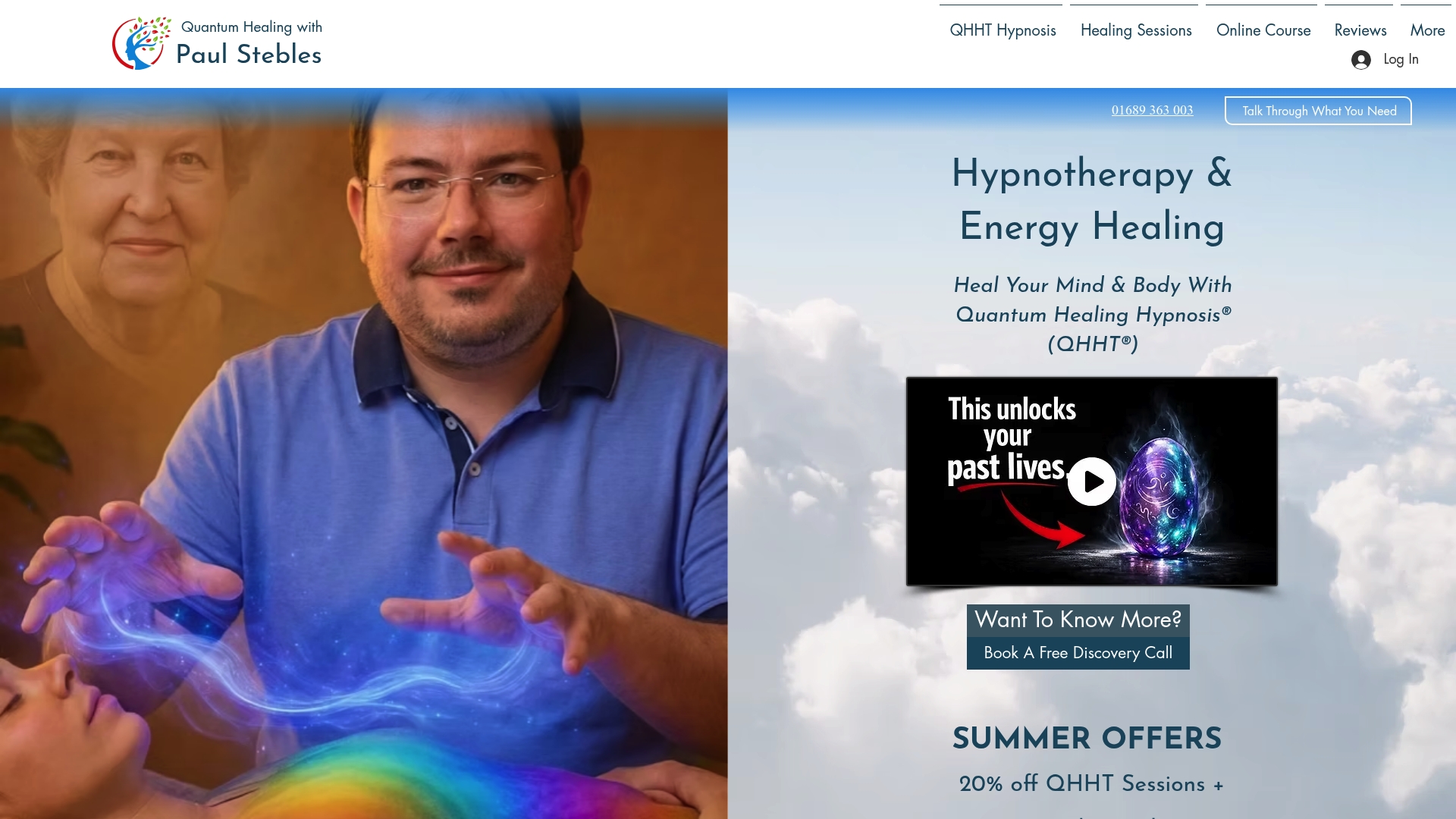
Unlike a generic wellness app or a one-size-fits-all course, each session is tailored to what you actually bring into the room. Paul creates a calm, confidential space where subconscious material can surface safely, and every session includes integration support so you leave with clarity, not just catharsis. Sessions are available in-person in Bromley and Orpington, and remotely across the UK. If you are ready to move beyond the plateau, book a session and find out what guided support can do that daily practice alone cannot.
Sources
Recommended
Comments