Emotional release therapy: practical techniques for healing


Emotional release therapy is a set of body-informed approaches that help people access, discharge, and integrate stored emotional charge that has become stuck in the nervous system and tissues. The main methods you will encounter are Somato-Emotional Release (SER), the Emotion Release Technique (ERT), Somatic Experiencing (SE), CranioSacral Therapy (CST), EMDR, breathwork, and trauma-informed movement. If you are ready to work with a practitioner, seek someone trained in trauma-informed somatic practice; if you want to start today, the safest first step is a simple grounding exercise:
Feet on the floor. Sit upright, press both feet firmly into the ground, and notice the physical pressure for 30 seconds.
Slow breath. Inhale for four counts, hold for one, exhale for six. Repeat five times.
Name what you notice. Say aloud or write down one physical sensation and one emotion without trying to change either.
If you have a significant trauma history, consult your GP or a registered mental health professional before beginning any body-based emotional work.
Key takeaways
Emotional release therapy covers a range of body-informed methods that help discharge stored nervous-system activation, and the evidence, safety, and practical fit vary significantly between modalities.
Point | Details |
EMDR has the strongest evidence | WHO-endorsed for PTSD and available through some NHS Talking Therapies pathways. |
SER evidence is emerging | SER sits within a broader somatic literature; large RCTs are currently lacking for this specific technique. |
Safety screening is non-negotiable | Active psychosis, severe dissociation, or acute crisis require clinical care before somatic emotional work. |
Integration shapes outcomes | Post-session journalling, rest, and pairing body-work with talk therapy significantly affect whether change is lasting. |
Paulstebles as a next step | QHHT, regression hypnotherapy, and energy healing sessions in Bromley and Orpington offer a supported, paced route into deeper emotional work. |
Table of Contents
What is emotional release therapy and why does the body hold emotion?
How to prepare for a session and care for yourself afterwards
How QHHT and energy healing relate to emotional release work
A practitioner’s perspective on integrating these approaches
Paul Stebles offers sessions that support emotional release work
What is emotional release therapy and why does the body hold emotion?
The phrase “emotional release therapy” is not a single registered clinical method. It is an umbrella term covering several body-informed approaches that share one central idea: emotions that are not fully processed at the time they arise can become encoded in the body as muscular tension, postural patterns, or altered nervous-system states, and targeted body-based work can help complete that interrupted cycle.
The nervous-system logic behind this comes from stress-response physiology. When a threat activates the sympathetic nervous system, the body prepares to fight or flee. If neither response is possible, the activation can remain incomplete. Vagal regulation and interoception are the two mechanisms most commonly cited by somatic practitioners to explain how this incomplete cycle persists and how body-based work can help resolve it. Interoception is simply the brain’s ongoing read of internal body signals; when that signal-reading is disrupted by chronic stress, people often lose contact with the felt sense of their own emotional states.
Common holding patterns practitioners observe include jaw clenching (often linked to suppressed anger or chronic vigilance), chest tightness (frequently associated with grief or anxiety), and lower-back tension (sometimes connected to long-term stress or a sense of unsupported burden). The Upledger Institute’s teaching materials are careful to note that specific emotions do not map neatly to fixed body sites; these patterns are individual, not universal. What is well-supported is that chronic stress and trauma correlate with measurable changes in muscle tone, posture, and autonomic regulation. What remains more theoretical is the precise mechanism by which a hands-on intervention resolves a specific emotional memory.

Medical News Today puts it plainly: the idea of fixed emotional maps in the body is not clinically established, yet people commonly report cathartic releases during body-based therapies, and somatic approaches show promising, if still limited, evidence overall.
What actually happens during a session?
Sessions vary by modality, but most trauma-informed practitioners follow a recognisable sequence. Here is what a typical session looks like from start to finish.
Intake and history. The practitioner takes a brief history, asks about current symptoms, any diagnoses, medications, and previous trauma work. This is not optional: it sets the pacing for everything that follows.
Safety agreements. You agree on a signal to pause or stop, discuss what touch (if any) is involved, and establish what “enough” looks like for the session. Consent is ongoing, not a one-time signature.
Grounding and orientation. Before any deeper work begins, the practitioner helps you arrive in your body, usually through breath, gentle movement, or sensory awareness. This is titration in practice: working at the edge of what is tolerable, not flooding.
In-session work. Depending on the modality, this might involve very light hands-on contact (CST or SER), guided attention to body sensation (SE), bilateral stimulation (EMDR), or directed breathwork. The practitioner tracks your nervous-system state throughout, slowing or pausing if activation becomes too high.
Integration time. The final portion of the session is deliberately quiet. You rest, the practitioner may guide a short grounding practice, and you discuss what arose without rushing to interpret it.
Post-session plan. A responsible practitioner will check you are grounded before you leave and suggest simple aftercare, particularly if strong material surfaced.
Session lengths vary considerably. CST and SER sessions typically run 60–90 minutes. SE sessions are often 50–60 minutes. EMDR sessions are usually 60–90 minutes, with some intensive formats running longer. ERT sessions vary by practitioner but commonly sit around 60 minutes. The session framework recommended by UK practitioners consistently emphasises safe space, paced body-mind exploration, naming the emotion, allowing expression, and integration, in that order.
Hands-on work, when it occurs, is extremely light. In CST and SER, the practitioner’s touch is very gentle and light. You remain fully clothed. In SE and EMDR, there is typically no physical contact at all.
The main modalities: how do they differ?
Seven approaches sit most commonly under the emotional release umbrella. They differ significantly on mechanism, format, and evidence strength.
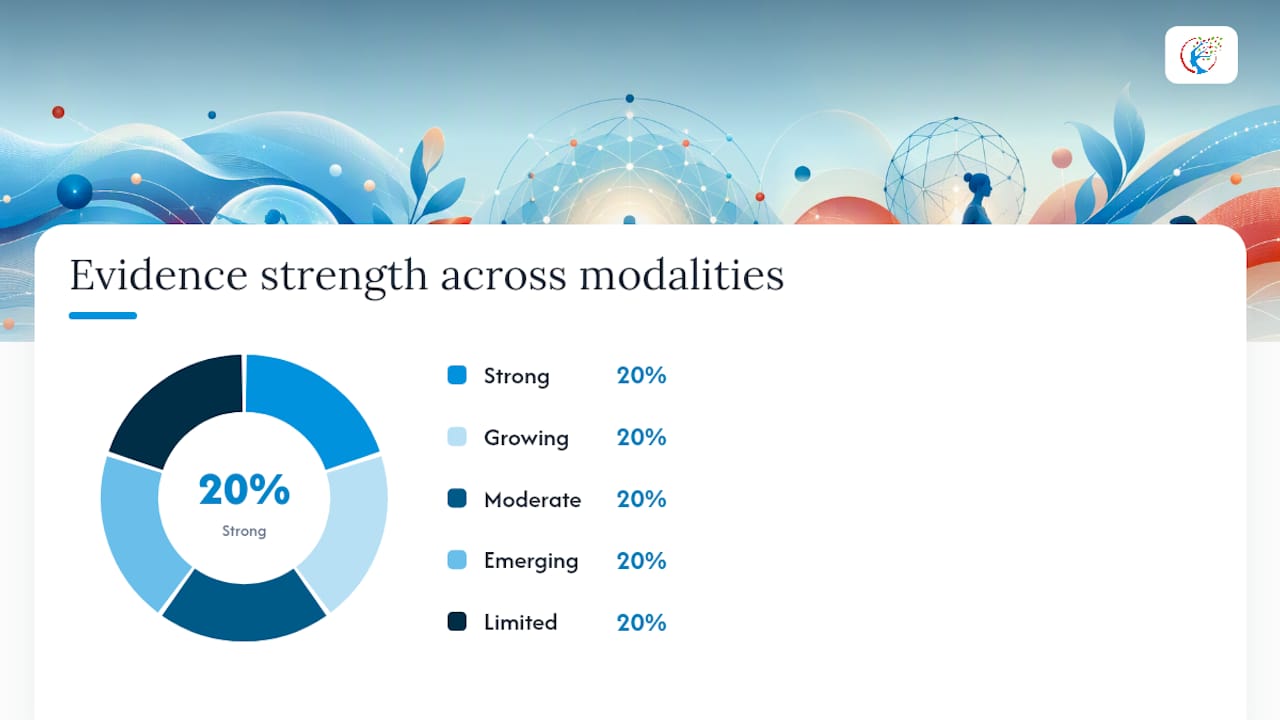
Modality | Primary mechanism | Touch | Typical session | Best for | Evidence strength |
Somato-Emotional Release (SER) | Light tissue contact to locate restrictions; allows stored emotional material to surface | Hands-on (very light) | 60–90 min | Chronic tension linked to past events; those comfortable with touch | Emerging; limited large RCTs |
Emotion Release Technique (ERT) | Guided attention to body sensation combined with cognitive reframing | Hands-off | 50–60 min | Anxiety, phobias, emotional blocks | Limited formal research |
Somatic Experiencing (SE) | Completing interrupted stress-response cycles via titrated body awareness | Hands-off | 50–60 min | PTSD, developmental trauma, chronic stress | Growing; positive trial results in trauma populations |
CranioSacral Therapy (CST) | Gentle cranial and spinal touch to release fascial restrictions | Hands-on (very light) | 60–90 min | Headaches, chronic pain, stress; emotional work secondary | Moderate for pain; limited for emotional outcomes specifically |
EMDR | Bilateral stimulation (eye movement, tapping, or sound) to reprocess traumatic memories | Hands-off | 60–90 min | PTSD, single-incident trauma, phobias | Strongest evidence base; WHO-endorsed for PTSD |
Breathwork | Regulated breathing patterns to shift autonomic state and access sensation | Hands-off | 60–90 minutes | Stress, anxiety, emotional numbing | Promising; varies by protocol. |
Trauma-informed yoga/movement | Slow, consent-based movement to rebuild body awareness and discharge tension | Hands-off | 50–60 minutes | Developmental trauma, dissociation, chronic stress | Growing; positive signals in trauma populations |
SER was developed by Dr John Upledger as an extension of CranioSacral Therapy. During SER sessions, practitioners describe “therapeutic images” or spontaneous emotional material arising as tissue restrictions release, which is a distinctive feature not shared by the other modalities in the table.
For readers uncertain where to start: if you have a confirmed PTSD diagnosis, EMDR has the strongest clinical backing and is available through some NHS services. If you prefer a body-awareness approach without touch, SE is a well-regarded starting point. If you are drawn to hands-on work and want to explore the SER or CST route, look for a practitioner registered with the Upledger Institute or the Craniosacral Therapy Association of the UK.
What benefits do people commonly report?
The outcomes people describe after sustained emotional release work tend to cluster around a few themes.
Reduced chronic muscle tension, particularly in the neck, shoulders, and jaw
Improved sleep quality and reduced night-time rumination
Lower baseline anxiety and fewer panic episodes
Greater emotional regulation, including the ability to notice and name feelings before reacting
Reduced frequency or intensity of stress-related headaches and digestive discomfort
A clearer sense of personal boundaries and improved capacity for connection
Clinical providers note that symptoms commonly associated with chronic stress, including muscle tension, headaches, digestive problems, and sleep disturbance, may improve with emotional release methods, though they also recommend integrating this work with broader clinical care where diagnoses exist.
Realistic expectations matter here. Some people notice a shift after a single session; others work for several months before changes feel stable. The depth of the original stress or trauma, the quality of integration work between sessions, and the fit between client and practitioner all shape outcomes. Body-based work is not a shortcut. It is a process that asks you to slow down and pay attention, which is itself unfamiliar for many people.
Consider someone who has carried chronic shoulder tension and low-level anxiety for years following a difficult period at work. After several SE sessions focused on tracking body sensation and completing interrupted stress responses, they might notice the tension easing, sleep improving, and a new capacity to pause before reacting in stressful conversations. That kind of gradual, integrated change is more typical than a dramatic single-session catharsis.
What does the research actually support?
The evidence base for emotional release approaches is uneven, and being honest about that matters.
EMDR has the strongest clinical support of any method in this group. It is endorsed by the World Health Organisation for the treatment of PTSD and is available through some NHS Talking Therapies services. The evidence for SE is growing, with published trials showing symptom reductions in trauma populations, and the nervous-system mechanisms it draws on, particularly interoceptive awareness and vagal regulation, are well-grounded in contemporary neuroscience.
Evidence note: EMDR is endorsed by the World Health Organisation for PTSD treatment and is available through some NHS Talking Therapies pathways, making it the most clinically validated option in the emotional release family.
For CST, evidence is moderate for pain and headache outcomes; the evidence specifically for emotional outcomes is thinner. For SER, the research is emerging but sits within a broader somatic literature rather than standing on its own large randomised controlled trials. Medical News Today’s review of body-based therapies concludes that somatic approaches show promising but still limited evidence, and that high-quality RCT evidence is lacking for many manual somatic techniques.
Breathwork and trauma-informed yoga show positive signals in trauma populations, but the research quality varies considerably by protocol and population. ERT as a named technique has the least formal research behind it.
None of this means these approaches are ineffective. It means the evidence is at an earlier stage than, say, CBT or EMDR. For anyone with a clinical diagnosis, the sensible path is to treat somatic work as a complement to evidence-based clinical care, not a replacement for it. UK readers can check the NHS website, the BACP register, and the EMDR Association UK for practitioner directories and guidance on what is available through NHS Talking Therapies.
Who is this suitable for, and when should you be cautious?
Emotional release work tends to suit people who:
Carry unresolved stress or tension that has not responded to talk therapy alone
Experience chronic physical symptoms (tension, headaches, fatigue) with no clear medical cause
Have a trauma history and are stable enough to engage in body-based exploration
Want to deepen their self-awareness and emotional regulation outside of crisis
Caution is warranted, and in some cases a clinical conversation should come first, for people who:
Are currently experiencing active psychosis or a manic episode
Have severe, unmanaged dissociation (losing track of where or who you are)
Are in active addiction without a stable recovery structure
Are in acute mental health crisis or have active suicidal ideation
Have a recent significant physical injury or surgery in areas that would be touched
A trauma-informed practitioner’s safety checklist should include: a thorough intake screening for the above; explicit grounding and pacing protocols; a clear plan for what happens if you become overwhelmed mid-session; and a referral pathway to a GP or mental health service if needed. If a practitioner skips the intake or rushes you into deep work in the first session, that is a red flag.
When to see your GP or an NHS mental health service first: if you have a diagnosis of PTSD, severe depression, bipolar disorder, a personality disorder, or any condition currently managed by a psychiatrist, speak to your clinical team before beginning somatic emotional work. This is not because the work is dangerous in all cases; it is because the pacing and coordination matter, and your clinical team needs to know what you are doing.
How to prepare for a session and care for yourself afterwards
Good preparation makes a real difference to how a session lands.
Before your session:
Drink water and eat a light meal; arriving dehydrated or hungry makes it harder to track body sensation.
Arrange transport home; do not plan to drive immediately after deep emotional work.
Inform your practitioner of any current medications, diagnoses, or recent significant events.
Avoid alcohol for at least 24 hours beforehand.
Sleep reasonably well the night before if you can.
After your session:
Give yourself at least 30 minutes of quiet time before re-entering a busy environment.
Drink water and eat something grounding (warm food tends to help).
Write a few sentences in a journal about what you noticed, without trying to analyse it.
Gentle walking or slow movement supports integration better than intense exercise.
If strong emotions surface in the days following a session, that is common; contact your practitioner if it feels unmanageable.
Longer-term integration works best when body-based sessions are paired with some form of reflective practice, whether that is journaling, talk therapy, or simply a daily five-minute body scan. Pairing somatic work with CBT or person-centred counselling is a well-regarded combination, particularly for people with complex histories. The body-based work opens material; the talk-based work helps make sense of it.
Seven safe exercises you can try at home
These exercises draw on established somatic and trauma-informed principles. Work slowly, and stop if you feel dizzy, dissociated, or overwhelmed.
Five-four-three-two-one grounding. Name five things you can see, four you can touch, three you can hear, two you can smell, one you can taste. This orients the nervous system to the present moment and is safe for almost everyone. Stop if you feel more anxious, not less.
Extended exhale breathing. Inhale for four counts, exhale for eight. The longer exhale activates the parasympathetic nervous system. Do this for two to three minutes. Stop if you feel light-headed.
Titrated sensation tracking (SE-style). Sit comfortably and notice one neutral or pleasant physical sensation, perhaps warmth in your hands or the feeling of your back against the chair. Stay with it for 30 seconds, then shift attention to a mildly uncomfortable sensation. Alternate slowly. This builds the capacity to move between activation and ease without flooding. Stop if the uncomfortable sensation becomes overwhelming.
Gentle shaking. Stand with soft knees and allow your legs to shake lightly for one to two minutes, as if you have just stepped off a long run. This draws on the neurogenic tremoring principle used in Tension and Trauma Releasing Exercises (TRE), developed by David Berceli. Stop if you feel unsteady or frightened.
Progressive muscle release. Starting at your feet, tense each muscle group for five seconds, then release completely. Work upward through calves, thighs, abdomen, hands, arms, shoulders, and face. Notice the contrast between tension and release. Avoid this if you have recent muscle injuries.
Slow mindful movement. Walk very slowly for five minutes, paying attention to each footfall, the shift of weight, and the sensation of movement. This is a simplified version of the body-awareness practices used in trauma-informed yoga. Breathwork and movement are commonly recommended alongside somatic work to help access strong sensations safely. Stop if you feel disconnected from your body.
Expressive journaling. Set a timer for ten minutes. Write without stopping about what you are feeling in your body right now, not what you think about it, just what you notice physically. Chest tight? Throat constricted? Hands restless? Healthline’s guidance on releasing emotional tension includes acknowledging feelings and stillness practices as core self-help approaches. Stop if the writing triggers a strong trauma response; seek professional support.
Pacing note: do one exercise per day at most when starting. These practices are not neutral; they can surface material. If you find yourself consistently activated after self-practice, that is a signal to work with a practitioner rather than continuing alone.
How to choose a qualified practitioner in the UK
Credentials in this field are genuinely varied, and the lack of a single statutory register for somatic therapies means the burden of checking falls on you.
What to look for:
Core training in a recognised modality: SE practitioners trained through the Somatic Experiencing International network; EMDR practitioners accredited by EMDR Association UK; CST/SER practitioners trained through the Upledger Institute or the Craniosacral Therapy Association of the UK.
An underpinning qualification in counselling, psychotherapy, or a health profession (nursing, physiotherapy, occupational therapy) is a strong positive signal, particularly for trauma work.
Membership of a professional body with a complaints procedure: BACP, UKCP, or a modality-specific register.
Questions to ask before booking:
What is your core training and how long did it take?
How much of your practice involves trauma clients?
What happens if I become overwhelmed during a session?
Do you have a supervision arrangement?
How do you handle referrals if something arises that is outside your scope?
Red flags to watch for:
Guarantees of cure or dramatic results in a fixed number of sessions.
Pressure to experience a cathartic “breakthrough” rather than working at your own pace.
Vague answers about training (“I’ve done lots of courses”).
No intake process or safety screening.
Boundary violations, including inappropriate touch or personal disclosures that shift the focus to the practitioner.
Pro Tip: Ask any prospective practitioner directly: “What do you do if a client becomes dissociated or overwhelmed mid-session?” A confident, specific answer (grounding techniques, pacing back, ending the session safely, referral pathway) tells you far more than their certificate list.
Body-based work for trauma and emotional release can be deeply helpful. It can also be poorly delivered. The difference usually comes down to training depth and the practitioner’s capacity to hold a safe, boundaried space, not to the modality itself.
How QHHT and energy healing relate to emotional release work
Quantum Healing Hypnosis Technique (QHHT) and energy healing approaches, including Reiki, chakra balancing, and timeline healing, occupy a different position in the evidence landscape from SE or EMDR. They are not currently supported by the same volume of clinical trial data, and it is important to be clear about that.
What they offer is a different kind of access. Regression hypnotherapy works at the level of the subconscious mind, using a deeply relaxed hypnotic state to surface material that is not easily reached through conscious reflection or body-sensation tracking alone. Some clients find that subconscious imagery or past-life narrative (whether understood literally or as metaphor) provides a framework for making sense of emotional patterns that somatic work has begun to surface. Energy healing sessions that combine Reiki, cord cutting, and belief transformation work on a different register again, addressing what practitioners describe as energetic or vibrational aspects of emotional holding.
For readers with a clinical diagnosis of PTSD, depression, or another condition currently managed by a mental health team, the sensible sequence is: stabilise with evidence-based clinical care first, add somatic work once you are stable, and consider QHHT or energy healing as a complementary layer for integration and deeper exploration. These approaches are not a substitute for clinical care; they work best alongside it. The nervous system reset work that QHHT and energy healing can support is most effective when the client already has a degree of nervous-system stability.
If you are not in clinical care and are exploring emotional release work for stress, chronic tension, or a desire for deeper self-understanding rather than a clinical diagnosis, QHHT and energy healing can be a meaningful starting point, particularly when delivered by a practitioner who screens carefully and works at a pace that feels safe.
A practitioner’s perspective on integrating these approaches
The most common mistake I see in this field is treating emotional release as a single event rather than a process. A session can open something significant, but what happens in the days and weeks afterwards, how you rest, reflect, and gradually integrate what arose, often determines whether the change sticks.

In my own practice, blending QHHT and energy healing with trauma-informed somatic awareness, the sessions that produce lasting shifts are almost always the ones where the client arrives with some capacity to track their own body state and leaves with a clear, simple integration plan. The subconscious material that surfaces in a QHHT session is richest when the client is not flooded by it, which means the grounding and pacing skills that somatic work builds are genuinely useful preparation.
I refer clients back to their GP or to a mental health service when I encounter active crisis, significant dissociation, or symptoms that suggest a clinical diagnosis needs to be addressed first. That is not a limitation of the work; it is part of doing it responsibly. The goal is always the client’s long-term wellbeing, not a dramatic session outcome.
Paul Stebles offers sessions that support emotional release work
If you are ready to move beyond self-practice and work with a practitioner, Paulstebles offers QHHT and regression hypnotherapy sessions that access subconscious material at depth, alongside energy healing sessions combining Reiki, chakra balancing, cord cutting, and belief transformation. Both are available in-person in Bromley and Orpington, with energy healing also available remotely.
For those who prefer to start independently, the online course for overcoming anxiety and depression provides structured video content and exercises you can work through at your own pace. Sessions are designed around safety, pacing, and integration, not cathartic pressure. If you have questions about whether QHHT or energy healing is appropriate for your situation, the QHHT FAQ page covers format, what to expect, and how to prepare. Book a session or get in touch through the website to discuss your needs before committing.
Sources
Recommended
Comments