Clinically Aligned 2–5 Minute Routines to Clear Energy for Empaths


If you are an empath, a two-breath grounding plus a visual shield will stop most immediate drains. Two slow diaphragmatic breaths lower your body’s stress response, and a brief visual shield gives your mind a clear stopping point for someone else’s emotion, as explained in these effective breathing exercises for anxiety. For the exact steps, go straight to the quick clearing routines below.
TL;DR:
Grounding and breathing techniques can allow empaths to quickly reduce emotional drains within a few minutes, even in public settings.
Daily habits like morning intention setting, midday releases, and evening hand-washing or journaling can prevent energy build-up over time.
Clinicians recommend grounding and breathwork because they interrupt physical panic cycles without requiring stillness or prolonged practice.
Longer visualizations such as shielding, cord-cutting, or chakra balancing help rebuild steadiness, but should be stopped if emotions become overwhelming.
Setting clear boundaries, avoiding over-responsibility, and recognizing signs of exhaustion are essential to prevent persistent energy depletion.
Table of Contents
2 to 5 minute clearing routines you can do anywhere
These micro-protocols work in a supermarket queue, after a tense meeting or the moment you step off a crowded train. None need privacy, equipment or more than five minutes.
Breathe low and slow. Sit or stand tall, place a hand on your stomach and breathe in through your nose for a count of four, feeling your hand rise, then out through your mouth for a count of six. Repeat four to six times. This diaphragmatic pattern is part of grounding techniques used clinically to calm the body quickly.
Ground through your senses. Name five things you can see, four you can hear, three you can touch, two you can smell and one you can taste. This empath-adapted version of the 5-4-3-2-1 technique pulls attention out of someone else’s feelings and back into your own body.
Cleanse with light and a shake. Picture a wash of pale light moving from your head to your feet, taking tension with it, then gently shake out your hands and shoulders for ten seconds to discharge leftover tension physically.
Cut the cord. If one person’s mood is still clinging, picture a thin cord between you and them, silently name what you are releasing, and mime cutting it with one decisive hand movement.
Work through them in order: breathe first, ground second, cleanse last, since each step settles your body enough for the next to land.
Pro Tip: Do the breathing step alone before anything else if you only have thirty seconds, since a steady breath is what makes the rest effective.
Daily rituals and habits that stop energy build-up
Clearing in the moment helps, but small daily habits stop the drain from stacking up in the first place. Pick two or three and attach them to something you already do, rather than adding a whole new routine.
Morning centring (1 to 3 minutes): before checking your phone, breathe slowly and set one intention for how you want to feel by the end of the day.
Midday reset: at lunch or between tasks, run a 60 second body check, noticing where tension sits and releasing your shoulders and jaw.
End-of-day shut-down: close the day with a short symbolic clearing, such as washing your hands with intention, or two minutes of journalling about what was yours and what belonged to someone else.
Habit-stack it: link each ritual to an existing anchor, like your kettle boiling or your commute, so it needs no extra willpower to remember.
Mental health charities point to small, repeatable actions like these as more sustainable than occasional dramatic resets, particularly for people already running low on energy and resilience.
Grounding, breathwork and why clinicians recommend these methods
Grounding and breathwork are not fringe ideas borrowed from energy work. They sit inside mainstream anxiety treatment because they interrupt the physical panic cycle directly rather than trying to reason your way out of it.
Breathing control exercises are effective at interrupting the breathlessness-anxiety cycle and can be taught by clinicians.
A notable portion of people show sensory processing sensitivity, a trait linked to stronger neural responses in brain regions tied to empathy and awareness, which helps explain why empaths feel overwhelm faster than most people, according to an fMRI study of sensory processing sensitivity.
Grounding is the better choice over a longer meditation when you feel agitated or panicky, since it needs no stillness and works in seconds. If anxiety or panic keeps returning despite regular grounding, that is a signal to speak with a GP or therapist rather than relying on self-practice alone.

Meditation and energetic practices: shields, chakras and cord-cutting
Once the acute drain has settled, a slightly longer practice helps you rebuild a steadier baseline. These take five to ten minutes and can be done seated, eyes closed.
Build a shield. Visualise a soft light, gold, white or blue, forming an egg-shaped field around your whole body, thick enough to blur sharp edges of other people’s moods.
Balance root and heart. Picture warm red light steadying your feet and legs, then a gentle green or pink light opening and softening your chest, the two points empaths lean on most.
Cut old cords. Bring to mind one relationship that feels heavy, picture the connecting cord, thank it for what it taught you, then visualise it dissolving rather than snapping.
Keep each stage to two or three minutes and stop immediately if emotions intensify rather than ease. Ground again with slow breathing before returning to your day.
Pro Tip: Open your eyes and name three objects in the room if a visualisation starts to feel too intense, then return to simple breathing instead.

Boundaries, behavioural strategies and red flags to watch for
Clearing techniques buy you relief, but boundaries stop the leak at its source. A few phrases and habits do most of the work.
Say “I can’t take that on right now” instead of absorbing someone else’s crisis as your own.
Leave a draining conversation with a simple “I need five minutes”, no justification required.
Watch for recurring exhaustion, disrupted sleep or rumination that loops the same worry for hours, since these are signs your container has sprung a leak.
Notice people-pleasing patterns, like agreeing to plans you dread, and practise a plain “no” without an apology attached.
Practitioner literature on empathic patterns notes that people-pleasing and over-responsibility are often what sustains long-term energy loss, meaning clearing tools stay temporary fixes until these habits shift. When exhaustion persists despite consistent boundaries, that is the point to consider therapy or a practitioner session.
Practical practitioner protocols worth borrowing
Beyond self-practice, stepwise protocols built by practitioners give empaths a repeatable structure rather than guesswork, particularly before and after an energetically intense session.
A short intake check before any deeper work: name your current stress level, sleep quality and what you want to release.
A grounding close after any session or heavy emotional exchange, using the breathing and sensory steps above before returning to normal activity.
A same-day integration note, a few lines on what shifted, to track patterns over weeks rather than relying on memory alone.
For longer, guided versions of these steps, our aura-cleansing protocol and grounding guidance walk through each stage in more depth. Self-practice covers daily maintenance; practitioner-led work adds value when a pattern keeps resurfacing despite consistent effort.
Practitioner viewpoint: sustainable practice for empaths
Grounding and plain boundaries come before any advanced energy work, because a nervous system that cannot settle will not hold a visualisation steady either. One sign the work is landing is simpler sleep, fewer intrusive emotions carried from other people into your evening. Asking for support when self-practice stalls is not failure. It is pacing.
— Paul
How a guided session can support deeper integration
Self-practice handles daily maintenance well, but some patterns need more focused attention than a five-minute routine can give. QHHT® - Quantum Healing Hypnosis sessions explore the deeper subconscious causes behind recurring exhaustion or emotional overwhelm, while our Evolve Quantum Healing sessions combine Reiki, chakra balancing and cord-cutting for a more hands-on energy reset.
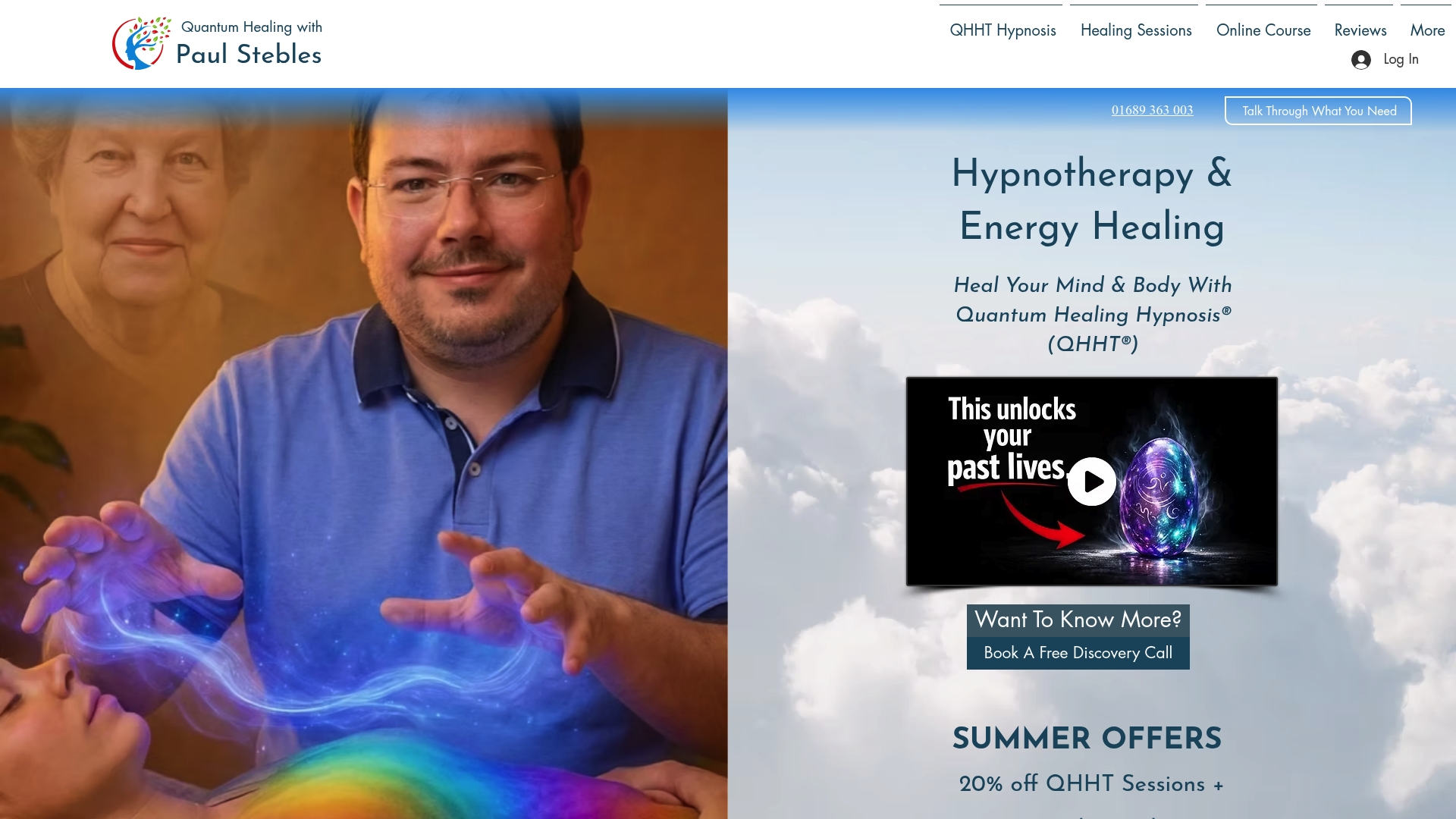
A typical session opens with an intake conversation about what you are carrying and what you hope to shift, followed by the main work in a calm, paced setting, then time afterwards to talk through what came up. Remote Evolve Quantum Healing sessions suit readers who prefer support without travel, and the self-paced Rising Higher course is there for anyone wanting structured exercises between sessions. You can see available times and book a session directly.
FAQ
What drains an empath’s energy the fastest?
Prolonged exposure to someone else’s distress, crowded or noisy environments, and unresolved conflict tend to drain empaths fastest. Poor sleep and skipped meals make the drain worse, since a depleted body has less capacity to filter incoming emotion.
What is the rarest type of empath?
Definitions of empath “types” vary across practitioner sources rather than coming from a single agreed system. Physical or medical empaths, who report feeling others’ physical symptoms in their own body, are commonly described as one of the less common categories.
What are the signs that an empath’s energy is exhausted?
Common signs include persistent fatigue, disrupted sleep, irritability, difficulty concentrating and a sense of carrying emotions that are not your own. Withdrawing from people you usually enjoy and feeling overwhelmed in ordinary settings, like a shop or office, are also frequent signals.
What is the spiritual gift of an empath?
Many empaths describe their gift as an unusually deep capacity for compassion and intuitive understanding of other people’s inner states. Practitioner traditions often frame this as a strength that needs protective boundaries to be sustainable, rather than a burden to suppress.
How is energy clearing for empaths different from general stress relief?
Energy clearing adds visualisation and symbolic release, such as shielding or cord-cutting, on top of standard grounding and breathing techniques. The breathing and grounding elements are shared with mainstream anxiety management, while the visualisation work is specific to empath and energy-practitioner approaches.
Sources
Recommended
Comments