Energy Healing and Placebo: 8 of 13 Reiki Trials, Safer Ways to Try


Short answer: energy healing reliably triggers relaxation, and in some controlled trials it produces effects beyond sham treatment, though the picture is mixed and depends heavily on the outcome measured. Several randomised controlled trials compare Reiki against sham Reiki, and some report changes in the parasympathetic nervous system that go further than expectation alone could explain.
TL;DR:
A 2017 review found Reiki outperformed sham in 8 of 13 trials, but benefits clustered around relaxation and subjective outcomes rather than disease markers.
Some trials recorded lower heart rates or higher heart rate variability after sessions, but these changes do not establish treatment for illness.
A randomized trial found that assessment, ritual, and practitioner warmth each added to reported benefit, with the practitioner relationship contributing the most.
Small samples, inconsistent sham procedures, and difficult blinding weaken comparisons, so one positive trial cannot establish that Reiki itself caused benefit.
Treat energy healing as an addition to medical care, never a replacement, and do not stop prescribed medication without consulting its prescriber.
Table of Contents
What the research finds: trials and reviews comparing energy healing with sham
The clearest picture comes from a 2017 review of placebo-controlled studies on Reiki, which looked at thirteen suitable trials and found that eight showed Reiki outperforming sham treatment, particularly for relaxation and certain clinical outcomes. That is not a unanimous verdict, but it tips meaningfully away from “nothing but suggestion”.
A broader Cochrane-style review of placebo interventions across many clinical conditions found a different pattern: placebo treatments in general do not produce large clinical effects, though they can shift patient-reported outcomes, especially pain, and the size of any effect depends on how a trial is built. This matters for energy healing specifically, because most Reiki trials rely on self-reported wellbeing rather than objective disease markers.
The endpoints that tend to show benefit are fairly consistent across the literature:
Relaxation and subjective calm, the most frequently replicated outcome across Reiki trials.
Patient-reported pain or stress scores, which respond to placebo-like components more than hard clinical markers do.
Physiological measures in a subset of studies, including heart rate and heart rate variability shifts during or after sessions.
Mixed results for disease-specific endpoints, where trials often fail to separate Reiki from sham convincingly.
The direction is encouraging for relaxation-type outcomes and far less settled for anything resembling a cure.
How placebo, ritual and the patient-practitioner relationship drive outcomes
A widely cited randomised trial in patients with irritable bowel syndrome broke the placebo response into three separate ingredients and tested them individually. The findings suggest that benefit builds in stages:
Observation and assessment alone produced a small improvement, simply from being evaluated and monitored.
Adding a therapeutic ritual, such as a sham acupuncture procedure, increased improvement further.
Augmenting the practitioner relationship with warmth, attention and confidence produced the largest effect of the three, confirming that the relationship itself carries therapeutic weight.
This graded-dose structure helps explain why two people can receive what looks like an identical Reiki session and report very different results. One might feel genuinely cared for and attended to; the other might feel the ritual was mechanical. Expectation and prior belief also shape outcomes: someone who arrives convinced that energy work helps them tends to report more relief than a sceptical first-timer, independent of what the practitioner’s hands are actually doing.
Pro Tip: Notice how a practitioner explains the session beforehand, since a clear, attentive explanation is itself part of what tends to improve outcomes.
Physiological signals that go beyond belief alone
Self-reported calm is easy to dismiss as pure suggestion, so physiological markers matter. The same 2017 review highlighted several trials recording reduced heart rate and altered heart rate variability after Reiki sessions compared with sham, measures that are not under conscious control and harder to fake through expectation alone.
One review found that eight of thirteen suitable placebo-controlled Reiki studies showed Reiki outperforming sham, with physiological measures replicated in both humans and rats. That non-human replication is notable, since rats presumably have no expectations about energy healing, which weakens a purely belief-based explanation for every observed effect.
Supporting physiological patterns include:
Reduced resting heart rate during or shortly after sessions in several trials.
Increased heart rate variability, a marker linked to parasympathetic, or “rest and digest”, nervous system activity.
Changes in blood pressure reported in a subset of studies, though less consistently than heart rate findings.
The plausible mechanism is vagal: touch, stillness and a calm environment can shift the body towards parasympathetic dominance, lowering arousal in a way that shows up on a heart monitor rather than only on a questionnaire.
Why studies disagree and what weakens the evidence
Energy healing research runs into the same problems that dog most complementary medicine trials. Sample sizes are often small, which inflates apparent effect sizes and makes single studies unreliable on their own. Blinding is genuinely difficult: a practitioner usually knows whether they are performing real or sham Reiki, which can leak into tone, timing or attentiveness even when patients cannot tell the difference.
Sham design itself varies enormously between trials:
Some shams involve a person mimicking hand positions without any intention to heal.
Others use no-touch sham procedures, which feel quite different to patients and may be easier to detect.
A few trials inadvertently compare Reiki against therapeutic touch, another contact-based practice, rather than against a true inert control.
Inconsistent session length and dosing across trials makes pooling results into one meta-analytic estimate shaky.
Publication bias is a further concern: positive results are more likely to be written up and submitted than null ones, which can inflate pooled estimates in meta-analyses. Heterogeneity across the Reiki literature is high enough that reviewers routinely flag it as a limitation, meaning the average effect across studies hides a wide spread between the best and worst-designed trials.
Practitioner perspective and mechanisms beyond placebo
Practitioners regularly observe short-term responses that go beyond simple relaxation, including transient emotional release or tiredness after a session. These fit the pattern seen in physiological research: a genuine autonomic shift, not just a story clients tell themselves afterwards.
An empathic, trauma-informed approach appears to amplify this response without requiring any deception about what is or is not proven. Evidence patterns also suggest that single sessions tend to produce short-lived relaxation, while sustained change is more often reported after multiple sessions.
Pro Tip: If you are trying energy healing for ongoing stress or fatigue, judge it over a course of sessions rather than from one visit alone.
Practical takeaways for trying energy healing thoughtfully
Energy healing works best as a complement to medical care, not a substitute for it. Never stop a prescribed treatment or medication without talking to the clinician who prescribed it, whatever relief a session brings.
Before booking, it helps to ask a practitioner a short set of questions:
What training or certification do you hold, and how long have you practised?
How long is a typical session, and what happens during it?
What aftercare do you recommend, and what responses are normal afterwards?
Reviews suggest that sustained quality-of-life improvements are more often linked to a course of several sessions rather than one-off visits, a pattern worth tracking for yourself.
What to monitor | Several sessions |
Sleep quality | Note any change in ease of falling or staying asleep |
Perceived stress | Track a simple 1 to 10 rating before and after each session |
Pain or tension | Record location and intensity if relevant |
Energy levels | Watch for patterns of tiredness followed by improved energy |
Theoretical models that go beyond a placebo explanation
Beyond the biomedical framing, some practitioners and theorists propose models that treat energy healing as more than a psychological or autonomic response. Quantum consciousness perspectives, for instance, suggest that intention or attention might interact with biological systems in ways conventional trial design struggles to capture. These frameworks borrow language from physics without offering testable predictions that current clinical science has verified, so they remain speculative rather than established.
Other models draw on traditional concepts of a vital life force, variously called qi, prana or similar terms depending on the tradition, proposing that a practitioner can perceive and influence this force directly. These ideas predate modern biomedicine by centuries and are not something a randomised trial is well equipped to confirm or rule out, since they describe a mechanism rather than a measurable outcome.
It is worth separating two claims that often get merged: whether energy healing produces measurable benefit, which trial data partly supports, and whether the proposed mechanism behind it is accurate, which remains unverified by conventional science. A reader can reasonably accept the first while staying agnostic about the second. None of this changes the practical advice: whatever the underlying mechanism, the benefits reported in trials tend to cluster around relaxation and subjective wellbeing rather than cures for diagnosed disease, and that is the honest frame to hold while trying it.

Historical and cultural context of energy healing and placebo
Hands-on healing traditions stretch back long before the word “placebo” entered medical vocabulary. Practices resembling Reiki, laying on of hands and various forms of spiritual or energetic healing appear across cultures: in Japan, where Reiki itself originated in the early twentieth century, in Ayurvedic traditions in India, in Traditional Chinese Medicine’s concept of qi, and in countless indigenous healing systems worldwide.
The placebo concept has its own separate history, emerging from Latin medical and religious use before becoming a formal clinical control in the twentieth century. For much of medical history, a caring ritual performed by a trusted healer was often the only treatment available, and some of what we now call the placebo response was simply what medicine did before pharmacology existed.
These two histories collide uncomfortably in modern research. Energy healing traditions were never designed with randomised controlled trials in mind, so testing them against sham controls imposes a biomedical framework on practices built around relationship, ritual and belief systems that predate that framework by millennia. That tension does not invalidate either the traditions or the research, but it explains why the scientific verdict on energy healing reads as more cautious and conditional than either enthusiasts or sceptics tend to prefer.
The placebo mechanism as it applies to energy healing
Placebo effects are not simply “nothing happening.” They involve measurable psychological and physiological processes: expectation, conditioning from past experiences with care, and the social context of being attended to by someone in a healing role. In energy healing specifically, all three are present in concentrated form.
Expectation plays an outsized role because most people seeking out Reiki or similar practices already hold some belief that it will help, which primes the nervous system towards a calmer response before a hand is even raised. Conditioning matters too: anyone who has previously felt relief from touch, massage or quiet attention carries that learned association into a new session, and the body can respond accordingly. The ritual itself, candles, quiet, unhurried pacing, gentle touch or the absence of touch, cues the nervous system that this is a safe, restorative space, distinct from the vigilance of daily life.
The BMJ trial on placebo components found that this combination, rather than any single ingredient, drives the largest response, with the practitioner relationship weighing more heavily than the ritual alone. In energy healing’s case, that means the calm voice, attentive presence and unhurried session length plausibly matter as much as any specific technique, which is not a criticism so much as a description of how the body responds to care.
Scepticism and common criticisms worth taking seriously
The central criticism of energy healing is straightforward: there is no accepted scientific mechanism by which a practitioner’s hands can detect or manipulate an energy field, and no instrument has reliably measured one. Critics reasonably point out that most positive trial results concern subjective, self-reported outcomes rather than objective disease markers, which leaves plenty of room for expectation and ritual to explain the bulk of the benefit.
A second fair criticism concerns sham design. When a sham procedure closely mimics the real session in touch, timing and interaction, differences between the two often shrink, suggesting that much of what looks like a “Reiki effect” in poorly controlled trials is really a relationship and ritual effect that any attentive sham practitioner could also produce. Some trials have effectively compared Reiki to therapeutic touch rather than to a genuinely inert control, muddying what the result actually demonstrates.
A third concern is practical rather than scientific: the risk that someone delays or abandons effective medical treatment in favour of energy work for a serious condition. This is a legitimate safety point, not a reason to dismiss relaxation-oriented benefits outright, and it is why every credible practitioner frames energy healing as complementary to, never a replacement for, medical care. Taking scepticism seriously means weighing the real methodological gaps rather than either dismissing the field entirely or overselling what controlled trials have actually shown.

How expectation and belief shape perceived effectiveness
Belief is not a flaw in the energy healing experience; it is one of the active ingredients research keeps identifying. Someone who approaches a session expecting benefit tends to report more relief than someone who is deeply sceptical, a pattern seen throughout the broader placebo and nocebo literature, where effect sizes vary considerably depending on condition and the person’s prior expectations.
This works both ways. A client who has heard positive accounts from friends, read convincing testimonials or simply wants the session to help is primed for a stronger subjective response, regardless of the specific technique used. Conversely, someone attending purely to disprove the practice, or under pressure from someone else, often reports far less benefit even when the session itself is identical.
This does not mean the relief people feel is fake or worthless. A genuine reduction in perceived stress, however it arises, is a real outcome for the person experiencing it. It does mean that anyone evaluating energy healing for themselves should separate two questions: did I feel better, which is a meaningful and legitimate data point, and would this outperform an attentive, ritualistic alternative in a properly blinded trial, which is a much harder question current research only partly answers. Holding both questions honestly is the most useful way to approach a first session.
A practitioner’s note on what we see in sessions
Across energy healing sessions, we consistently observe relaxation responses, occasional emotional release and, for some clients, improvement reported over a course of several sessions. We take a trauma-informed approach throughout, building a calm, unhurried space rather than promising outcomes the evidence cannot support. For more detail on what a session involves, our energy healing FAQ covers the practical questions clients ask most.
— Paul
Try energy healing with us, in person or remotely
If this has left you curious rather than fully convinced, that is a reasonable place to start. We offer in-person and remote sessions built around the same relationship-centred approach the research keeps pointing to: unhurried time, genuine attention and a calm space, whether you visit us directly or book a remote energy healing session from home.
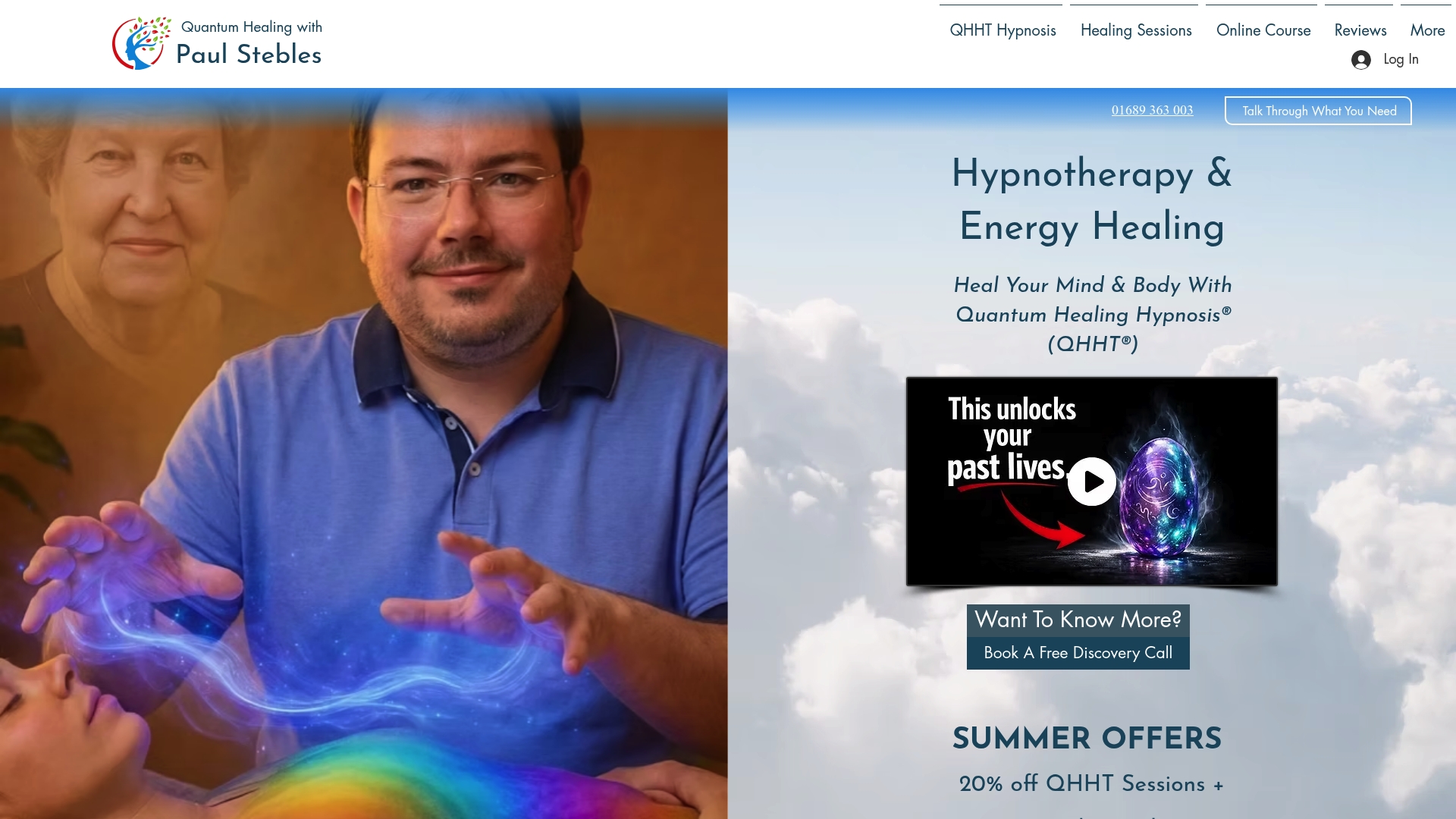
A first session typically includes a conversation about what you want to address, the session itself, and aftercare guidance, and works alongside any medical treatment you are already receiving rather than replacing it. You can see session options and book directly through our calendar when you are ready.
FAQ
Is Reiki just a placebo effect?
Not entirely. A 2017 review found that 8 of 13 suitable placebo-controlled studies showed Reiki outperforming sham treatment, particularly for relaxation, though evidence for specific medical conditions remains limited and mixed.
Does energy healing actually work for stress or anxiety?
Many people experience genuine relaxation and reduced perceived stress after a session, supported by physiological measures like reduced heart rate in some trials. Results vary between studies, and stronger, more consistent evidence exists for relaxation than for treating diagnosed anxiety disorders.
What does the placebo effect have to do with energy healing?
Expectation, ritual and the practitioner relationship all contribute measurably to how beneficial a session feels, a pattern confirmed in a randomised trial that separated these components. This does not mean the relief is imaginary; it means part of the benefit comes from context and care rather than from the specific technique alone.
How many sessions does energy healing typically take to show benefit?
A single session often produces short-lived relaxation, while sustained improvements in quality of life are more commonly reported over a course of several sessions. Many practitioners, including our own approach, suggest reviewing progress over four to eight sessions rather than judging from one visit.
Can energy healing replace medical treatment?
No. Energy healing is best used as a complement to prescribed medical care, and no prescribed treatment should be stopped without first speaking to the clinician who prescribed it. Integrative clinics such as Green Circle Wellness Clinic similarly frame complementary therapies as additions to, not substitutes for, conventional care.
Sources
Recommended
Comments