Overcome Anxiety: Quick Tools, NHS Care, and Practitioner Insight


To start overcoming anxiety today, try one immediate calming technique such as slow breathing, build a short daily routine around it, and plan an evidence-based course of support such as CBT or a mindfulness programme if symptoms persist. We also look at how practitioner-led approaches, including Paul Stebles’ QHHT sessions, can sit alongside that pathway. Pick one step and try it now.
TL;DR:
Symptoms that persist most days for several weeks, disrupt work or relationships, or include panic attacks warrant assessment by a GP.
NICE recommends guided self help first, with individual CBT or medication considered if symptoms persist; CBT usually involves 12 to 15 sessions.
An eight week mindfulness programme was noninferior to escitalopram and had fewer treatment related side effects; broader evidence uses 8–12 weeks of practice.
Use breathing or grounding during an anxiety spike, then try worry time or gradual exposure; start exposure with a manageable step and avoid safety behaviors.
Paul Stebles’ QHHT sessions and energy work can complement NHS care, but they do not replace evidence based treatment; coordinate them with your therapist.
Table of Contents
How anxiety shows up and what keeps it going
Anxiety rarely announces itself as a single feeling. It tends to arrive as a mix of physical, emotional and mental signals that feed off each other.
Physical: a racing heart, tight chest, shallow breathing, muscle tension or stomach upset.
Emotional: a sense of dread, irritability or feeling constantly on edge.
Cognitive: racing thoughts, catastrophic predictions or difficulty concentrating.
What keeps anxiety going is often more telling than what starts it. Avoidance (skipping the situation that worries you) brings short-term relief but teaches your brain the threat was real, so the fear grows. Rumination, replaying worries without reaching a resolution, works the same way: it feels like problem-solving but rarely produces an answer. When these symptoms persist most days for several weeks, interfere with work or relationships, or come with panic attacks, that pattern points towards a diagnosable anxiety disorder worth assessing with a GP.
What clinical guidance and trials say actually works
Anxiety treatment in the NHS follows a stepped-care model set out by NICE: start with lower-intensity support such as guided self-help, and move to higher-intensity psychological therapy or medication if that is not enough. This matters because it means you do not need to jump straight to intensive therapy to see results, but you also should not stay on a step that is not working.
Guided self-help programmes typically run for a brief, structured number of sessions designed to build skills quickly.
Standard individual CBT courses usually run to 12 to 15 sessions, according to NHS talking-therapies data for 2024 to 2025.
CBT accounted for nearly half of therapy courses delivered in that same period, making it the most commonly used approach within NHS talking therapies.
Nearly half of all NHS talking-therapy courses use CBT, which reflects how consistently it performs across different anxiety presentations (NHS talking-therapies data, 2024 to 2025).
Mindfulness-based interventions (MBIs) have their own evidence base. A 2026 clinical analysis found that MBIs produce moderate to large improvements in anxiety when practised consistently over 8 to 12 weeks, with some comparisons suggesting MBIs can perform comparably to medication for certain patients. A separate randomised trial found an 8-week mindfulness-based stress reduction programme was noninferior to escitalopram at 8 weeks, with fewer treatment-related side effects reported in the mindfulness group.
Medication is discussed within NICE guidelines as an option alongside or instead of therapy, depending on severity and preference, and it is worth raising with a GP rather than starting independently.
Techniques and daily habits that reduce anxiety now
Short-term relief and long-term change need different tools. Use the quick techniques when anxiety spikes, and the habits below to lower your baseline over weeks.
Try 3-2-3 breathing: inhale for three seconds, hold for two, exhale for three, repeating until your heart rate settles.
Use the 3-3-3 rule: name three things you can see, three sounds you can hear, and move three parts of your body to interrupt a spiral.
Ground with 5-4-3-2-1: notice five things you see, four you can touch, three you hear, two you smell, one you taste. Our somatic grounding guide walks through this in more depth.
Set a daily worry time: a fixed 10 to 15 minute slot to write down worries, separating them into ones you can act on and ones you cannot.
Build a simple exposure ladder: list feared situations from mildest to hardest, then work upward one small step at a time rather than facing the hardest one first.
Try the 50% rule for micro exposure: pick a step that feels only half as hard as your biggest fear, which keeps the exercise manageable while still building confidence.
Anchor your days with exercise, sleep and regular meals: these three habits do not cure anxiety alone, but they make every other technique work better.
For extra grounding variations, this external list of techniques offers further practice options worth trying alongside the steps here.
Pro Tip: Use rapid techniques (breathing, grounding) to calm your body first, then use slower tools (worry time, exposure) once you are not in a spike, and watch for safety behaviours such as over-checking or avoiding eye contact, which quietly undo exposure progress.
How to get the right level of professional support
Stepped care works best when you treat it as a real ladder rather than a single appointment. Start with guided self-help or a structured self-help guide, and move to individual CBT or a medication conversation if symptoms have not eased after a reasonable trial.
Before seeing a GP, it helps to prepare:
Note how long symptoms have lasted and how often they occur.
Write down specific examples, such as a recent panic attack or an avoided situation.
List questions: which treatment step is appropriate, expected waiting times, and what self-help resources exist meanwhile.
In therapy, expect sessions of around 50 minutes, with guided self-help running 5 to 7 sessions and individual CBT typically 12 to 15 sessions, per NHS talking-therapies figures. Progress is usually judged by reduced symptom scores and your own sense of coping, not the absence of all anxiety.
If you are in crisis or feel unsafe, contact emergency services or a crisis line immediately rather than waiting for a scheduled appointment.
How Paul Stebles’ practitioner approach complements evidence-based care
Alongside the structured therapy routes above, some readers look for a more exploratory, reflective option. Paul Stebles offers Quantum Healing Hypnosis (QHHT) sessions, energy healing work, and a structured online programme called Rising Higher, each suited to different needs.
QHHT sessions use regression hypnotherapy to explore the subconscious mind, suited to those wanting deeper insight into recurring patterns.
Energy healing sessions combine Reiki, chakra balancing and related techniques, suited to those seeking a calming, body-based complement to talking therapy.
The Rising Higher course offers structured video exercises for anxiety and depression, suited to those who prefer a self-paced, at-home format.
These approaches are intended to sit alongside NHS and NICE-recommended treatment, not replace it. A reader already working through CBT or guided self-help might use a QHHT session or the course as an additional layer of reflection and calm, then return to their therapist with what surfaced.
The role of subconscious mind exploration in overcoming anxiety
Much of anxiety’s grip comes from patterns we are not consciously tracking: a tone of voice that triggers old fear, a situation that echoes an earlier experience without us noticing the link. Subconscious exploration works on the idea that some anxiety is maintained by associations formed outside everyday awareness, and that bringing them into view can loosen their hold.
In a QHHT session, this exploration happens through guided regression hypnotherapy, where a client reaches a deeply relaxed state and works through memories or associations that may be shaping present-day anxiety. The aim is not to replace structured skills like breathing or exposure work, but to add a reflective layer: understanding why a particular trigger feels so charged can make it easier to apply the practical tools covered earlier in this guide.
This kind of work suits readers who have already tried surface-level techniques and feel there is a deeper pattern worth examining, rather than those looking for a first step. It works best as a complement to, not a substitute for, the stepped-care approach NICE guidance describes, since the subconscious material it surfaces still benefits from the structure a therapist or self-help programme provides.

Regression hypnotherapy and identifying root causes
Regression hypnotherapy, the core method within a QHHT session, is built around the idea that present anxiety sometimes traces back to a specific earlier experience, even one that feels unrelated on the surface. During a session, Paul Stebles guides clients into a relaxed, focused state and helps them revisit memories that may connect to current anxious patterns.
The process is exploratory rather than diagnostic. It does not identify a clinical cause in the way a GP assessment would, but it can offer a client a narrative that makes sense of a feeling they previously could not explain. For some, that sense of understanding reduces the emotional charge around a trigger, which can make exposure work or worry-time techniques easier to apply afterwards.
This approach suits readers who feel their anxiety has a specific root they have not been able to name through talking therapy alone. It is one option among several, and works alongside, rather than instead of, the evidence-based therapies and stepped-care route described earlier. Anyone currently in CBT or guided self-help can mention this kind of session to their therapist so the two strands of work stay joined up rather than running separately.
Connecting with your higher self for emotional healing
The idea of a “higher self”, a wiser, calmer part of identity beyond day-to-day anxious thinking, is central to how Paul Stebles frames emotional healing work. The practice involves using the relaxed state reached during a QHHT session to access perspective that feels harder to reach during an anxious moment.
For some clients, this translates into a felt sense of reassurance: a step back from the immediate worry loop towards a steadier vantage point. That shift echoes, in a different language, what mindfulness-based interventions aim for when they describe changing your relationship to anxious thoughts rather than eliminating them.
Readers drawn to this kind of work tend to be those who already have some self-help or therapy structure in place and want an additional, more reflective practice to sit alongside it. It is not a replacement for CBT, guided self-help or medication where those are indicated, but a complementary space for emotional processing that some find valuable between or alongside more structured sessions.
Bringing spiritual insight into your coping strategy
Spiritual or reflective practices, prayer, meditation, energy work or regression sessions, can sit comfortably next to clinical anxiety treatment for readers who find meaning in them. The key is treating them as an addition to, not a substitute for, the steps that have the strongest evidence base: breathing techniques, structured self-help, CBT and, where appropriate, medication.
A practical way to integrate the two is sequencing: use a grounding technique or breathing exercise in the moment, apply worry time or exposure work on a daily basis, and reserve spiritual or energy-based sessions, such as those Paul Stebles offers, for deeper, less time-pressured reflection. Creating a calm, dedicated space for these sessions, free from distraction, mirrors a principle found throughout anxiety self-help guidance: your environment shapes how effectively any technique works, whether that is a breathing exercise or a longer reflective session.

Readers who find this blend useful are often those who have tried purely clinical routes and want a more holistic layer of support, or who value the subconscious and energy-based lens as part of how they understand their own anxiety. For everyone else, the clinical steps outlined earlier remain the evidence-backed starting point.
A realistic outlook on overcoming anxiety
Anxiety rarely lifts in a straight line. Expect weeks where techniques feel effortless and others where old patterns resurface, especially under stress. Progress usually looks like fewer spikes and faster recovery from them, not their total absence.
Combine the short-term techniques here with a proper evidence-based pathway, whether that is guided self-help, CBT or a mindfulness programme, and treat reflective work as a bonus layer, not the main event.
— Paul
A supportive option alongside your anxiety plan
If you would value a more personal, reflective layer alongside structured self-help or therapy, we offer in-person QHHT sessions for exploring subconscious patterns and past experiences, energy healing sessions combining Reiki and related techniques, and the Rising Higher online course for structured, self-paced support.
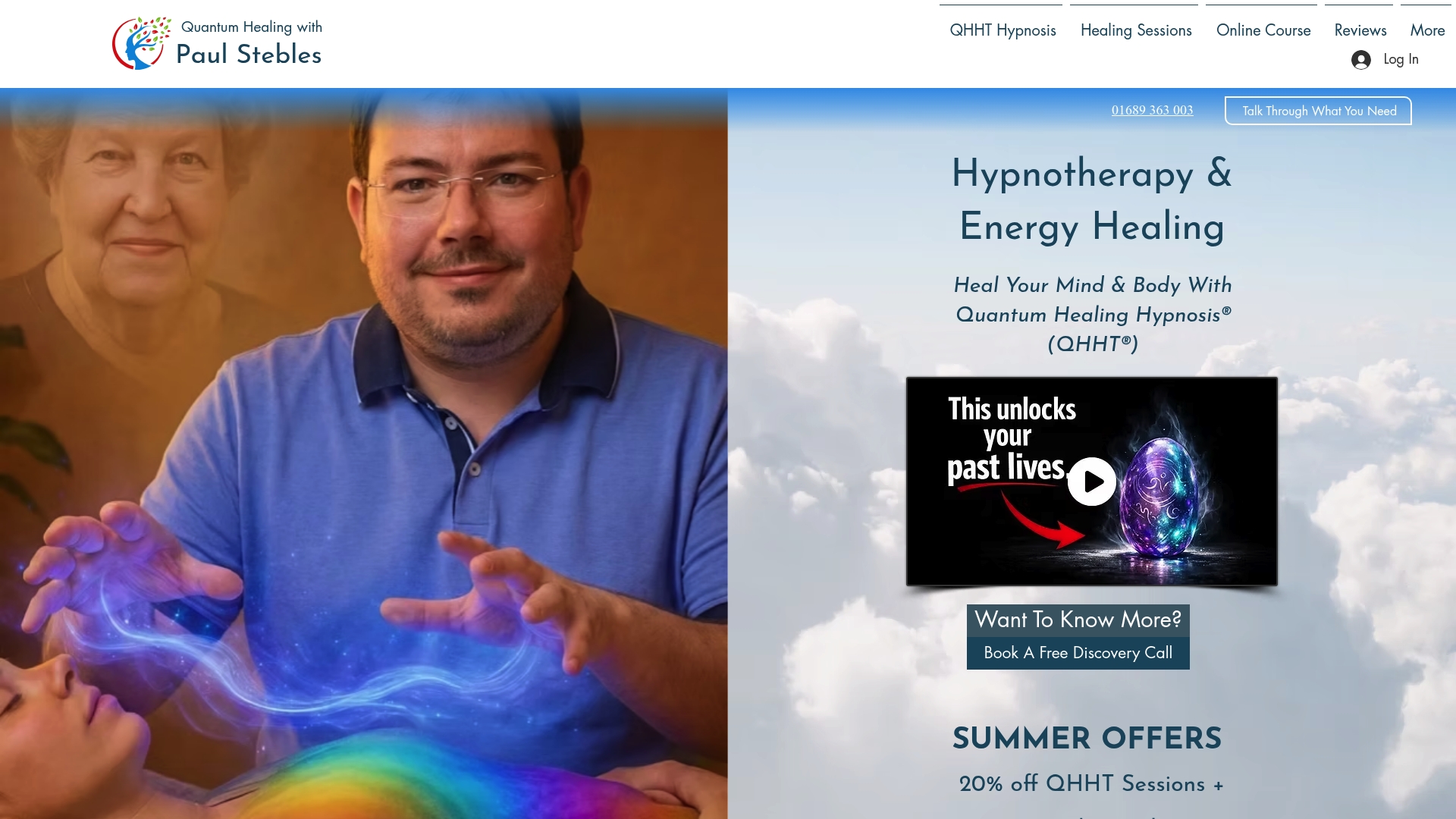
QHHT sessions are priced at £369, with a mobile option available at £399 for those who prefer a session at home, and energy healing sessions, in-person or remote, are priced at £99. We see this work as a complement to NHS and NICE-recommended care, never a replacement for it. Book a session or explore the Rising Higher course to see which route fits where you are right now.
FAQ
How do I make my anxiety go away?
There is no single switch that removes anxiety instantly, but combining an immediate calming technique, such as slow breathing or grounding, with a structured approach like guided self-help or CBT gives you the best chance of lasting change. The NICE stepped-care model recommends starting with lower-intensity support and progressing if needed.
What is the 3-3-3 rule for anxiety?
The 3-3-3 rule is a quick grounding technique: name three things you can see, identify three sounds you can hear, then move three parts of your body. It works by shifting your attention away from anxious thoughts and back into your immediate physical surroundings.
What are five warning signs of anxiety?
Common warning signs include a racing heart, muscle tension, constant worry or dread, irritability, and difficulty concentrating. When these symptoms persist most days for several weeks or interfere with daily life, it is worth discussing them with a GP using NHS guidance on anxiety.
What could be causing me to feel stressed all the time?
Ongoing stress is often maintained by cycles like avoidance (dodging situations that worry you) and rumination (replaying worries without resolving them), both of which reinforce anxious thinking over time. Lifestyle factors such as poor sleep, irregular meals and lack of exercise can also lower your capacity to cope with everyday pressures.
How long does mindfulness take to help with anxiety?
Mindfulness-based interventions are typically practised consistently over 8 to 12 weeks to see moderate to large improvements in anxiety symptoms, according to 2026 clinical research. Some trials have found 8-week mindfulness programmes perform comparably to certain medications for anxiety, with fewer reported side effects.
Sources
Recommended
Comments