Reiki Evidence for UK Patients: Why Eight Sessions Matter

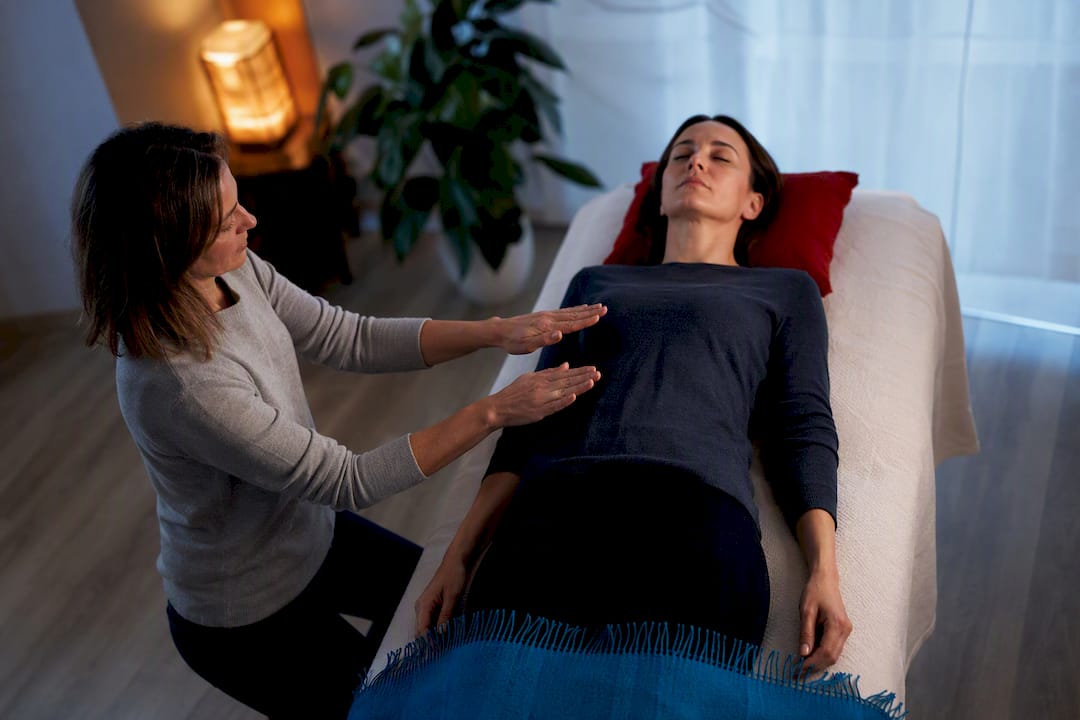
Systematic reviews and meta-analyses show Reiki produces small-to-moderate improvements in quality of life, postoperative pain and anxiety, though certainty ranges from moderate to low. The strongest signals appear after short acute sessions or sustained courses of eight or more sessions. Reiki works best as a complementary therapy alongside conventional treatment, not a replacement for it. Paul Stebles and other evidence-aware practitioners frame it that way deliberately.
TL;DR:
Short sessions of 20 minutes or less provide immediate relaxation effects, whereas courses of eight or more 60-minute sessions offer more sustained quality-of-life improvements.
Reiki has shown small-to-moderate benefits in reducing postoperative pain, anxiety, and improving blood pressure, mainly when applied consistently over time.
Most individual trials involve small sample sizes, and effect sizes are generally modest, with better results seen in musculoskeletal and perioperative conditions.
Quantifiable physiological effects, like lower heart rate and blood pressure, support the relaxation mechanism, but research faces limitations such as poor blinding and protocol variability.
Patients should ensure sessions follow research-backed durations and tracking, and use Reiki as an adjunct alongside conventional medical treatment, not a substitute.
Table of Contents
What do systematic reviews and meta-analyses report?
The clearest answer to “does Reiki work” sits in a small handful of pooled analyses, and they don’t agree on everything, which is exactly why the detail matters more than the headline.
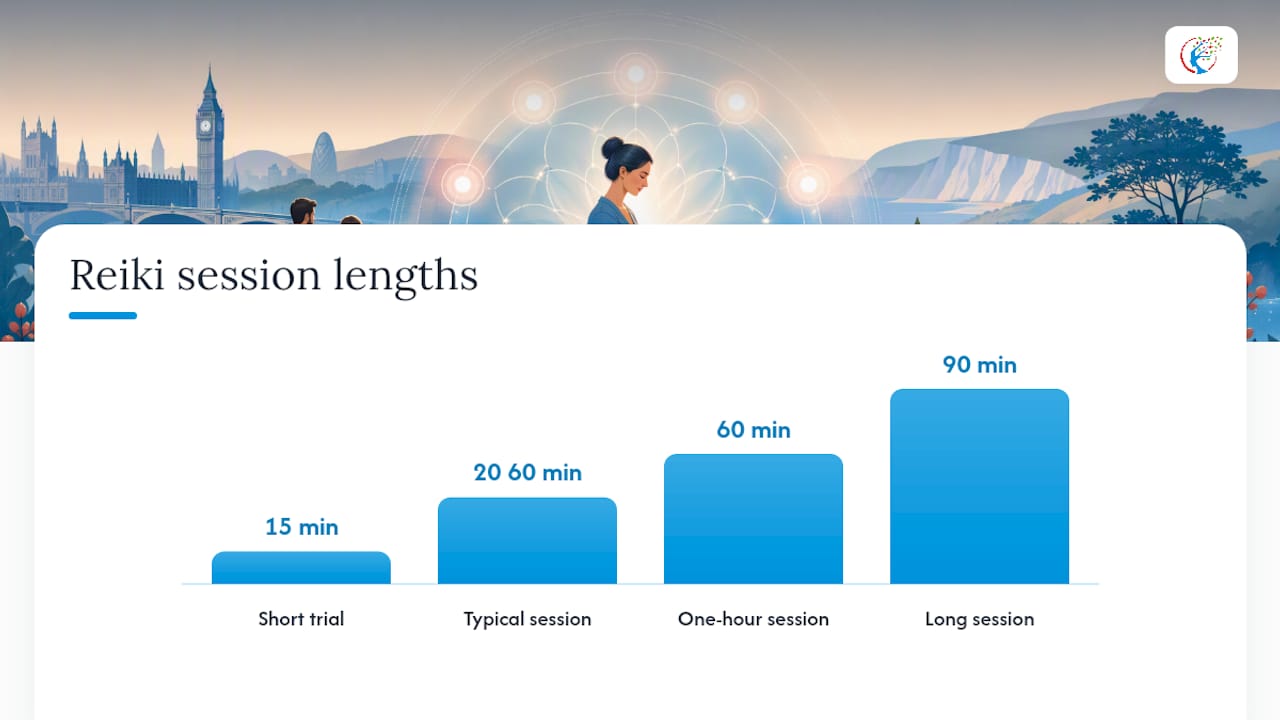
A 2026 meta-analysis of randomised controlled trials covering 661 participants found Reiki significantly improved quality of life scores, with a standardised mean difference of 0.28 (95% CI 0.01 to 0.56, P = 0.043). That’s a small effect by conventional statistical benchmarks, roughly equivalent to what you’d see from a modest but genuine improvement in daily wellbeing rather than a dramatic transformation. The confidence interval brushing right up against zero at its lower bound tells you something too: this is a real but fragile signal, not a slam-dunk result. Subgroup analysis inside that same review found two dosing patterns stood out. Acute sessions of 20 minutes or less produced measurable short-term relief, while sustained regimens of eight or more sessions at around 60 minutes each delivered the more durable quality-of-life gains. Anything in between, with irregular timing or vague duration, tended to produce weaker or inconsistent results.
Surgical settings tell a more consistent story. A separate 2026 systematic review and meta-analysis pooled 15 RCTs involving 1,219 patients around operations, comparing 555 people who received Reiki against 664 controls. It reported moderate-to-low certainty evidence that Reiki reduced postoperative pain at both 24 and 48 hours, alongside improvements in anxiety and blood pressure readings taken around the same window. The “moderate-to-low certainty” label isn’t a throwaway phrase in GRADE terminology. It means reviewers trust the direction of the effect but expect future, better-designed trials could shift the size of that effect meaningfully.
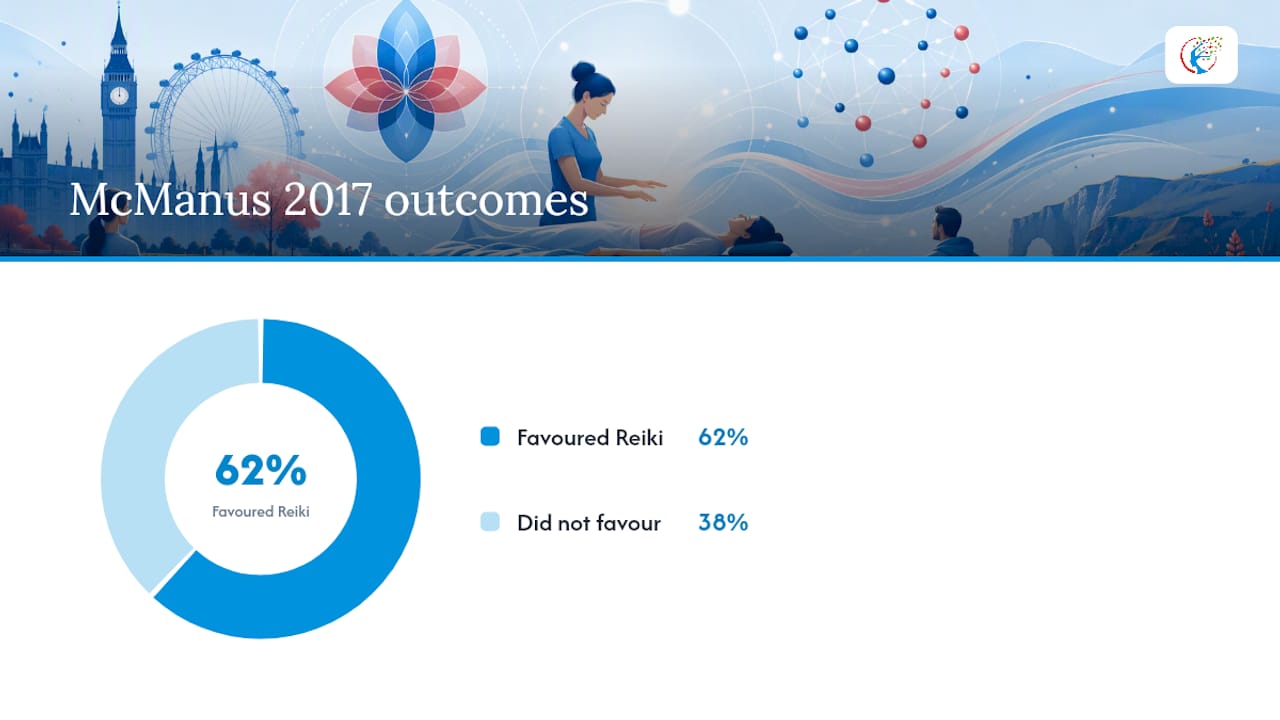
Older work backs the general pattern without pretending it’s settled science. A widely cited 2017 review by McManus examined 13 placebo-controlled studies that each had at least 20 participants per arm. Eight of those 13 found Reiki outperformed placebo on the outcomes measured, most often relaxation-linked markers like heart rate and blood pressure. Five did not. That’s not a resounding endorsement, but it’s a coherent minority-positive signal repeated across independent groups, which counts for more than a single flashy result.
Review | Sample | Main finding | Certainty |
2026 meta-analysis, quality of life | 661 participants | SMD 0.28, quality-of-life improvement | Statistically significant, wide CI |
2026 perioperative meta-analysis | 1,219 surgical patients | Reduced pain and anxiety at 24 to 48 hours | Moderate to low |
2017 McManus placebo-controlled review | 13 studies, ≥20 per arm | 8 of 13 favoured Reiki over placebo | Mixed, coherent minority signal |
Two things worth pulling out from all three reviews at once:
Effect sizes are consistently small to moderate, never large, across every pooled analysis available.
Session dosage appears to matter as much as whether Reiki is given at all, which is the kind of detail generic wellness coverage rarely mentions.
None of these reviews claim Reiki cures disease or replaces medication. What they consistently show is a measurable, if modest, benefit for subjective and some physiological outcomes when sessions follow a reasonably consistent pattern. Research on Reiki benefits keeps landing in that same narrow but real band.
What do individual clinical trials show?
Meta-analyses pool numbers, but the individual randomised controlled trials underneath them are where you see what actually happened to real patients, session by session.
Take the 2024 trial on knee osteoarthritis. Researchers gave one group face-to-face Reiki sessions of 39 minutes combined with distance Reiki, then compared outcomes against a control group. With only 42 participants it’s a small study, but the results were striking within that scope: patients receiving Reiki showed significantly lower pain scores on validated scales including the WOMAC index, with a P value under .001. Holistic wellbeing scores improved too. It’s exactly the kind of condition-specific trial that feeds into the larger pooled reviews, and it illustrates why chronic pain populations keep showing up as one of the more promising groups for this therapy.
Postoperative and caesarean-section studies follow a similar shape. Multiple smaller trials embedded in the perioperative meta-analysis measured outcomes at fixed intervals after surgery, tracking pain scores, anxiety inventories, and blood pressure readings rather than relying purely on how patients described feeling. That reliance on objective physiological measures matters. Self-reported relaxation is easy to dismiss as expectation bias; a documented drop in systolic blood pressure at 24 hours is harder to wave away, even if the effect size stays modest.
Not every trial lands in Reiki’s favour, and a credible evidence article has to say so plainly. Some fibromyalgia trials found no meaningful difference between Reiki and control conditions, particularly where session numbers were low or where the comparison group also received substantial attention and rest, which tends to narrow any gap a hands-on therapy might otherwise show. Larger effectiveness research, including work associated with Dyer’s broader Reiki effectiveness studies, has produced more encouraging real-world data on symptom improvement, but even that body of work acknowledges it’s observational in parts rather than fully randomised and controlled.
A few patterns emerge once you line the trials up side by side:
Trials using objective measures (heart rate, heart-rate variability, blood pressure) tend to report smaller but more defensible effects than trials relying purely on symptom questionnaires.
Positive trials cluster around musculoskeletal pain, perioperative recovery, and general anxiety, not around disease-modifying outcomes.
Negative or null trials cluster around conditions with highly variable baseline symptoms, such as fibromyalgia, where distinguishing a real effect from natural fluctuation is genuinely difficult.
Sample sizes across almost every Reiki RCT sit well below what would be considered adequately powered in mainstream pharmaceutical research.
That last point deserves its own weight. When most individual trials run somewhere between 30 and 100 participants, a single unusually positive or negative study can shift the average more than it should. That’s precisely why the pooled meta-analyses, imperfect as they are, still tell you more than any one trial in isolation.
Why is Reiki hard to test, and what might explain the effect?
The leading physiological explanation for whatever benefit Reiki produces centres on the parasympathetic nervous system, the branch of the body’s autonomic control that governs rest, digestion, and recovery rather than fight-or-flight arousal. McManus’s 2017 review concluded that Reiki appears to activate this parasympathetic response, producing the kind of measurable relaxation that shows up in lowered heart rate and blood pressure during and after sessions. This doesn’t require accepting any claim about a universal life force or energy field. A quiet room, a calm practitioner, slow deliberate touch, and twenty to sixty minutes without interruption is, on its own, a fairly reliable recipe for triggering a relaxation response, regardless of what you call the mechanism behind it.
That plausible mechanism doesn’t rescue Reiki research from its structural problems, though. Three limitations come up in nearly every review of the field:
Blinding is close to impossible. A hands-on or near-body intervention can’t be disguised the way a placebo pill can, so both practitioner and participant almost always know who’s receiving the “real” treatment.
Sample sizes stay small. Most trials recruit well under 100 participants, which limits statistical power and makes single outlier results disproportionately influential on pooled estimates.
Protocols aren’t standardised. Session length, frequency, practitioner training, and even hand placements vary from trial to trial, which is a major driver of the heterogeneity reviewers flag when they try to combine results.
The MSD Manual’s clinical summary puts this plainly: high-quality trials remain limited and the evidence stays mixed, with some outcomes like depression showing no consistent benefit across systematic reviews even where pain and anxiety do. Reviewers researching Reiki therapy studies generally recommend standardised dosing protocols going forward, precisely because comparing a 15-minute session against a 90-minute course, or a single visit against an eight-week programme, produces the kind of heterogeneity that makes any pooled statistic wobble.
Pro Tip: When you read a headline claiming Reiki “works” or “doesn’t work,” check whether the underlying study used a sham-Reiki control (someone mimicking the hand positions without training) or just a no-treatment waitlist. The comparison group changes what the result actually proves.
None of this means the statistical significance in the 2026 quality-of-life meta-analysis is meaningless. It means that P = 0.043 result sits inside a body of research that still can’t fully separate the specific effect of Reiki from the general effect of rest, attention, and expectation. Both explanations can be true at once, and the honest position is to say so.
How should patients and clinicians actually use this evidence?
The strongest, most repeatable evidence for Reiki clusters around three areas: postoperative pain and anxiety, certain chronic pain conditions like knee osteoarthritis, and general quality-of-life measures when sessions follow a consistent schedule. Outside those three, particularly for conditions like depression, the MSD Manual is right to flag that systematic reviews haven’t shown consistent benefit.
Across the pooled reviews covered above, the two dosing patterns most associated with measurable benefit were acute sessions of 20 minutes or less for immediate relaxation, and sustained courses of at least eight sessions of roughly 60 minutes for durable quality-of-life gains.
That dose-response pattern gives patients something concrete to ask for rather than a vague single appointment and hoping for the best. If the goal is short-term relief before or after a stressful medical procedure, a brief session fits the evidence. If the goal is a meaningful shift in day-to-day wellbeing, the research points toward committing to a full course rather than a one-off.
On safety, the picture is reassuring but not a blank cheque:
Reiki carries very low physical risk since it involves light or no touch and no manipulation of the body.
It should never replace prescribed medication, surgery, physiotherapy, or ongoing psychiatric care, only sit alongside it.
The Cleveland Clinic’s guidance is explicit that Reiki should be treated as complementary support, not a substitute for medical treatment, even where patients report genuine subjective improvement.
Anyone with worsening symptoms, new or severe pain, or signs that a condition is progressing should contact their GP or specialist before or instead of booking a session, not after weeks of relying on Reiki alone.
For anyone wondering whether Reiki healing effectiveness holds up outside a lab setting, the honest answer is that the evidence supports it as a genuine, low-risk adjunct with a real if modest effect, not as a stand-alone treatment for serious illness.
How does an evidence-aware practitioner apply this?
Reading a meta-analysis is one thing. Structuring a real session around what that research actually supports is another, and it’s where most generic Reiki guidance falls short.
Paul’s approach to autoimmune support, for instance, runs on a six-to-eight week clinician trial structure rather than a single unmeasured visit, which mirrors the sustained-regimen pattern the 2026 quality-of-life meta-analysis flagged as most effective. Sessions get spaced deliberately, and outcomes get tracked at each stage rather than assessed only by how the client felt walking out the door that day.
Distance sessions follow their own practitioner checklist, built to keep remote work as reproducible as in-person sessions, covering preparation, session structure, and the aftercare steps that follow. Practical aftercare, including hydration and simple journalling, gives clients a record to compare against future sessions rather than relying on memory alone.
For anyone considering a course of sessions, a few things are worth asking a practitioner directly before booking:
How long is each session, and does that match either the acute (≤20 minute) or sustained (8+ sessions) pattern the research associates with measurable benefit?
What baseline measures does the practitioner record, such as sleep quality, a validated pain scale, or an anxiety score, so change over time can actually be tracked?
What aftercare guidance is given between sessions, and is there a clear point at which the practitioner would recommend seeing a GP instead?
Pro Tip: Keep your own simple log alongside whatever the practitioner tracks, noting sleep hours, a 0 to 10 pain or anxiety score, and one line on mood before and after each session. Eight weeks of that log tells you more than memory ever will.
Anyone exploring how longer courses of sessions are structured can see what eight sessions of tracked Reiki practice looks like in a clinician’s own protocol.
An honest look at where the research needs to go
The evidence supports cautious, adjunctive use of Reiki, tracked properly, not blind faith and not blanket dismissal. What’s missing is scale: too few adequately powered, sham-controlled trials, and too much variation in session length and frequency between the studies we do have. Investigators should prioritise standardised protocols and pragmatic effectiveness trials that mirror how sessions are actually delivered. Practitioners, meanwhile, carry a simple obligation: never present Reiki as a substitute for evidence-based medical care, however consistent the relaxation response looks in the data.
— Paul
Ready to book an evidence-aware session?
If everything above has you weighing whether to try Reiki, energy healing, or something deeper like past-life regression work, the practical next step is choosing a practitioner who treats session structure and outcome tracking as seriously as the research does. Paulstebles offers Evolve Quantum Healing sessions in person and Remote Evolve Quantum Healing for those who can’t attend in Orpington, Bromley, or the wider South East London area, both combining Reiki with chakra balancing, cord cutting, and emotional release work in a single structured session. For those wanting to go deeper into subconscious patterns behind physical or emotional blockages, QHHT sessions pair regression hypnotherapy with the same energy-healing principles discussed throughout this piece.
Before booking anything, check three things: how long the session runs and whether it matches an acute or sustained pattern, what the practitioner records as a baseline so you can judge change afterwards, and what aftercare guidance you’ll get once the session ends. Those questions apply whether you’re looking at Reiki specifically or exploring the Rising Higher online course as a self-guided complement between sessions. If sleep is part of what you’re hoping to improve, pairing session work with well-researched natural sleep support is worth a look too. Book a session directly through the Paulstebles booking page to see current availability and pricing.
Sources
FAQ
Is Reiki just nonsense, or is there real evidence behind it?
Neither extreme fits the data. Multiple systematic reviews and meta-analyses report small-to-moderate but statistically measurable improvements in quality of life, pain, and anxiety, particularly after sustained courses of sessions, even though the underlying mechanism (a claimed energy field) remains scientifically unproven.
What do doctors generally think about Reiki?
Most clinical guidance, including from the Cleveland Clinic, treats Reiki as a reasonable complementary therapy for relaxation and subjective symptom relief, never as a replacement for diagnosis or treatment. Doctors are generally supportive of patients using it alongside, not instead of, prescribed care.
Can anything unusual, like spiritual experiences, happen during a Reiki session?
Some clients report vivid relaxation, emotional release, or a strong sense of calm during sessions, which practitioners often attribute to parasympathetic activation rather than any external presence. Sessions are structured around grounded, evidence-aware protocols rather than framing experiences as proof of any specific spiritual claim.
Who should avoid Reiki or be cautious about it?
Reiki carries very low physical risk since it typically involves light or no touch, but anyone with a serious, undiagnosed, or worsening medical condition should see a doctor first rather than relying on Reiki alone. It should always run alongside conventional treatment for serious illness, not instead of it, per guidance from Cleveland Clinic and the MSD Manual.
How much does a Reiki-style session with Paulstebles cost?
Paulstebles offers Evolve Quantum Healing, which combines Reiki with chakra balancing and emotional release work, for £99 one off in person or remotely. QHHT sessions, which pair regression hypnotherapy with energy healing, start at £369 one off for in-person visits.
Recommended
Comments