6 Real QHHT Benefits UK Clients Report: Evidence, Safety, Integration


Quantum Healing Hypnosis Technique (QHHT) commonly produces emotional release, clearer life direction, spiritual insight, and shifts in relationship patterns, with some clients also reporting eased physical symptoms. Most of this evidence is anecdotal and specific to QHHT itself; broader clinical hypnosis research backs certain outcomes, particularly around pain and procedural anxiety, more solidly than others. The honest answer is that QHHT benefits are real for many people but not guaranteed or clinically proven in the way a licensed medical treatment would be.
TL;DR:
QHHT primarily offers emotional release, clarity on life purpose, spiritual insights, and sometimes relief from physical symptoms, mostly derived from deep trance dialogue.
The technique involves a long session with intake, deep trance induction, past life regression or imagery, and direct communication with the higher self, lasting four to six hours.
Benefits are generally anecdotal, with clinical evidence supporting hypnosis’s effectiveness for anxiety, procedural pain, and stress, but not necessarily for past life claims or all physical conditions.
Success relies heavily on a trauma-informed, qualified practitioner who emphasizes safety, clear questions, and post-session integration support.
QHHT should be viewed as a tool for emotional and meaning-making work, not a guaranteed or scientifically verified method for past life discovery or medical treatment.
Table of Contents
QHHT benefits at a glance: the main categories
Ask ten QHHT practitioners what their clients report and you will hear the same six themes, in roughly the same order of frequency. Emotional healing tops the list: clients often describe releasing grief, guilt, or long held anger during the session’s regression and higher self dialogue. Life purpose clarity comes next. People arrive with a vague sense of being stuck and leave with a specific decision, whether that means changing career, ending a relationship, or simply forgiving themselves for a past choice.
Spiritual insight is the third major category, covering shifts in how someone understands death, meaning, or their place in a bigger picture. Physical symptom support is reported less consistently but does show up, usually alongside emotional release rather than instead of it. Relationship and pattern change follows a similar logic: clients recognise a repeating dynamic (with a parent, a partner, themselves) and describe behaving differently afterwards. Stress reduction rounds out the list, often as a byproduct of the other five rather than the main goal.
Emotional healing — processing grief, guilt, anger, or long held shame
Life purpose clarity — a specific decision or direction rather than vague relief
Spiritual insight — changed views on meaning, death, or personal identity
Physical symptom support — reported pain or energy shifts, usually secondary to emotional release
Relationship and pattern change — recognising and altering a repeating dynamic
Stress reduction — calmer baseline mood in the weeks following a session
Each of these traces back to specific session features. Practitioner literature on talking with your Higher Self groups the reported outcomes exactly this way: emotional healing, physical support, clarity, and spiritual expansion, all stemming from the deep trance state and the higher self dialogue at the session’s core.
How does QHHT actually work?
QHHT follows a fairly fixed structure, and understanding it explains why the benefits above show up where they do.
Intake interview. You and the practitioner spend an hour or more discussing your history, your questions, and what you hope to explore.
Induction to somnambulistic trance. This is a notably deeper hypnotic state than most clinical hypnosis sessions aim for, allowing vivid imagery and reduced conscious filtering.
Regression or past life imagery. The client narrates whatever scenes or memories surface, guided lightly by the practitioner’s questions.
Higher self dialogue. The practitioner speaks directly with what QHHT calls the higher self, asking your prepared questions about purpose, relationships, or health.
Body scan and healing request. The higher self is asked to address specific physical or emotional concerns, sometimes producing reported sensations of warmth or release.
Debrief. You wake gradually and talk through what came up while it is fresh.
This differs from mainstream clinical hypnotherapy in two clear ways: the depth of trance targeted, and the direct dialogue format with a higher self rather than standard suggestion based techniques, as Dolores Cannon’s original method laid out. Sessions typically last several hours because reaching and working within that trance state takes time, and QHHT is generally designed as a single, in-depth visit rather than a course of weekly appointments.
What do these benefits actually look like in practice?
Numbers help. Stories help more.
Emotional healing tends to follow what psychologists call a corrective emotional experience: revisiting a painful memory in a safe, deeply relaxed state and processing it differently the second time round. A client carrying decades of guilt over a family estrangement might, during the higher self dialogue, hear a reframe that finally lets them put it down. The mechanism resembles memory reconsolidation more than any literal historical excavation.

Clarity and life purpose often arrive as a single, specific answer rather than a vague good feeling. Someone stuck between two careers for years might leave a session with a clear preference, not because the trance predicted the future, but because the process strips away the noise that kept them undecided.
Spiritual insights show up as changed frameworks: less fear around death, a stronger sense of connection, or a new comfort with uncertainty. Physical symptom support is the category needing the most care. Clients do report reduced pain or renewed energy, but this should sit alongside, never instead of, continued medical treatment. Relationship patterns often click into focus during the regression portion, when a client recognises the same dynamic playing out across different people in their life.
Corrective emotional processing during regression
A single, specific answer rather than vague reassurance
Changed worldview around meaning or mortality
Reported physical relief that complements, not replaces, medical care
Recognition of repeating relational patterns
Integration matters more than people expect. Most reported shifts consolidate over the following weeks, not the following day.
Pro Tip: Keep a short notebook for two weeks after your session and jot down anything that resurfaces, even if it seems unrelated. Many clients only spot the pattern in hindsight.
What should you do to prepare for a session?
Preparation shapes the outcome more than most people assume.
Write down your questions in advance. Focused, specific questions produce better sessions than a vague hope for “answers”. Practitioners consistently find that narrowing the list to the handful that matter most improves the depth of what emerges.
Disclose relevant medical or psychiatric history. A responsible practitioner needs to know about any conditions or medications that could affect how you respond to extended trance work.
Expect a long, mostly passive role. Your job during the session itself is simply to relax and narrate what you experience; the practitioner guides pacing and questions.
Plan gentle aftercare. Journalling, rest, and avoiding heavy commitments for the rest of that day help the insights settle rather than getting buried under normal routine.
A first booking typically means blocking out most of a day, since sessions commonly run four to six hours once you include the interview and debrief either side of the trance work itself.
What does the research actually say about hypnosis and QHHT?
Clinical hypnosis has a real evidence base, but it is uneven, and QHHT sits at the edge of it rather than inside it. A Frontiers meta-analytic review covering two decades of research found consistent benefits for anxiety and procedural distress, with generally low rates of serious adverse events. That is a solid foundation for hypnosis broadly.
A meta-analysis of medical hypnosis found statistically significant reductions in acute pain and opioid use, but no clear benefit for chronic pain, a distinction worth holding onto before assuming hypnosis helps every kind of pain equally.
QHHT’s past life and regression content sits outside what any of this research verifies. The therapeutic value most likely comes from emotional processing and narrative reframing rather than accessing genuine historical events. Anyone with active psychosis, severe dissociative disorders, or unmanaged psychiatric conditions should discuss suitability with their own clinician first, and QHHT should never replace ongoing medical or psychiatric care.
How do you choose a QHHT practitioner?
The gap between a good session and a disappointing one usually comes down to the practitioner, not the technique itself.
Verified training and a documented, trauma-informed approach to regression work
Clear informed consent before any session begins
A stated plan for post-session integration support, not just a one-off appointment
Transparency about whether sessions are recorded and how that recording is handled
Upfront, published pricing with no surprise add-ons
Be wary of anyone promising a guaranteed cure, discouraging you from continuing medical treatment, or applying sales pressure to book immediately. On an initial enquiry call, ask directly how they handle integration support, what their training background is, and how they would respond if difficult material surfaces.
How Paul Stebles approaches QHHT sessions
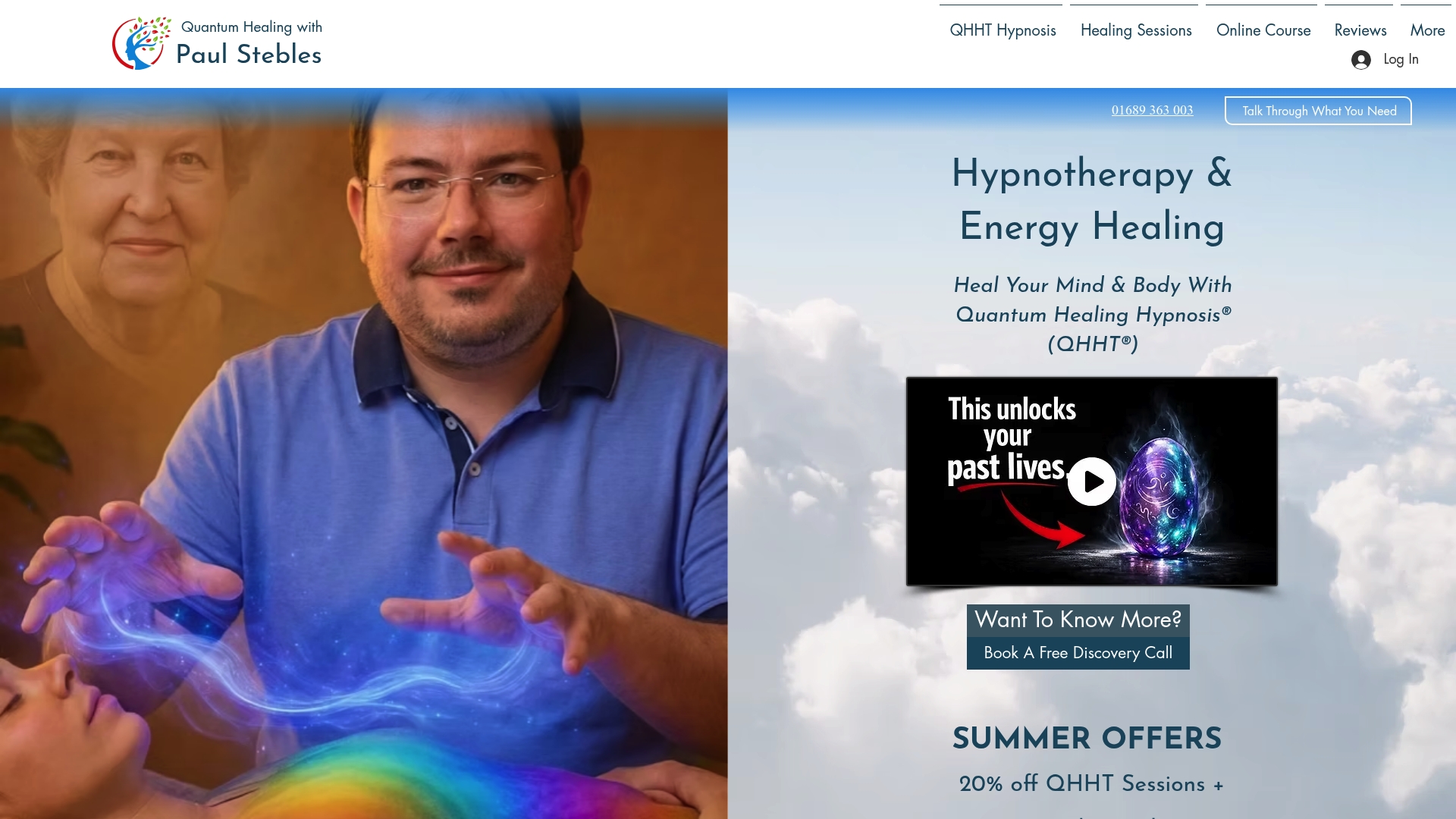
Paul Stebles runs in-person QHHT sessions lasting four to five hours, combining traditional QHHT with energy healing work and a trauma-informed approach throughout. Clients most often report clearer direction, eased emotional weight, and a calmer relationship with past events. Integration guidance follows every session, since the real change tends to settle in over the following weeks rather than the drive home.
An honest take on what QHHT can and cannot promise
The conventional pitch around QHHT oversells certainty. Nobody can guarantee you will meet a past life, resolve a decades old wound, or receive a tidy answer to your biggest question. What the evidence and the practitioner reports actually support is more modest and, frankly, more useful: a structured, deeply relaxed space where emotional material surfaces and gets processed differently than it would in ordinary conversation.

Where most advice on this topic falls short is treating QHHT as either miracle cure or pseudoscience, with nothing in between. Neither framing helps you decide whether to book a session. The realistic middle ground is this: clinical hypnosis has genuine, documented benefits in specific areas, QHHT borrows that trance capacity and extends it further than most therapy does, and the past life framework is best understood as a vehicle for meaning making rather than a verified historical record.
If you are considering a session, prioritise the practitioner’s approach to safety and integration over any claims about what you might “discover”. A skilled, trauma-informed guide matters more than the specific technique’s mythology.
— Paul
Ready to book your own QHHT session?
If everything above has you weighing up whether to try this for yourself, here is the practical next step. Paulstebles offers a full QHHT® session at £369, a Mobile QHHT® visit at £399 for those who would rather stay in familiar surroundings, and shorter Evolve Quantum Healing or Remote Evolve Quantum Healing sessions at £99 each for focused energy work without the full regression format.
A first QHHT booking is best suited to anyone who has already prepared a short list of specific questions and set aside most of a day, since sessions commonly run four to six hours including interview and debrief. If a longer regression session feels like too big a first step, the Evolve sessions offer a lower-commitment way to experience the energy healing side of Paul’s work before booking the full experience. For those working through identity change more broadly, this piece on rebuilding identity from Reclaim Sobriety covers similar ground from a different angle. Whichever route fits, the booking page shows live availability and lets you reserve a slot directly.
Sources
FAQ
Is QHHT worth it?
For many clients seeking emotional release, clarity, or spiritual insight, QHHT delivers meaningful results, though it works best as a complement to, not a replacement for, medical or psychiatric care. Whether it is “worth it” depends on realistic expectations. Treat it as a structured space for processing, not a guaranteed cure, and value tends to follow.
What happens during a quantum healing session?
A QHHT session moves through an intake interview, induction into a very deep trance, regression or past life imagery, a direct dialogue with your higher self, and a body scan where healing requests are made. The whole process, including debrief, typically runs four to six hours in one sitting.
What is quantum healing and how does it work?
Quantum healing hypnosis works by guiding you into a somnambulistic trance state deeper than most standard hypnotherapy, where the practitioner asks your prepared questions directly of what QHHT calls your higher self. Reported benefits are thought to stem from emotional processing and memory reconsolidation rather than literal recovery of past events.
What does QHHT stand for and what is its purpose?
QHHT stands for Quantum Healing Hypnosis Technique, a method developed by Dolores Cannon and designed around a single, extended session aimed at accessing the subconscious for emotional healing, life purpose clarity, and occasional physical symptom support. Paulstebles offers this as an in-person QHHT service alongside combined energy healing work for clients seeking a more rounded approach.
Recommended
Comments