Timeline therapy: QHHT and energy healing for deep release


Timeline therapy, as practised at Paulstebles, is a Quantum Healing Hypnosis Technique (QHHT) session combined with energy healing that works with your internal timeline, present-life and past-life memories alike, to soften the emotional charge sitting behind them. It draws on principles the Hypnosis Efficacy Task Force uses to judge hypnosis work generally, delivered by Paul Stebles through guided regression and hands-on energy techniques. Before booking, read the safety section below so you know what to expect and whether it’s the right fit.
Key Takeaways
Timeline therapy works by combining QHHT regression with energy healing to soften emotional charge stored across a client’s past and present timeline, though outcomes vary and safety screening matters.
Point | Details |
Not the NLP technique | This site’s timeline therapy is QHHT plus energy healing, distinct from NLP’s “Time Line Therapy®”. |
Screen before booking | Active psychosis, unmanaged bipolar disorder or recent suicidal ideation warrant a clinical assessment first. |
Expect variable outcomes | Emotional and spiritual shifts are commonly reported; physical symptom relief varies and isn’t guaranteed. |
Sessions run long | A full QHHT session typically takes two to four hours, often as a single deep session. |
Paulstebles delivers this directly | Paul Stebles offers QHHT and energy healing in person across Bromley and Orpington, or remotely. |
Table of Contents
What is timeline therapy in this context?
This isn’t the NLP technique some websites call “Time Line Therapy®”, which uses visualisation exercises to locate a root event without reliving it. What Paulstebles offers is different: a QHHT-based regression session, developed from Dolores Cannon’s method, paired with energy healing to work through whatever surfaces.
A session typically moves through hypnotic regression into a deep, somnambulistic state, dialogue with your subconscious or “higher self”, and hands-on or intuitive energy work addressing whatever needs attention. The core components are:
Hypnotic regression (QHHT): guided induction into a trance state deep enough to access past-life and subconscious material.
Higher-self dialogue: a structured conversation aimed at insight, guidance and requested healing.
Energy techniques: Reiki, chakra balancing, cord cutting and timeline repatterning to shift stored emotional patterns.
What actually happens during a session?
Expect a clear sequence, not a mysterious ritual. Here’s how a typical timeline therapy session unfolds:
Intake and screening. You’ll discuss your history, intentions and any mental health considerations before anything begins.
Induction. Paul guides you into a relaxed, then deeply hypnotic, somnambulistic state.
Exploration. You move through relevant scenes, which may be past-life impressions, childhood memories or symbolic imagery.
Higher-self communication. Once in the deeper state, the session opens into dialogue aimed at understanding root causes and requesting healing.
Energy work. Reiki, chakra balancing or cord cutting addresses whatever surfaced.
Reintegration and aftercare. You’re brought back gently, with time to talk through what emerged.
Bring loose clothing, stay hydrated, and keep the rest of the day light if you can. Emotional responses afterwards, tears, fatigue, sudden clarity, are all common. Remote sessions work well for the regression and dialogue portions; in-person sessions tend to suit hands-on energy work slightly better, though both formats are used successfully.
What benefits and outcomes should you expect?
Clients most often report:
Reduced emotional reactivity around long-standing triggers.
Shifts in limiting beliefs that felt previously immovable.
Spiritual insight or a stronger sense of life purpose.
Greater energetic balance and calmer sleep in the days after.
Occasional reports of eased physical symptoms, though this varies considerably from person to person.
Physical healing outcomes are the least predictable part of this work and should never be treated as guaranteed. Track how you feel over the following weeks rather than expecting instant transformation, and keep any existing medical or psychological support in place alongside sessions rather than instead of it.
Is timeline therapy safe, and who should avoid it?
Timeline therapy suits most people seeking emotional or spiritual insight, but it isn’t right for everyone. Avoid it, or get a clinical assessment first, if you’re experiencing active psychosis, unmanaged bipolar disorder, recent suicidal ideation or acute substance withdrawal.
The two biggest risks are worth naming plainly. Regression work can surface impressions that feel vivid but aren’t factually verifiable, which is why critics of regression therapy warn against treating everything recalled as literal history. The second risk is emotional destabilisation: powerful material can surface faster than you’re ready to process, which is exactly why self-guided regression is discouraged and professional support matters.
Before booking anywhere, check for:
Clear informed consent explaining what the session involves and what you’re agreeing to.
A defined aftercare plan, not just a goodbye at the door.
A willingness to refer you to a GP or therapist if something beyond the practitioner’s scope emerges.
Pro Tip: If you have a significant mental health history, get a brief assessment from your GP or a psychologist before booking, and mention it during intake rather than after the session starts.
How do you choose a practitioner?
Ask direct questions before you commit: What’s their training in hypnosis and regression specifically? How much QHHT experience do they have? What’s their plan if intense emotional material surfaces? What does aftercare look like, and what happens if you need to cancel or reschedule?
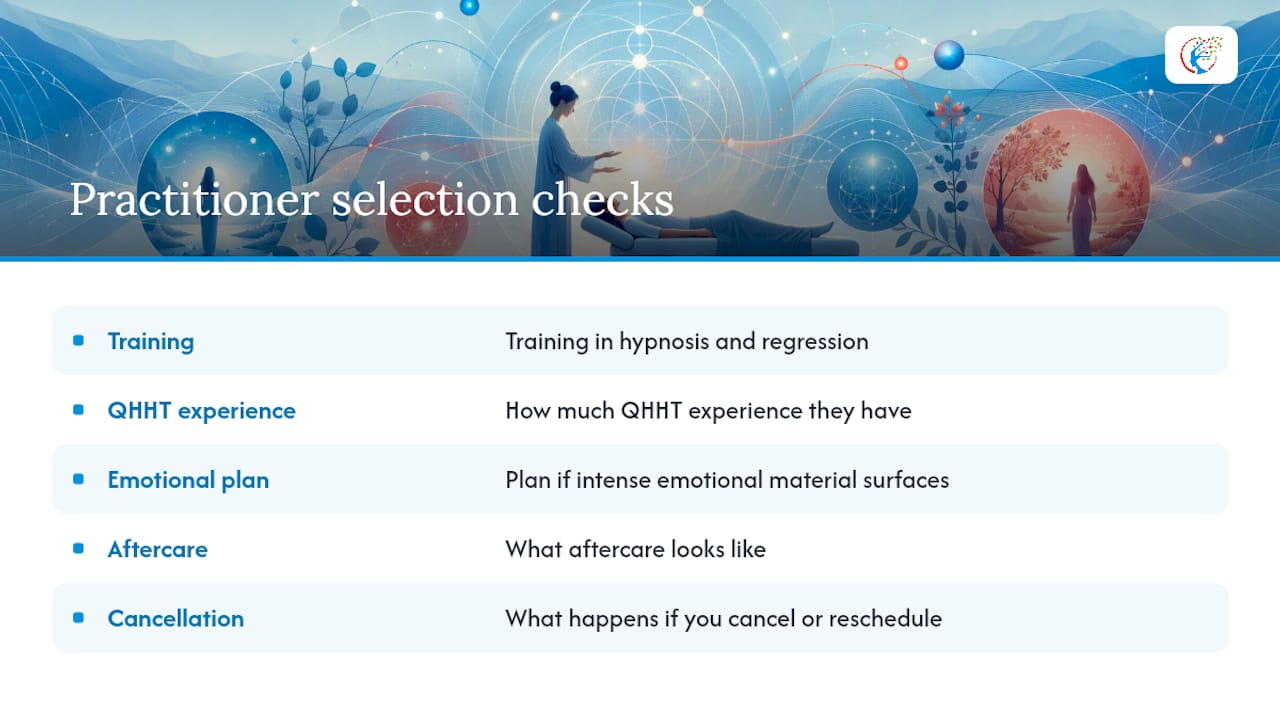
Watch for red flags. Be wary of anyone promising guaranteed cures, skipping informed consent, pressuring you to disclose private details before you’re ready, or dismissing the idea of clinical referral outright.
Trust signals worth checking include genuine client testimonials, a clearly described local practice, and proper booking and consent paperwork rather than a vague email exchange. A practitioner who welcomes these questions is generally a safer bet than one who brushes past them.
What does the research actually say?
Rigorous assessment of any hypnosis application requires systematic reviews, independent replication, and follow-up periods long enough to judge whether an effect on an enduring condition actually holds.
That’s the standard the Hypnosis Efficacy Task Force sets for hypnosis research generally, and it’s a useful yardstick here. Controlled evidence for past-life regression specifically remains limited, and much of what circulates publicly is practitioner and client testimony rather than independently replicated research.
That doesn’t make the reports meaningless, but it does mean:
Anecdotal accounts of healing should be read as personal experience, not clinical proof.
Critiques of regression practice flag genuine risks worth weighing before booking.
A cautious, informed-consent-led approach matters more than any single claimed outcome.
What does a session cost and how long does it take?
Logistics vary by practitioner, but general patterns hold across most QHHT and energy-healing work:
A full QHHT session often runs several hours, since regression and higher-self dialogue take time to unfold properly.
Many clients find one deep session sufficient; others book follow-ups to build on what surfaced.
Remote sessions work well for regression and dialogue; in-person suits hands-on energy techniques slightly better.
Fees vary between practitioners, so confirm pricing and the cancellation policy directly before booking. Afterwards, rest, journal what came up, and consider a short follow-up call to help integrate the material properly.
How does Paul Stebles deliver timeline therapy?
Paul Stebles offers QHHT and regression hypnotherapy alongside energy healing, serving clients across Bromley, Orpington and the wider Greater London area, both in person and remotely. His approach includes:
QHHT sessions combining regression with higher-self communication.
Energy healing: Reiki, chakra balancing, cord cutting and timeline work.
Flexible remote and in-person options depending on what suits you.
Sessions take place in a calm, unhurried setting, with a somnambulistic induction, guided exploration, and time built in afterwards for integration rather than being rushed out the door. If you want a fuller picture before booking, the past life regression guide walks through safe preparation and aftercare in more detail.
Why guided work matters
Powerful material deserves a steady hand. Sessions like these can surface more than a person expects, and doing this work without proper screening, consent and aftercare risks real harm rather than genuine healing. Integration afterwards matters as much as the session itself.

Ready to book a timeline therapy session?
Reading about QHHT and energy healing only gets you so far. Paulstebles offers something the theory can’t: a calm, structured, one-to-one session where the work actually happens, with clear informed consent and an aftercare plan built in from the start, not bolted on afterwards.
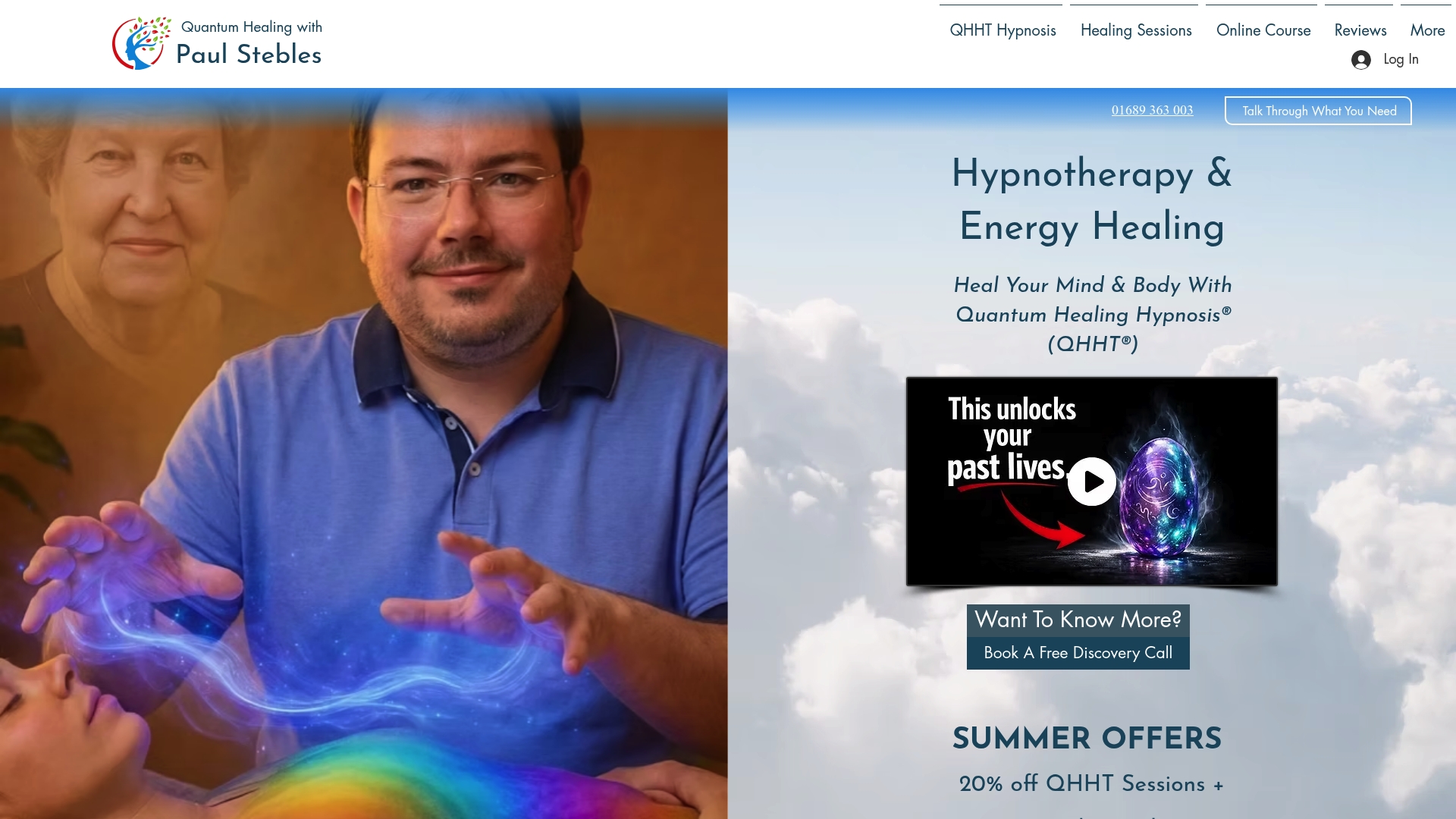
Booking is straightforward. Visit the QHHT healing session page to check availability, or start with the QHHT FAQ if you have questions before committing. For deeper background on the biofield side of this work, energy-focused practitioners describe similar principles of working with stored emotional patterns. Before you book, re-read the safety and contraindications section above, then reach out to discuss your intentions on an initial call. Sessions can be arranged in person across Bromley and Orpington, or remotely if that suits you better.
Frequently asked questions
Is timeline therapy the same as past-life regression? Past-life regression is one part of it. Timeline therapy here also includes higher-self dialogue and energy healing techniques layered on top of the regression itself.
Can I do timeline therapy remotely? Yes. Regression and higher-self dialogue translate well to video calls, though some hands-on energy techniques work better in person.
How many sessions will I need? Many clients find a single deep QHHT session sufficient, while others choose follow-up sessions to build on what emerged the first time.
What if I don’t believe in past lives? The work often centres on meaning and emotional release rather than literal historical verification, so scepticism about past lives doesn’t rule out benefit from the process.
This article is general information, not a substitute for advice from a qualified doctor. Consult a qualified healthcare professional about your own circumstances before acting on anything here.
Sources
Recommended
Comments