Two Week Grounding Plan to Clear a Blocked Third Eye
- Paul Stebles

- 5 days ago
- 9 min read
A blocked third eye usually means intuition feels patchy, mental clarity keeps slipping, and there’s a dull pressure sitting between your eyebrows that won’t shift. The first move isn’t more meditation or forcing visions. It’s grounding: calm the nervous system, steady the body, and let clarity return on its own terms. The rest of this guide walks through the symptoms, likely causes, a few honest self-checks, and a grounding-first programme for getting your third eye back online.
TL;DR:
Grounding practices such as walking barefoot outdoors, simple breathwork, and regular movement can significantly reduce third eye pressure caused by overstimulation.
Tracking symptoms through journaling helps identify whether the third eye is blocked or overactive, with fog and dullness indicating blockage and hyperactivity causing intrusive visions.
Lifestyle factors like irregular meals, dehydration, and overstimulation from screens often contribute to chakra imbalance and should be addressed first.
A two-week routine of daily grounding, sleep hygiene, and heart-centered meditation can restore clarity without risking overactivation or further imbalance.
Seek medical attention for sudden vision changes or neurological symptoms, and consider professional help if symptoms persist beyond the initial self-care phase.
Table of Contents
What does a blocked third eye actually feel like?
The third eye, or Ajna chakra in yoga tradition, governs perception, intuition and inner clarity rather than physical sight. Yoga Journal’s overview of Ajna describes it as the seat of higher perception, and when it’s imbalanced, the fallout shows up in the body, the mind and the emotions all at once. Chakra teachers and contemporary practitioners describe a fairly consistent cluster: inconsistent intuition, mental fog, difficulty visualising, and that specific forehead pressure people often mistake for tension headaches, according to Spirit Realm’s guide to third eye chakra imbalance.
Physical signs tend to cluster around the head and eyes:
Pressure or tightness between the eyebrows, sometimes mistaken for sinus congestion
Recurring headaches, particularly behind the eyes or across the forehead
Increased sensitivity to bright light or screens
Blurred or strained vision without an obvious optical cause
A vague, heavy sensation across the brow that worsens with stress
Cognitive signs show up as a kind of static in your thinking:
Persistent self-doubt, even about decisions you’d normally make instantly
Mental fog that doesn’t lift with sleep or rest
An inability to visualise clearly, or images that feel flat and distant
Chronic indecision, particularly around choices that used to feel obvious
Struggling to trust your first instinct, then overriding it with analysis
Emotional signs are quieter but just as telling:
A sense of disconnection from yourself or the people around you
Escapism, whether through overworking, scrolling, or daydreaming
Emotional numbness that feels like flatness rather than calm
Reactivity that seems disproportionate to what actually happened
A portion of these symptoms overlap with entirely mundane, entirely medical explanations. Sinus pressure can look identical to third-eye tightness. Chronic headaches can stem from screen strain, dehydration or migraines. Persistent brain fog might point to sleep deprivation, anxiety, or a thyroid issue that has nothing to do with energy centres. Treat the symptom list as a prompt to investigate, not a diagnosis.
What causes a blocked third eye?
Most practitioner-focused analyses agree on something worth repeating: a blocked third eye is rarely a single-point failure. It’s a systemic issue, built from emotional patterns, nervous-system state and daily habits stacking on top of each other, according to Conscious Vibrancy’s breakdown of third eye blockages. Understanding the layers matters more than chasing the sensation itself.
Energetic causes sit closest to the surface but run deepest:
Emotional suppression, where feelings get parked rather than processed
Unfinished grief that hasn’t had space to move through the body
Spiritual bypassing, or using meditation and positivity to skip past pain instead of feeling it
Neglecting root and heart chakra work while jumping straight to third-eye practices
Nervous-system causes are more physiological, and often the actual root:
Chronic stress that keeps the body in a low-grade fight-or-flight state
Poor or irregular sleep, which disrupts the rest cycles the brain needs for clear thinking
Overstimulation from screens, notifications and constant input
Long, ungrounded contemplation sessions that leave you floaty rather than clear
Lifestyle contributors are the ones people underestimate most:
Irregular meals or skipped eating, which destabilises blood sugar and focus
Dehydration, which affects concentration well before anyone feels thirsty
Heavy reliance on caffeine or other stimulants
A sedentary routine with little movement to discharge nervous tension
Pro Tip: If you’ve been doing intensive third-eye meditation, breathwork or visualisation for weeks with no improvement, and things feel worse, that’s not a sign to push harder. It’s a sign to stop and ground.
Forcing third-eye activation without stabilising the nervous system or working through the root and heart centres first tends to backfire. Rather than sharper intuition, people report depersonalisation, spikes in anxiety, or a sense of being unmoored from their body. Harm-reduction research on meditation-related adverse effects points specifically to intensive contemplative practice stacked with sleep restriction, fasting, or breath retention as a common trigger. If your foundations aren’t steady, upper-chakra work amplifies the wobble instead of fixing it.
How do you know if your third eye is blocked or overactive?
Before reaching for any healing technique, it helps to know which problem you’re actually solving. A blocked third eye and an overactive one produce almost opposite experiences, and treating one like the other tends to make things worse.
Keep a 7 to 14 day symptom journal. Track sleep hours, meal timing, caffeine intake, screen time, meditation or visualisation practice, and how you feel each day (foggy, clear, anxious, calm). Patterns usually surface within a week: a night of poor sleep followed by fog, or a heavy screen day followed by that familiar brow pressure.
Try the grounding test. Pause any upper-chakra practices, visualisation work, or intensive meditation for seven days. Replace them with grounding activities instead: walking outdoors, regular meals, earlier nights. If clarity improves noticeably, the issue was almost certainly overstimulation rather than a genuine block.
Distinguish blocked from overactive. A blocked third eye tends to feel like blankness or fog, an absence of insight. An overactive one feels more like racing imagery, intrusive visions, heightened sensitivity to light and sound, or a wired, can’t-switch-off quality. Therapy Directory’s overview of overactive third eye signs lists paranoia, hypersensitivity, migraines and mood swings as the more common overactive presentation, and grounding still helps in both cases, just for different reasons.
Watch for red flags that need medical attention. Sudden vision changes, one-sided numbness, severe or worsening headaches, fainting, or any neurological symptom is not a chakra issue until a doctor has ruled out everything else. See a GP promptly if physical symptoms persist beyond a couple of weeks or intensify.
A grounding-first routine for unblocking the third eye
Forget dramatic third-eye activation techniques for a moment. The most reliable path to clearer intuition starts lower down: stabilising the body and nervous system before asking the mind to do anything subtle. Practical grounding and nervous-system regulation, including nature walks, regular meals, movement and short breath practices, consistently show up as effective first-line steps in practitioner guidance, and they cost nothing and carry almost no risk.
Daily foundations
Sleep hygiene comes first, not last. Aim for a consistent bedtime, and cut screens at least 30 minutes before sleep since blue light and notification stress both feed the mental fog you’re trying to clear. Eat at regular intervals rather than skipping meals and then overcompensating; blood sugar swings mimic and worsen brain fog in ways people rarely connect back to food. Drink water consistently through the day rather than in one large dose. If you’re a heavy coffee drinker, cut back gradually rather than quitting cold, since caffeine withdrawal headaches will muddy your symptom tracking.
Grounding practices
Barefoot walking on grass, sand or soil for even ten minutes a day gives the nervous system a tangible anchor. Time outdoors more broadly, away from screens, does the same job less directly but still works. A simple grounding breath, four seconds in, hold for four, four seconds out, repeated for two or three minutes, interrupts the racing-thought loop quickly. Short movement breaks, five to ten minutes of stretching or walking every couple of hours, discharge the physical tension that builds from sitting still and thinking too hard.
Meditation, restructured
Skip the long, closed-eye third-eye visualisations for now. Start instead with heart-centred or grounding meditations, ten to twenty minutes, focused on breath and body sensation rather than imagery. The goal at this stage is stability, not visions. Once clarity and calm return consistently over a week or two, you can reintroduce brief, gentle third-eye focus, but there’s no rush, and rushing is usually what caused the block in the first place.
Movement and yoga
Favour root and heart-focused sequences over anything head-centred. Standing poses (mountain pose, warrior sequences) and hip openers (pigeon, low lunges) help discharge stored tension and rebuild a felt sense of stability. Leave prolonged headstands, intensive third-eye focused holds or extended pranayama for later, once your baseline has settled.
Breathwork, with a caution
Short, calming techniques work best here: box breathing (four seconds in, four hold, four out, four hold) done for a few minutes is a reliable reset. Avoid breath retention practices if you’re already feeling anxious or unstable; holding the breath under stress can intensify exactly the symptoms you’re trying to calm.
Supportive tools
Low, grounding sound frequencies, singing bowls or simple ambient drones, can help anchor attention without overstimulating. Journalling prompts (“What am I avoiding feeling right now?” or “What decision am I overthinking?”) give suppressed emotion somewhere to go instead of staying stuck in the body. Crystals such as amethyst or lapis lazuli are used symbolically by many practitioners as a focus point for intention rather than as a medical treatment. Treat them as a ritual anchor, not a cure.
A two-week starting point
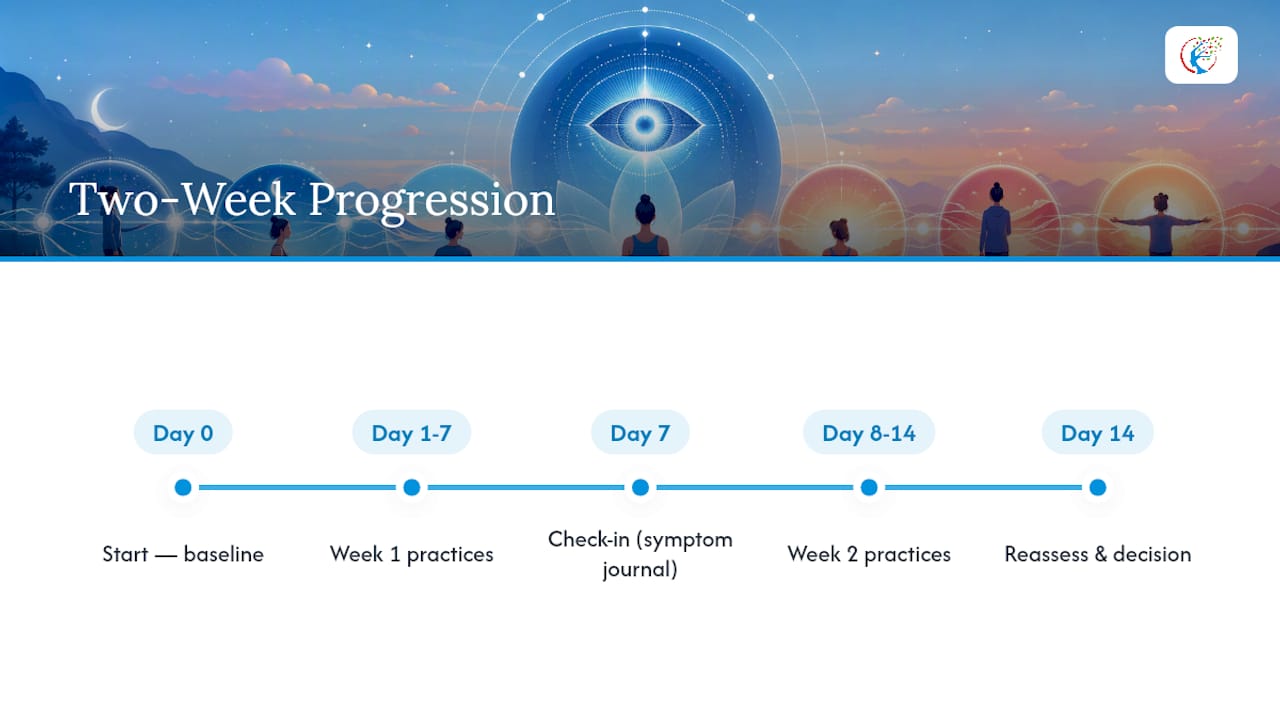
Week one: daily grounding walk (10 minutes), consistent sleep and meal times, box breathing twice a day, journalling three times a week. Check in at day seven using your symptom journal.
Week two: add heart-centred meditation (ten minutes, four times a week), one root/heart yoga session, continue journalling. Reassess at day fourteen: has clarity improved, stayed flat, or worsened?
Pro Tip: If symptoms worsen rather than ease over the two weeks, stop adding new practices and go back to basics: sleep, food, water, and grounding alone, for another week before trying anything else.
When self-care isn’t enough: professional help and what to expect
Grounding and lifestyle changes resolve a lot of third-eye imbalance, but not all of it, and knowing when to hand things to a professional is part of doing this responsibly.
See a doctor if: headaches are severe, worsening, or unlike your usual pattern; vision changes are sudden or one-sided; you experience fainting, numbness, or any other neurological symptom. These need medical evaluation before any energy work, full stop.
See a mental health professional if: you’re experiencing panic attacks, derealisation or a persistent feeling of unreality, insomnia that won’t resolve with better sleep habits, or symptoms that are genuinely interfering with work, relationships or daily function.
Once medical and mental-health causes are ruled out or being managed, structured sessions with a practitioner can go further than solo grounding work. Emotional release, identifying subconscious patterns that keep recreating the same blockage, and integration work afterwards are realistic outcomes; instant transformation isn’t. Regression hypnotherapy sessions work specifically with the subconscious beliefs that often sit underneath a persistent block, which is where self-help alone tends to hit a ceiling.
A responsible practitioner will screen for trauma history, ask about any history of psychosis or bipolar disorder before deep subconscious work, and explain risks and aftercare clearly before a session begins, not after. When choosing someone to work with, look for a clear explanation of method, visible credentials or experience, written aftercare guidance, genuine client feedback, and promises that sound proportionate rather than miraculous. Trauma release work within QHHT and energy healing is one example of how emotional clearing and subconscious exploration can work together when the groundwork has already been laid.
A practitioner’s take on steady progress
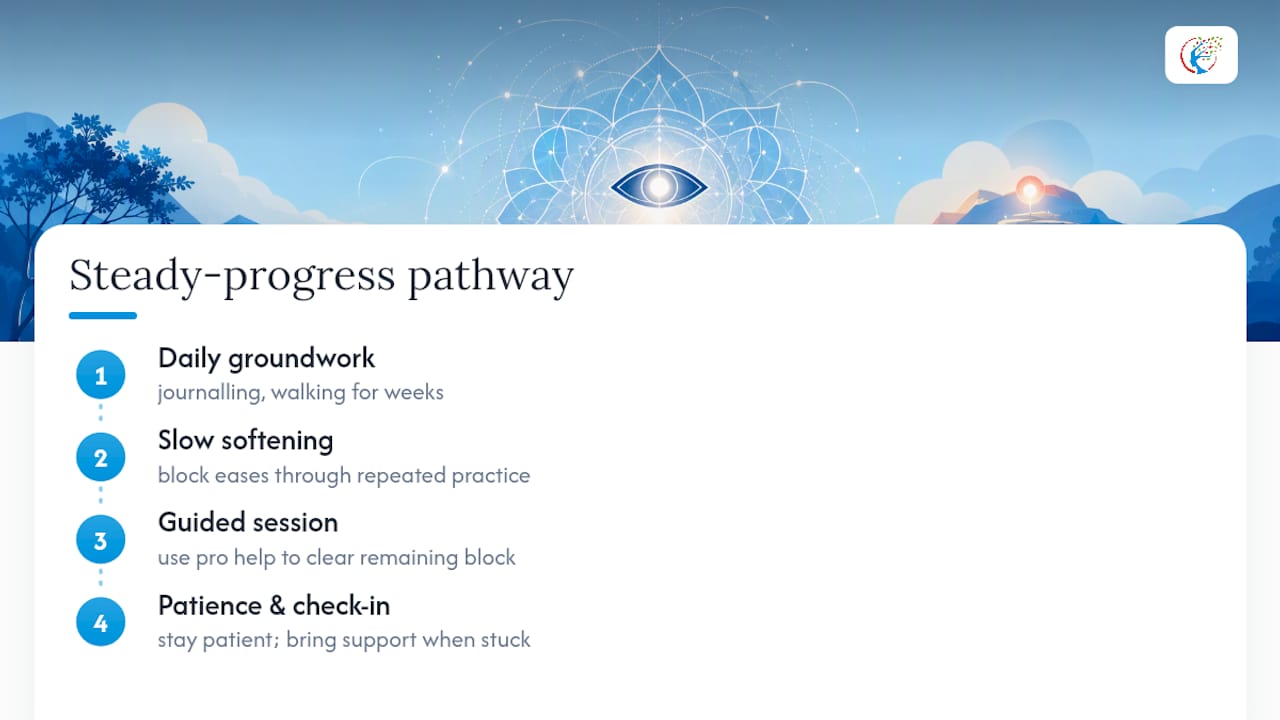
Stable intuition rarely arrives in a single breakthrough session. It tends to build the way trust builds with a person: slowly, through repetition, and mostly through the unglamorous work of processing emotion rather than chasing sensation. One pattern that comes up often is a client who spends weeks journalling and walking before anything shifts, then finally books a guided session once the ordinary groundwork has already softened the block, using the session to clear what daily practice couldn’t reach alone.
If clarity feels slow to return, that’s not failure. It’s usually just the pace this kind of work actually moves at. Be patient with the process, and don’t hesitate to bring in professional support when your own tools have taken you as far as they can.
— Paul
Sources
For deeper reading on the physical and mental signs of an overactive third eye and grounding remedies, see Therapy Directory’s clinical overview. For the risks of intensive contemplative practice and how to pace yourself safely, TrueAwake’s guide to third eye dangers is worth reading in full. For the traditional yogic framing of Ajna and its role in the wider chakra system, Yoga Journal’s introduction offers useful grounding in the source material.
If you’d like guided support once your own grounding work has settled, Paul Stebles’s QHHT FAQ explains how sessions run and what to realistically expect from deeper subconscious work.
Recommended
Comments